
Loose Stair Handrail: How to Make It Solid Again
Part of: Floors, walls and doors
- Difficulty
- Moderate
- Time
- 30 to 60 minutes
- Tools
- Drill, stud finder, screwdriver, longer 2.5 to 3 inch wood screws, wall anchors, level, pencil
- Call a pro if
- The handrail pulls out of the wall with force, the stair post or balusters wobble, the wood is rotted, or the railing is part of a deck or exterior stair.
In this guide
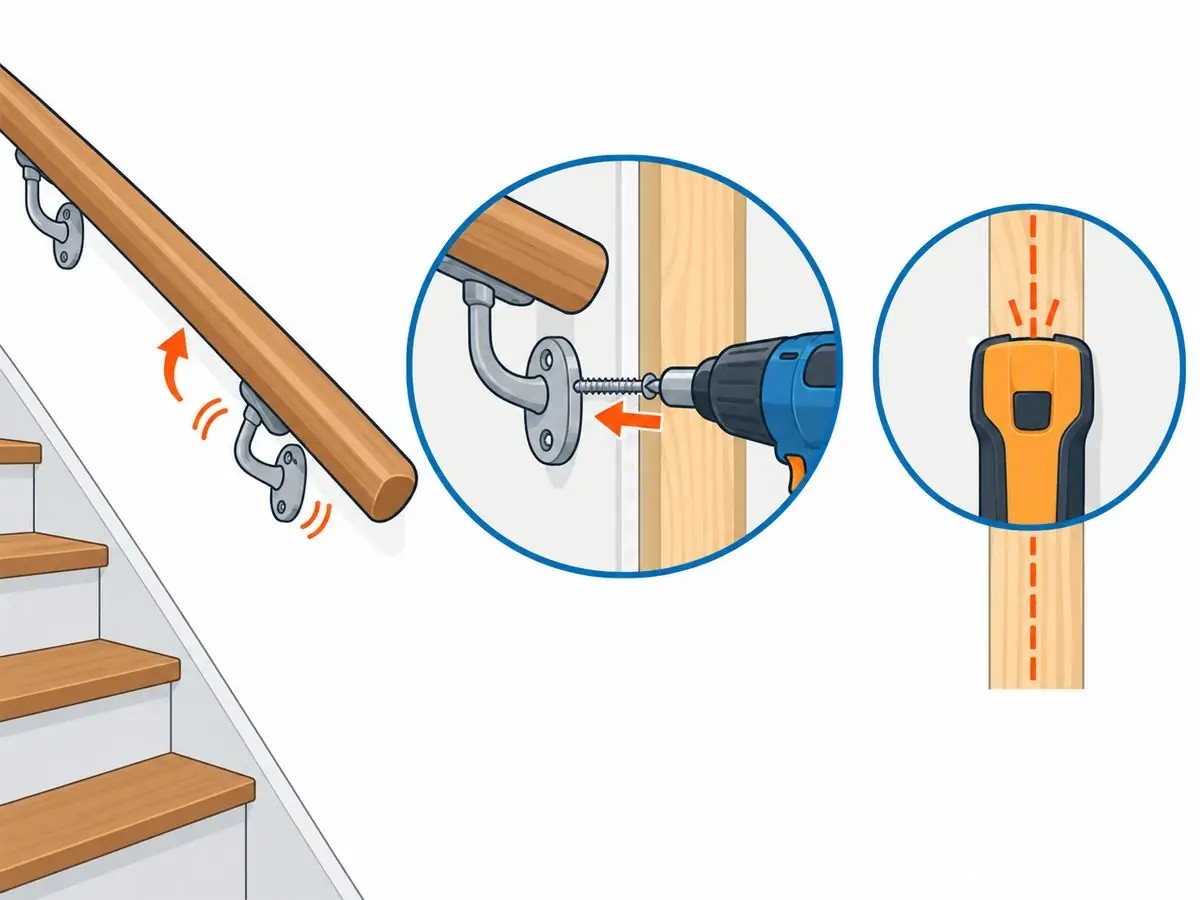
A loose stair handrail often feels fine until the one day you grab it hard. Then it shifts, and that is not a good moment. Most wall-mounted rails come loose because the brackets were attached to drywall only, with no stud behind the screws.
This guide is part of our wider guide to floor care.
Test it
Grab the rail at several points and pull firmly outward and downward. Note which bracket moves and how. If the whole rail swings, all the brackets may be loose. If one end is loose, the problem is local.
Find the studs
Use a stud finder to mark the studs behind each bracket. Studs are usually 16 inches apart, but do not trust that. Mark both sides of each stud, and pick the center. A bracket should have at least one screw in a stud, and ideally two.
Fix a bracket with a stripped hole
If the screws spin in the wall, they have lost their grip. Remove the bracket. If the hole sits in a stud, put in a longer screw, about 2.5 to 3 inches, so it goes at least an inch into the framing. If there is no stud behind it, use a heavy-duty toggle or anchor rated for the load, but only as a second choice. Moving the bracket to a stud is better.
Move a bracket
If a stud does not line up with the old bracket, move the bracket along the rail to meet it. Fill the old holes with spackle. The rail should sit at a steady height, and brackets should be placed as the local code says. Handrails are usually 34 to 38 inches above the stair edges, but check your local rules.
Fix a rail that moves in the bracket
Sometimes the rail twists in the bracket. Tighten the set screw or the screws that hold the rail to the bracket. Replace short or stripped screws.
Stair posts and balusters
If the newel post at the bottom wobbles, that is a different job. It may need a post anchor bolt or a repair of the joint under the floor. A loose baluster can sometimes be glued. If the post is split or rotted, call a carpenter.
Test again
After you fix it, put your weight on it. Pull and push at each bracket. It should not move. If it does, stop and get help.
Notes for older homes
Old plaster walls over wood lath can crumble when you drill. Use a stud finder and a pilot hole, drill slowly, and avoid anchors in plaster. If the wall is crumbling, a carpenter can add backing.
Check the other end of the rail
The loose bracket is often not the only problem. A rail is a long lever, and a pull at one end puts stress on the far end. After you fix the loose bracket, check each end, including where the rail meets a newel post or turns at a landing. End caps and returns, the small pieces that curve the rail back to the wall, can be glued and pinned if they have come loose. If the wall behind the rail has cracks around the brackets, patch them once the screws are in. Small cracks at screw holes can be a sign the wall has been pulled a lot.
Related guides
- Squeaky Stair Tread: How to Quiet a Creaking Step
- How to Fix a Squeaky Cabinet Door: Hinges, Catches and Wood Rub
- How to Fix a Squeaky Door in 10 Minutes
- How to Fix Squeaky Floors Without Tearing Anything Up
- How to Fix a Loose Hinge Screw
FAQ
Can I just use bigger screws?
Longer is better than fatter. The screw has to reach the stud.
How strong should a handrail be?
Building codes require rails to hold a strong load. A well-fixed rail in a stud should feel solid.
Is an outdoor rail the same?
No. Weather and rot are a bigger issue. Replace any rotting wood.
More from this topic
- How to Fix a Loose Newel Post Without Rebuilding the Stair: How to fix a loose newel post: find why it moves, tighten or replace the bolt, add blocking and brackets, and...
- How to Fix a Loose Baluster: How to fix a loose baluster: find out why it worked free, tighten or reset the joint, and make the railing...
- How to Install a Stair Nosing on a Wood or Vinyl Stair: How to install a stair nosing: measure the tread, cut the nosing to fit around the stringer, glue and fasten...
- How to Fix a Wobbly Handrail on Outdoor Steps: Learn how to fix a wobbly handrail on outdoor steps. Find the loose post or bracket, tighten the fasteners,...
- How to Install a Stair Handrail: How to install a stair handrail at the right height: find the studs, set the brackets on the pitch, and...
 Doors and WindowsHow to Fix a Loose Newel Post Without Rebuilding the StairHow to fix a loose newel post: find why it moves, tighten or replace the bolt, add blocking and brackets, and check the handrail so the stair is safe again.
 SafetyHow to Fix a Loose BalusterHow to fix a loose baluster: find out why it worked free, tighten or reset the joint, and make the railing solid again without replacing the whole run.
 Doors and WindowsHow to Install a Stair Nosing on a Wood or Vinyl StairHow to install a stair nosing: measure the tread, cut the nosing to fit around the stringer, glue and fasten it, and finish the edge so it is safe underfoot.
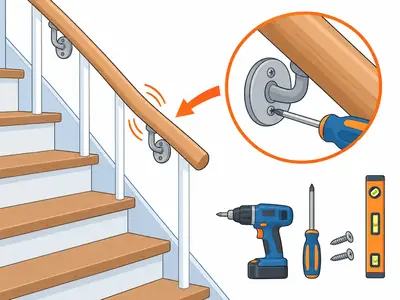 Garage and OutdoorsHow to Fix a Wobbly Handrail on Outdoor StepsLearn how to fix a wobbly handrail on outdoor steps. Find the loose post or bracket, tighten the fasteners, repair rotted wood and test the rail for strength.
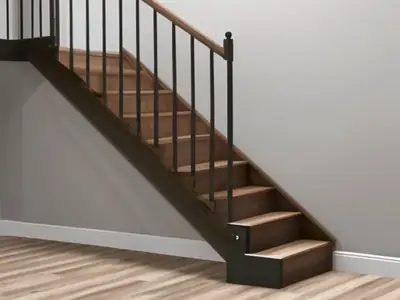 Walls and PaintHow to Install a Stair HandrailHow to install a stair handrail at the right height: find the studs, set the brackets on the pitch, and anchor it so it takes weight.