
How to Fix a Squeaky Cabinet Door
Part of: Kitchen
- Difficulty
- Easy
- Time
- 15 to 45 minutes for a whole kitchen
- Tools
- Screwdriver, paraffin wax or a candle stub, a dry lubricant or light machine oil, cotton swabs, felt or rubber bumpers, sandpaper, a flashlight, a helper
- Call a pro if
- The hinge is cracked, the door has dropped so far that the cabinet frame is damaged, or the noise comes from inside the cabinet wall rather than the door.
In this guide
- Power off first
A squeaky cabinet door is one of those sounds that you stop hearing consciously and start hearing every single time. The good news is that the noise always comes from one of a few places, and each has a fix that takes minutes. Working out which one it is saves you from oiling hinges that were never the problem. Here is how to fix a squeaky cabinet door.
This guide is part of our wider guide to floor care.
1. Find the actual source
Open and close the door slowly while listening, and put your hand on the hinge as it moves. A squeak that happens in the middle of the swing is usually the hinge. A click or a squeak at the end of the swing, when the door meets the cabinet, is usually the catch or the door rubbing.
Two more clues: a squeak that only happens when the door is nearly closed is often the door rubbing on the frame or on a neighboring door. A rattle rather than a squeak is usually a loose hinge screw or a glass panel moving in its frame.
2. Lubricate the hinge properly
Most squeaks come from a dry hinge pin.
1. Wipe the hinge with a dry cloth to remove dust and cooking grease.
2. Put a drop of light machine oil or a dry lubricant on the pin, where the two halves of the hinge meet. A cotton swab keeps it precise.
3. Open and close the door several times to work it in.
4. Wipe off any excess so it does not collect dust.
On a European style cabinet hinge, the moving part is inside the cup and the arm, so put the drop where the arm enters the cup. On an exposed butt hinge, oil the pin at both ends.
Avoid heavy grease and cooking spray. Grease holds dust and turns into a sticky paste, and cooking spray goes rancid and smells. If a hinge has already been sprayed with something sticky, clean it with a little rubbing alcohol on a cloth and start again.
3. Check the screws
A hinge that is slightly loose squeaks because the whole door shifts as it moves. Tighten every hinge screw, using a screwdriver that fits the head. If a screw turns without tightening, the hole is stripped; our guide on fixing a cabinet hinge covers filling it with glued toothpicks, which is the repair that lasts.
4. Adjust the door so it stops rubbing
A door that rubs its neighbor or the frame squeaks at the end of its swing and will eventually wear the finish off. Look at the gap around the door with it closed. An uneven gap means the door needs adjusting, not lubricating.
Use the adjustment screws on the hinge to move the door a millimeter at a time, and check after each quarter turn. If the door has simply dropped, lift it slightly by loosening the frame screws, raising the door and retightening.
5. Silence the catch
Magnetic catches, roller catches and touch latches all squeak or click when they are dry or misaligned.
- Put a tiny amount of dry lubricant on a roller catch.
- Check that the strike plate on the door lines up with the catch; if it is off, the roller drags across it.
- Replace a magnetic catch that has lost its strength. They are inexpensive and come in standard sizes.
6. Stop wood on wood
A door rubbing against the frame or a shelf edge will squeak and mark the finish. Find the contact point by looking for a shiny or worn patch, then:
- Sand the touching edge lightly and seal it.
- Add a small felt or rubber bumper at the contact point.
- Adjust the hinge to move the door away.
Bumpers on the inside corner of the frame are also the cheapest way to stop doors banging shut, and our guide on stopping cabinet doors from slamming covers the options.
7. Check glass doors and panels
A glass cabinet door with a squeak or rattle usually has a loose retaining strip or a gasket that has shrunk. Tighten the retaining clips gently, and never overtighten, because glass cracks under point pressure. If the panel is loose in a wooden frame, a thin bead of clear silicone in the rebate will stop the movement.
8. Quiet the drawers while you are there
Drawers squeak for the same reasons: dry slides, loose screws or wood rubbing. Wipe the slides, tighten the screws, and put paraffin wax on wooden runners. Our guide on fixing a kitchen drawer that sticks covers the full repair.
9. Keep the kitchen quiet
Cooking grease is what dries out hinges in a kitchen. Wipe the hinges and the door edges when you clean the cabinet fronts, and the squeak will not come back as fast. A twice-a-year drop of oil on each hinge takes five minutes for a whole kitchen.
Common mistakes
- Spraying lubricant over the whole hinge and the cabinet face, which marks the finish.
- Using cooking oil or grease, which gums up and attracts dust.
- Oiling a hinge that is actually loose, then wondering why the noise continues.
- Overtightening a glass door's retaining clips.
- Adjusting a door without checking the gap first, so the rub moves to the other side.
Related guides
- How to Fix a Squeaky Door in 10 Minutes
- How to Fix Squeaky Floors Without Tearing Anything Up
- How to Fix a Squeaky Deck
- How to Install a Pull-Out Shelf in a Cabinet
- How to Hang a Wall Cabinet Safely on Studs
- How to Fix a Cabinet Shelf Bracket That Came Loose or Broke
FAQ
Why does my cabinet door squeak only sometimes?
Often humidity or temperature related. Wood and hinges move slightly with the seasons, so a door that rubs in summer can be fine in winter. Adjusting the gap usually fixes the seasonal version.
Is it safe to use oil on kitchen cabinet hinges?
A drop of light machine oil is fine on metal hinges. Keep it off the wood and wipe the excess, and never use it where it can drip onto food.
What if the squeak is still there after oiling?
Then it is probably not the hinge. Check the catch, the door's edge for rubbing, and whether a hinge screw is loose.
Should I replace squeaky hinges?
Only if they are bent, cracked or the pin is worn. Most squeaky hinges are fine after cleaning, oiling and tightening.
More from this topic
- How to Fix a Cabinet Door That Rubs: Learn how to fix a cabinet door that rubs: find the contact point, adjust the hinge, sand or seal a swollen...
- How to Fix a Cabinet Hinge: Learn how to fix a cabinet hinge that is loose, squeaking or pulling out: tighten it, reset stripped screw...
- How to Fix a Bathroom Mirror Cabinet: Learn how to fix a bathroom mirror cabinet: rehang it level, adjust the hinges, fix a door that will not stay...
- Cabinet Door Won't Stay Closed: How to Fix It: Cabinet door won't stay closed? Clean the catch, adjust the hinges, and align or replace the magnetic or...
- How to Reverse a Refrigerator Door Swing: Learn how to reverse a refrigerator door swing: remove the doors, move the hinges and handles, rehang them on...
 KitchenHow to Fix a Cabinet Door That RubsLearn how to fix a cabinet door that rubs: find the contact point, adjust the hinge, sand or seal a swollen edge, and correct a cabinet that is out of square.
 KitchenHow to Fix a Cabinet HingeLearn how to fix a cabinet hinge that is loose, squeaking or pulling out: tighten it, reset stripped screw holes, adjust the door and replace a bent hinge.
 BathroomHow to Fix a Bathroom Mirror CabinetLearn how to fix a bathroom mirror cabinet: rehang it level, adjust the hinges, fix a door that will not stay shut and stop the mirror from fogging up again.
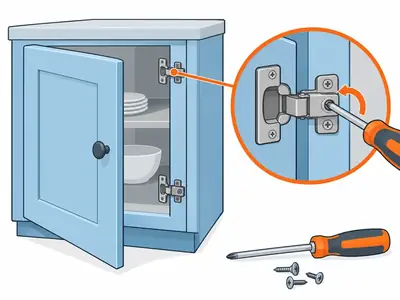 KitchenCabinet Door Won't Stay Closed: How to Fix ItCabinet door won't stay closed? Clean the catch, adjust the hinges, and align or replace the magnetic or roller catch. Steps and safety tips.
 KitchenHow to Reverse a Refrigerator Door SwingLearn how to reverse a refrigerator door swing: remove the doors, move the hinges and handles, rehang them on the other side and check that the seals close.