
How to Stop Cabinet Doors From Slamming
Part of: Kitchen
- Difficulty
- Easy
- Time
- 10 minutes for bumpers, about an hour for a soft-close upgrade
- Tools
- Adhesive felt or rubber bumper pads, degreasing cleaner, screwdriver, soft-close hinges or dampers for the upgrade route
- Call a pro if
- The cabinets are frameless with unusual hinge systems, or doors are misaligned enough that they hit each other before they hit the frame.
In this guide
Slamming cabinet doors are one of those small irritations that wear on you daily, and the bang is also slowly loosening your hinge screws and rattling whatever sits on the shelves. The fix ranges from a two-minute sheet of bumper pads to a full soft-close conversion, and every option is DIY-friendly. Here is how to stop cabinet doors from slamming, cheapest first.
This guide is part of our wider guide to kitchen cabinets, countertops and storage.
Fix 1: Bumper pads, the two-minute solution
The slam is the sound of wood hitting wood. Small adhesive bumper pads placed where the door meets the frame absorb the impact and turn the bang into a faucet.
Clean the contact points on the frame with a degreasing cleaner and let them dry, because pads stuck to grease fall off within weeks. Then press one pad at each corner where the door touches the frame, typically top and bottom on the hinge side's opposite edge. Clear polyurethane pads are nearly invisible; felt pads are quieter but compress over time.
Test the door. It should close with a soft thud and still latch. If the pads hold the door slightly open, use thinner pads or fewer of them.
Fix 2: Tighten and adjust the hinges
A door that slams is often a door that swings too freely because its hinges have loosened. Snug every hinge screw, on the door and on the cabinet, with a screwdriver. A screw that spins without catching means a stripped hole; our guide on fixing a loose cabinet door covers the toothpick-and-glue repair.
While you are there, check the door alignment. A door hanging slightly off can swing past its catch and gain momentum. Concealed hinges adjust in three directions, and our guide on a cabinet door that won't stay closed explains the adjustment screws.
Fix 3: Add soft-close dampers without changing hinges
If bumpers quiet the slam but you want the doors to glide shut, add-on soft-close dampers are the middle path. These small pistons mount inside the cabinet with one or two screws, one per door. When the door closes, the damper catches it in the last inch and pulls it in slowly.
They work with most existing hinges, cost a few dollars per door, and install in minutes. Position the damper so the door edge meets the piston squarely, following the product's template.
Fix 4: Upgrade to soft-close hinges
The full conversion replaces your existing concealed hinges with soft-close versions that have the damper built in. Match the new hinges to your old ones: bring one along to the hardware store, since concealed hinges come in different cup sizes and overlay styles. Swapping is a screwdriver job per door, and the adjustment screws let you dial in the door position afterward.
This is the most expensive route per door, but it is also the most seamless: nothing visible inside the cabinet, and every door closes with the same gentle pull.
Do not forget the drawers
Drawers slam too, and they take the same fixes. Bumper pads work on drawer fronts. Many drawer slides can be swapped for soft-close slides, though that is a bigger job involving draw-out and re-mounting. If a drawer slides open on its own rather than slamming, the cabinet may be out of level; our guide on leveling a bathroom vanity shows the shimming technique that applies to kitchen cabinets too.
Common mistakes
- Sticking pads on a greasy frame, then wondering why they drop off.
- Pads so thick the door no longer latches.
- Mixing pad thicknesses so the door closes crooked and stresses the hinges.
- Buying soft-close hinges without matching the cup size and overlay of the old ones.
Related guides
- How to Install Cabinet Knobs and Pulls (Straight and Even)
- How to Fix a Cabinet Hinge: Loose, Sagging and Stripped Screw Holes
- How to Fix a Sagging Cabinet Shelf
- How to Paint Kitchen Cabinet Doors Without Brush Marks
- How to Fix a Squeaky Cabinet Door
- How to Fix a Cabinet Door That Rubs the Frame or Another Door
FAQ
Are felt or clear plastic bumpers better?
Clear polyurethane pads last longer and disappear visually. Felt is a touch quieter but compresses and needs replacing sooner. Most people prefer the clear pads.
How many bumpers per door?
Two is standard, one at each corner on the side opposite the hinges. Add one mid-edge on tall pantry doors.
Do soft-close dampers work on frameless cabinets?
Most add-on dampers are designed for framed cabinets, but versions exist for frameless construction. Check the product's compatibility with your cabinet style before buying.
More from this topic
- How to Fix Peeling Laminate on Cabinets and Doors: Fix peeling laminate on cabinets by cleaning out old glue, re-bonding the laminate with contact cement or...
- How to Stop a Door From Slamming or Banging: How to stop a door from slamming or banging with felt pads, a soft-close hinge or a door closer. Easy steps,...
- Cabinet Door Won't Stay Closed: How to Fix It: Cabinet door won't stay closed? Clean the catch, adjust the hinges, and align or replace the magnetic or...
- How to Level Kitchen Cabinets Before the Countertop Goes On: How to level kitchen cabinets: set the base run first, shim front and back, check level and straightness, and...
- Dishwasher Door Latch Not Closing: How to Fix It: Dishwasher door latch not closing or the cycle will not start? Check for blockages, the latch, the strike and...
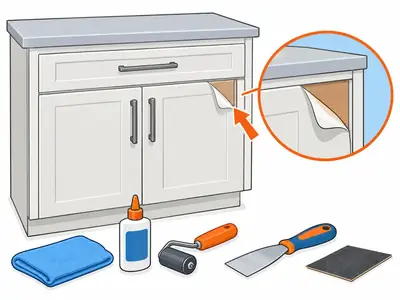 KitchenHow to Fix Peeling Laminate on Cabinets and DoorsFix peeling laminate on cabinets by cleaning out old glue, re-bonding the laminate with contact cement or wood glue, and clamping it flat while it cures.
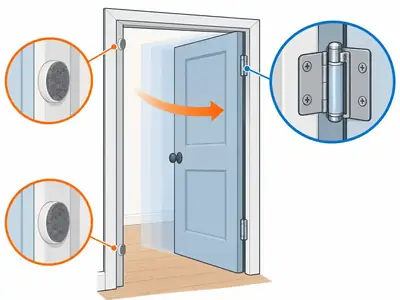 Doors and WindowsHow to Stop a Door From Slamming or BangingHow to stop a door from slamming or banging with felt pads, a soft-close hinge or a door closer. Easy steps, tools and when to adjust the hinges.
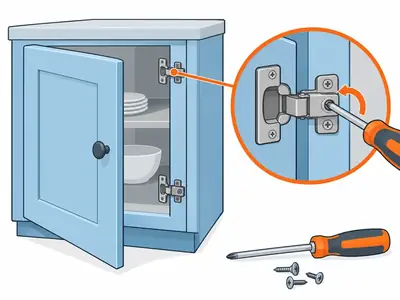 KitchenCabinet Door Won't Stay Closed: How to Fix ItCabinet door won't stay closed? Clean the catch, adjust the hinges, and align or replace the magnetic or roller catch. Steps and safety tips.
 KitchenHow to Level Kitchen Cabinets Before the Countertop Goes OnHow to level kitchen cabinets: set the base run first, shim front and back, check level and straightness, and fasten the boxes so the countertop sits flat.
 KitchenDishwasher Door Latch Not Closing: How to Fix ItDishwasher door latch not closing or the cycle will not start? Check for blockages, the latch, the strike and the door switch. Easy steps to fix it.