
Cabinet Door Won't Stay Closed: How to Fix It
Part of: Kitchen · Also in: The Complete Guide to Kitchen and Appliance Care at Home
- Difficulty
- Easy
- Time
- 15 to 45 minutes per door
- Tools
- Screwdriver, degreasing cleaner, cloth, small level, replacement catch if needed, wood toothpicks and wood glue for stripped holes
- Call a pro if
- The cabinet box itself is pulling away from the wall, the door is badly warped, or the hinges are damaged beyond adjustment.
In this guide
If a cabinet door won't stay closed, the catch, the hinge or the door alignment is usually to blame. A cabinet door that won't stay closed is usually not broken. In most kitchens the cause is one of four things: a dirty or worn catch, hinges that have drifted out of adjustment, a door that has sagged, or a warped door. You can fix the first three with a screwdriver and a little patience. Here is how to work through them in order, cheapest fix first.
This guide is part of our wider guide to doors and windows.
Step 1: Clean the catch and the door edge
Grease and dust build up on the small magnetic catch or roller catch that holds the door shut. A catch coated in kitchen grime loses its grip, and the door pops open or never quite latches.
Spray a degreasing cleaner on a cloth and scrub the catch on the cabinet frame and the strike plate on the door. Clean the hinge arms while you are at it. Close the door a few times. On many cabinets, this alone fixes the problem.
Step 2: Check that the hinges are tight
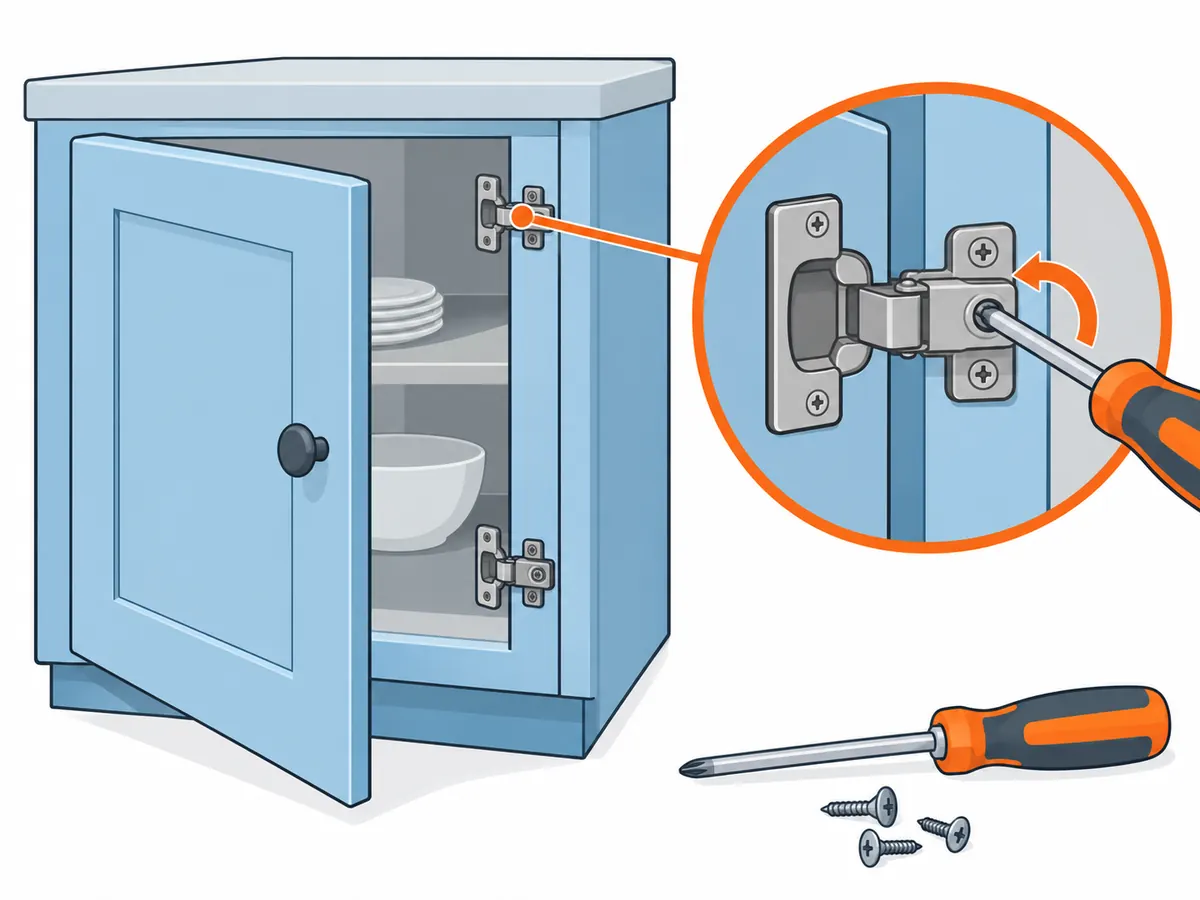
Open the door and look at the hinges. On modern concealed hinges, check the screws that hold the hinge to the door and the mounting plate to the cabinet wall. Snug each one. Do not overtighten, especially into particleboard, because the screw can strip the hole.
If a screw spins without biting, the hole is stripped. Remove the screw, dip a couple of wood toothpicks in wood glue, push them into the hole, snap them off flush, and drive the screw back in after the glue sets. This gives the screw fresh material to grip.
If your issue is a door that swings loosely rather than one that pops open, our guide on how to fix a loose cabinet door covers hinge tightening in more detail.
Step 3: Adjust the hinge position
Concealed hinges have adjustment screws that move the door side to side, up and down, and in and out. If the door hangs crooked, it may press against the frame and refuse to latch.
Close the door slowly and watch the gap around it. The gap should be even on all sides. If the door sits too far from the cabinet, the catch cannot reach it. Turn the depth adjustment screw a quarter turn at a time to bring the door closer to the frame, then test. Small turns make a visible difference, so adjust in small steps and keep testing the latch.
For older surface-mounted hinges without adjustment, you can shim a hinge leaf with a thin piece of cardboard behind it to nudge the door into line.
Step 4: Align or replace the catch
If the hinges look good but the door still will not stay closed, the catch is the culprit. Loosen the screws on the strike plate or the catch body, slide it so the magnet or rollers meet squarely when the door closes, and retighten. A strike plate mounted even a few millimeters off will let the door bounce back open.
If the magnet has lost its strength or a roller catch has a cracked wheel, replace the whole catch. Take the old one to the hardware store so the screw holes and size match. Catches are cheap, and swapping one takes five minutes.
Step 5: Deal with a warped door
Hold a straight edge across the door face, or close the door and look for a corner that stands proud of the frame. A slight warp can sometimes be pulled in by moving the catch so it holds the bowed corner. A badly twisted door will not stay shut no matter what you adjust, and replacement is the lasting fix.
Common mistakes
- Overtightening screws into particleboard and stripping the holes.
- Replacing the catch before cleaning it. Most catches just need degreasing.
- Making big hinge adjustments at once. Quarter turns are plenty.
- Ignoring a damp cabinet. Swelling from a slow leak can push doors out of line, so check under the sink for moisture.
Related guides
- How to Stop Cabinet Doors From Slamming
- How to Fix a Storm Door That Slams or Will Not Close With the Closer
- How to Fix a Door That Will Not Latch (3 Simple Fixes)
- How to Fix a Door That Scrapes the Floor
FAQ
Why did my cabinet door suddenly stop closing?
Usually grime on the catch or a hinge screw that worked loose. Doors drift gradually, so the change feels sudden when the latch finally stops catching.
Can I add a catch to a door that never had one?
Yes. A simple magnetic catch screws to the inside of the cabinet frame with a strike plate on the door. Hold the parts in place, mark the holes, and use short screws that will not poke through.
Do soft-close hinges fix a door that pops open?
They can, because soft-close concealed hinges pull the door shut in the last inch of travel. Swapping hinges is a bigger job than adjusting them, so try the steps above first.
More from this topic
- How to Hang a Wall Cabinet Safely on Studs: How to hang a wall cabinet: find the studs, set a ledger at the right height, lift the cabinet with help, and...
- How to Level Kitchen Cabinets Before the Countertop Goes On: How to level kitchen cabinets: set the base run first, shim front and back, check level and straightness, and...
- How to Organize Kitchen Cabinets Around How You Cook: Learn how to organize kitchen cabinets by zones: empty and clean them, group by task, set shelf heights, use...
- How to Paint Kitchen Cabinet Doors Without Brush Marks: Learn how to paint kitchen cabinet doors: remove and label them, degrease and sand, prime, then paint flat...
- How to Paint Kitchen Cabinets: Paint kitchen cabinets with a durable finish by removing doors, degreasing and sanding, priming with bonding...
 KitchenHow to Hang a Wall Cabinet Safely on StudsHow to hang a wall cabinet: find the studs, set a ledger at the right height, lift the cabinet with help, and fasten it into framing so it carries the load.
 KitchenHow to Level Kitchen Cabinets Before the Countertop Goes OnHow to level kitchen cabinets: set the base run first, shim front and back, check level and straightness, and fasten the boxes so the countertop sits flat.
 KitchenHow to Organize Kitchen Cabinets Around How You CookLearn how to organize kitchen cabinets by zones: empty and clean them, group by task, set shelf heights, use drawers well and keep the system working.
 KitchenHow to Paint Kitchen Cabinet Doors Without Brush MarksLearn how to paint kitchen cabinet doors: remove and label them, degrease and sand, prime, then paint flat with a foam roller and a brush for a smooth finish.
 KitchenHow to Paint Kitchen CabinetsPaint kitchen cabinets with a durable finish by removing doors, degreasing and sanding, priming with bonding primer, and applying thin enamel coats.