
How to Fix Squeaky Floors Without Tearing Anything Up
Part of: Floors, walls and doors
- Difficulty
- Moderate
- Time
- 30 to 90 minutes
- Tools
- Stud finder, drill, trim screws or special squeak repair kit, talcum powder or graphite
- Call a pro if
- The floor is sagging, or the noise comes with cracked beams or moisture damage.
In this guide
- Power off first
- Wear protection
A squeaky floor is usually caused by wood rubbing against wood or against a nail. Floorboards shrink and swell with the seasons, and over time they loosen. The fix is to remove the movement. This guide explains how to fix squeaky floors, from simple tricks to proper repairs.
This guide is part of our wider guide to floor care.
Step 1: Find the squeak
Walk slowly across the room and listen. Have a helper stand below if you can reach the underside. Mark the spots with painter's tape. Squeaks often come along a line, which is a joist underneath, so check where the boards meet it.
Step 2: Try a quick fix for hardwood
For a minor squeak in a hardwood floor, sprinkle talcum powder, baby powder or powdered graphite on the seam and sweep it into the cracks. The powder acts as a lubricant between the boards. Walk on it to work it in, and wipe up the extra. This is a cheap trick that often works for a while.
Step 3: Fix it from below if you can
If the floor is over an unfinished basement or crawl space, you can fix it from beneath. This is the best method because it does not mark the floor.
- If you see a gap between the subfloor and a joist, tap a thin wood shim, with a dab of wood glue, into the gap. Do not force it, or you may lift the floor.
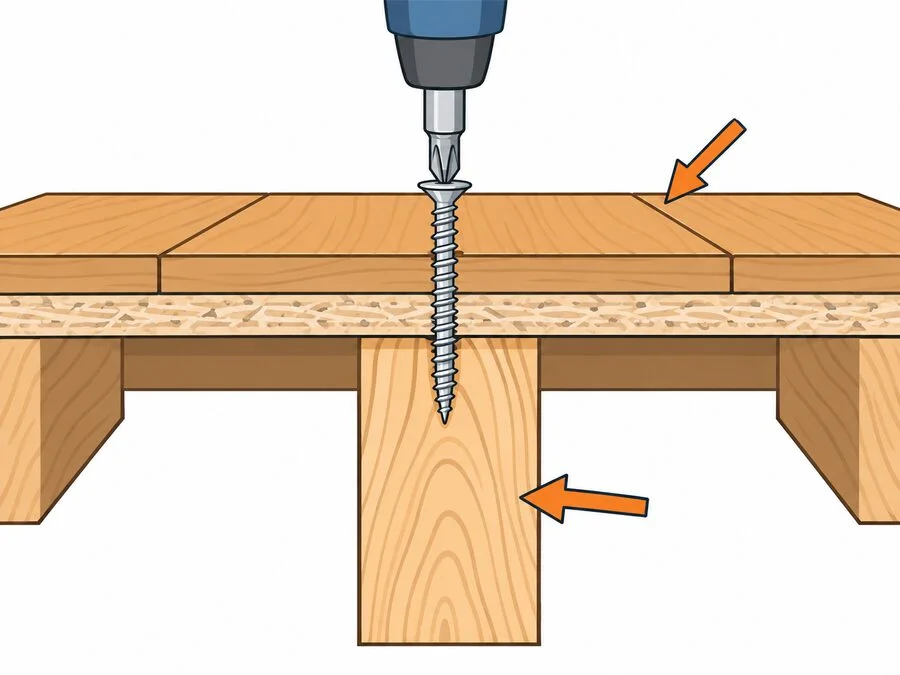
- If you see a gap between the subfloor and the finished floor, a helper can stand on the spot while you drive a screw up through the subfloor into the finished floor. Choose a screw short enough that it does not poke through the top.
Wear safety glasses, and watch for pipes and wires before you drill.
Step 4: Fix it from above
If you cannot get underneath, secure the floor from above. A squeak repair kit has special screws that snap off below the surface so they leave a tiny hole. Drive the screw into the joist through the floor, and fill the hole. For nailed floors, you can drive a finishing nail at an angle, called face nailing, then set the head and fill it with wood putty. Pre-drill the hole to avoid splitting the wood.
Step 5: Handle carpet
For squeaks under carpet, use a screw kit made for carpet. It lets you screw through the carpet into the joist and then snap off the screw head below the surface.
Step 6: Check stairs
Squeaky stairs often come from a loose tread rubbing against the riser. Drive a screw or a few finishing nails through the tread into the riser, or from below, add a small wood block and glue.
Glue the seam if boards separate
For a tongue and groove board that rubs, squeeze a little wood glue into the seam with a thin tip. Press the board down and put weight on it while it dries. Wipe away glue that squeezes out.
What if nothing works?
A squeak that stays after you fix it may come from a nail rubbing in its hole or from a board that has dried and shrunk. Try another spot. If the whole area moves, the problem may be larger, such as a loose subfloor or a damaged joist. Ask a carpenter to look. See our guide to fixing a hardwood floor scratch for finishing touches after repairs.
Keep the floor quiet
Keep indoor humidity steady. Wood swells in damp air and shrinks in dry air. A hygrometer tells you what your house is doing. Many homes do well in a range of about 30 to 50 percent humidity. Our digital hygrometer guide shows options.
When to call a pro
Call a pro if the floor is bouncy or sagging, if the squeaks come with cracked plaster or a slope, or if you see moisture, rot or insect damage. Those signs can mean a structural problem, not just a loose board. Also be careful when drilling: do not drill where you may hit pipes or wires.
Common mistakes
- Using screws that are too long, which can come through the top.
- Hammering large nails that split the boards.
- Fixing the wrong spot because the squeak and the cause are in different places.
- Ignoring signs of water damage under the floor.
Seasonal changes in humidity make floors squeak more in winter. A humidifier can help keep wood stable.
Related guides
- How to Fix a Cracked Tile Without Replacing It (Step by Step)
- How to Fix Squeaky Floorboards Without Tearing Up the Floor
- How to Fix a Squeaky Cabinet Door: Hinges, Catches and Wood Rub
- How to Fix a Squeaky Door in 10 Minutes
- Squeaky Bed Frame: Find the Noise and Quiet It for Good
- Squeaky Stair Tread: How to Quiet a Creaking Step
FAQ
Why do floors squeak?
Boards or subfloor rub on nails or each other as the wood moves with humidity.
Can I fix it from above?
Yes, with screws into the joist or a repair kit, and from below if you can reach.
Does talcum powder help?
It can quiet rubbing between boards, but it is a temporary fix.
More from this topic
- How to Remove Scuff Marks From Floors Without Dulling: Learn how to remove scuff marks from floors on vinyl, laminate, tile, and sealed wood with a tennis ball,...
- How to Fix a Scratch on Hardwood Floors Without Refinishing: Learn how to fix a scratch on hardwood floors with simple tools. Match the depth, use a wax stick or stain...
- Floors and Floor Care: Stop Squeaks, Scratches and Gaps: Floors and floor care: fix a squeaky floor without tearing it up, close gaps in vinyl plank, deal with a...
- How to Fill Gaps Between Hardwood Floorboards: How to fill gaps between hardwood floorboards: tell seasonal movement from a real problem, fill narrow gaps,...
- How to Fix a Cracked Tile Without Replacing It: Learn how to fix a cracked tile without replacing it using epoxy filler and a color match. Includes when a...
 FloorsHow to Remove Scuff Marks From Floors Without DullingLearn how to remove scuff marks from floors on vinyl, laminate, tile, and sealed wood with a tennis ball, baking soda paste, and mild cleaners.
 FloorsHow to Fix a Scratch on Hardwood Floors Without RefinishingLearn how to fix a scratch on hardwood floors with simple tools. Match the depth, use a wax stick or stain pen and keep the repair from showing.
 FloorsFloors and Floor Care: Stop Squeaks, Scratches and GapsFloors and floor care: fix a squeaky floor without tearing it up, close gaps in vinyl plank, deal with a cracked tile. Steps, tools and safety notes included.
 FloorsHow to Fill Gaps Between Hardwood FloorboardsHow to fill gaps between hardwood floorboards: tell seasonal movement from a real problem, fill narrow gaps, and use wood slivers for wide ones.
 FloorsHow to Fix a Cracked Tile Without Replacing ItLearn how to fix a cracked tile without replacing it using epoxy filler and a color match. Includes when a crack means a bigger problem underneath.