
Squeaky Bed Frame: Find the Noise and Quiet It for Good
Part of: Floors, walls and doors
- Difficulty
- Easy
- Time
- 20 to 40 minutes
- Tools
- Screwdriver or hex key set, wrench, candle wax or paraffin, felt pads, wood glue, flashlight
- Call a pro if
- A slat is cracked, the side rail is split, or a metal bracket is bent or broken.
In this guide
A squeaky bed frame wakes people up for no good reason, and the noise is rarely the mattress. It comes from a joint that moves a hair when you roll over. The trick is to find which joint, then stop the movement or the friction.
This guide is part of our wider guide to floor care.
Play detective first
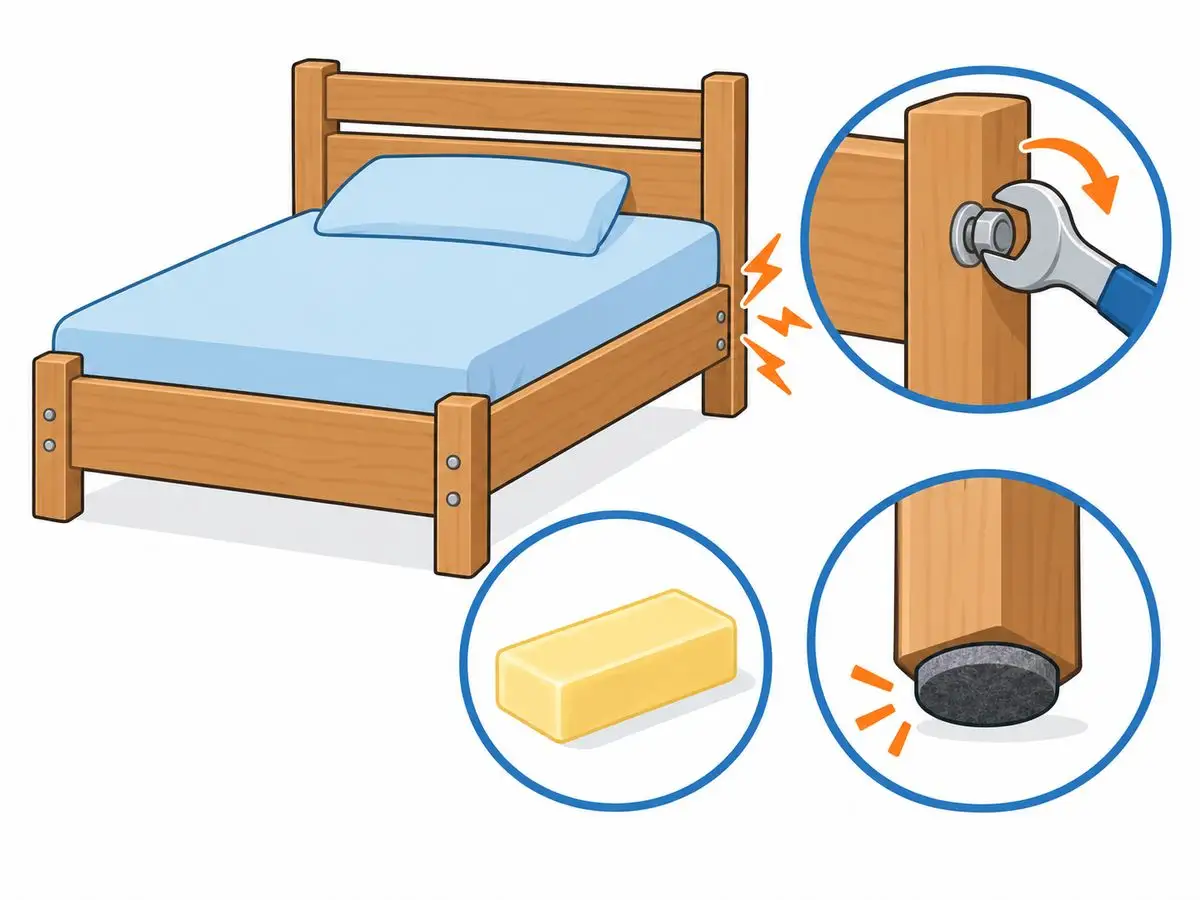
Strip the bed down to the frame. Then sit on one corner and rock gently, then do the same at the middle and at the foot. Have a second person put an ear near the joints while you rock. Squeaks usually come from one of four places: the bolts that join the headboard to the side rails, the hooks where rails meet the footboard, the slats sitting on their ledges, or a center support leg standing on a hard floor.
Tighten everything
Most frames use bolts that work loose after a year or two. Go around the frame with the right hex key or wrench and snug each bolt. Do not crank hard on a wood frame. A quarter turn past snug is enough, and too much can crush the wood around the hole. If a bolt keeps backing off, add a flat washer or a small lock washer under the nut.
Stop metal from singing against metal
Where a steel hook sits in a steel slot, the squeak is friction. Rub a candle or a bar of paraffin on both surfaces and wipe off the extra. Wax lasts longer than spray oil here, and it will not stain bedding. If you want a cushion instead, cut a thin strip of felt or craft foam and stick it where the two parts touch.
Slats that click and creak
Look at where each slat rests on the side rails. If the slats slide a little, they rub. Wrap a bit of felt tape around each end, or push a thin piece of cardboard under them as a shim. If one slat is cracked, replace it. A cracked slat will fail with no warning, and then you are back to a morning without a bed.
Wood joints
On wooden frames, a loose joint can be glued. Take the joint apart if the frame allows it, scrape off old glue, add fresh wood glue, and clamp it overnight. You can use a belt or a rope as a clamp if you do not own clamps. Do not glue joints that are meant to come apart for moving.
Floors and legs
If the sound is a rubbing or tapping, check the feet. Hard feet on a wood floor can chirp when the frame flexes. Little felt furniture pads cure that. Also look at the center support legs under a queen or king frame. They should touch the floor firmly. If one hangs a quarter inch above the floor, shim it.
What to avoid
Do not spray cooking oil on joints. It attracts dust and leaves a stain. Do not skip the mattress removal, because you will miss hidden problems at the slats. Do not keep tightening a bolt that spins freely, since the hole is stripped. Our guide to fixing a stripped screw hole covers wood repair.
Related guides
- How to Remove Water Rings From Wood Furniture (White or Dark)
- How to Fix a Squeaky Cabinet Door: Hinges, Catches and Wood Rub
- How to Fix a Squeaky Door in 10 Minutes
- Squeaky Stair Tread: How to Quiet a Creaking Step
- How to Fix a Squeaky Deck
- How to Fix Squeaky Floors Without Tearing Anything Up
FAQ
Why did the bed start squeaking after I moved it?
Moving loosens bolts. Tighten them all again.
Could it be the box spring?
Yes. Press down on the box spring alone, with the mattress off. If it squeaks, check its wood frame for loose staples or joints.
Is it okay to sleep on a frame that squeaks?
Usually, but a new or louder noise can mean a split rail or slat. Check it.
More from this topic
- How to Remove Water Rings From Wood Furniture: Learn how to remove water rings from wood furniture: tell white rings from dark ones, use gentle heat or a...
- Squeaky Stair Tread: How to Quiet a Creaking Step: A squeaky stair tread is usually wood rubbing on wood. Find the noisy step and fix it from above or below...
- How to Glue Wood With Wood Glue: Learn how to glue wood with wood glue so the joint holds: dry fit it, spread a thin even coat, clamp it...
- How to Apply Polyurethane: How to apply polyurethane smooth and even: thin coats, the right brush, light sanding between, and a dust...
- How to Remove Dents From Wood Trim: How to remove dents from wood trim with steam and a wet cloth: raise the crushed fibers, then sand and finish...
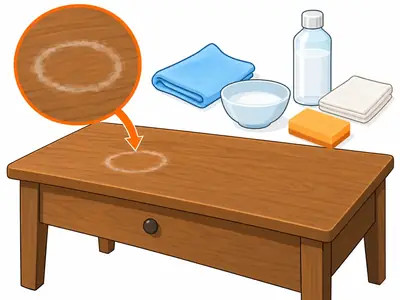 Walls and PaintHow to Remove Water Rings From Wood FurnitureLearn how to remove water rings from wood furniture: tell white rings from dark ones, use gentle heat or a mild abrasive and finish with wax or polish.
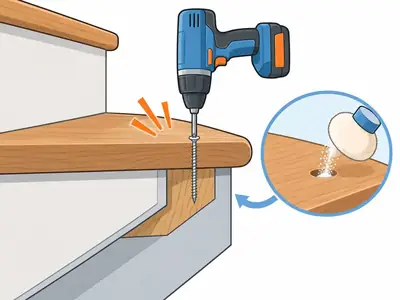 Doors and WindowsSqueaky Stair Tread: How to Quiet a Creaking StepA squeaky stair tread is usually wood rubbing on wood. Find the noisy step and fix it from above or below with screws, glue or small wedges.
 Garage and OutdoorsHow to Glue Wood With Wood GlueLearn how to glue wood with wood glue so the joint holds: dry fit it, spread a thin even coat, clamp it square and let it cure.
 Walls and PaintHow to Apply PolyurethaneHow to apply polyurethane smooth and even: thin coats, the right brush, light sanding between, and a dust free room to dry in.
 Walls and PaintHow to Remove Dents From Wood TrimHow to remove dents from wood trim with steam and a wet cloth: raise the crushed fibers, then sand and finish so the dent disappears.