
Squeaky Stair Tread: How to Quiet a Creaking Step
Part of: Floors, walls and doors
- Difficulty
- Easy to moderate
- Time
- 20 to 40 minutes per step
- Tools
- Drill, trim-head screws or finish nails, wood glue, wood shims, hammer, flashlight, painter's tape
- Call a pro if
- A tread is cracked, a step sags or moves a lot under your weight, or the stringer, the side board that supports the steps, looks split.
In this guide
- Wear protection
A squeaky stair tread is a little like a clock ticking in the night. It tells you which step you used, and who is sneaking to the kitchen. Nearly all squeaks come from the same cause. The tread, the part you step on, moves a hair against the riser, the vertical board, or the stringer. Wood on wood makes noise.
This guide is part of our wider guide to floor care.
Find the right step
Walk up and down the stairs slowly, one step at a time, and put a piece of painter's tape on each squeaky step. Test near the wall edge and the middle. Stand on the squeaky spot and rock. Often the noise is in one corner only. If you have a basement or closet under the stairs, have someone walk the steps while you look and listen from below.
Fix from below if you can reach
Working from underneath is the cleanest because it does not mark the visible step.
1. Look for a gap between the tread and the riser. A flashlight helps.
2. If you see a gap, spread a little wood glue on a thin wood shim and tap it gently into the gap. Do not drive it hard. You want it snug, not forced.
3. Cut off the extra shim with a utility knife after the glue dries.
4. If there is a triangular block at the joint, add a dab of glue and a screw through the block into the tread.
Fix from above when there is no access
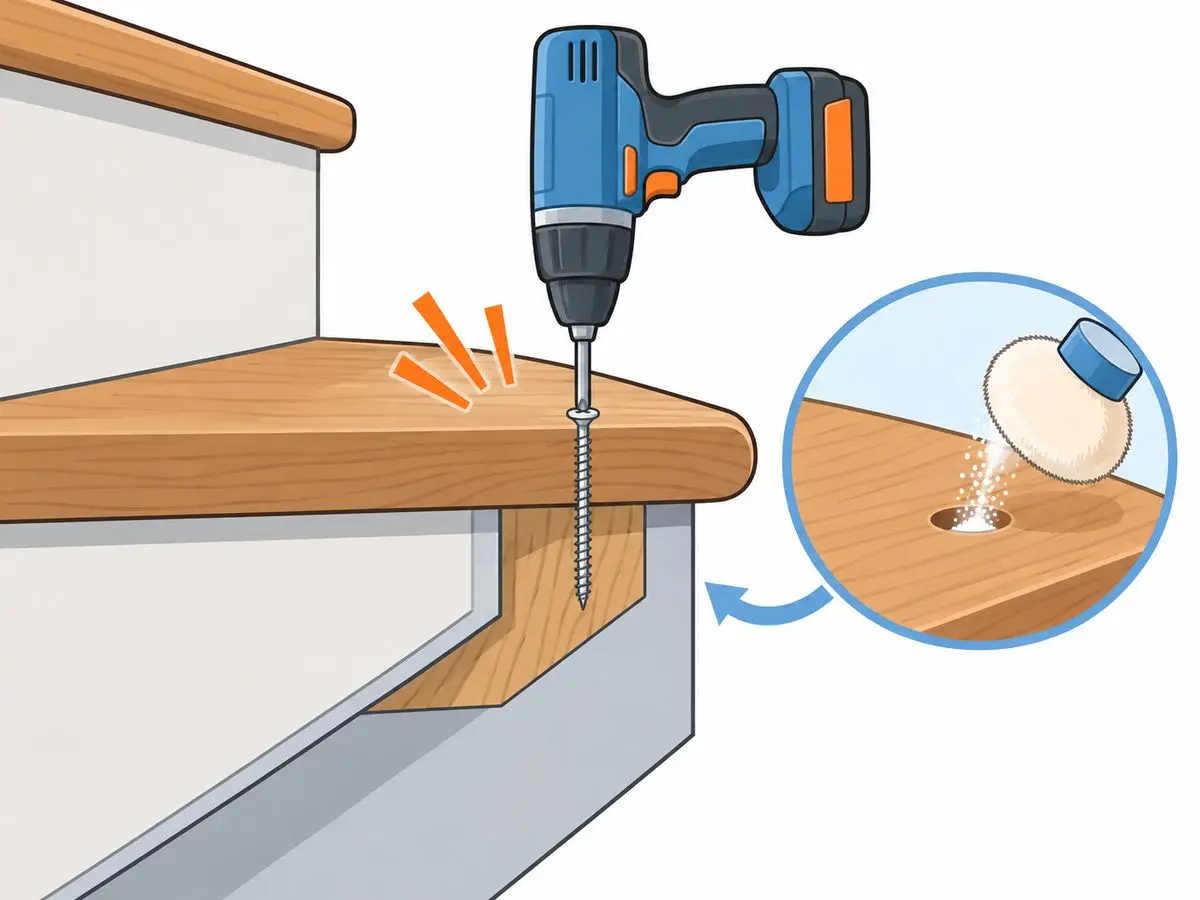
When the stair is closed in, work from the top. Drill a small pilot hole through the tread near the back edge and into the riser below, angled slightly. Drive a trim-head screw or a finishing nail into the hole. Do it in a couple of places along the length, about 8 to 10 inches apart. A countersink bit leaves a tidy hole. Fill the heads with wood filler that matches the stair, and touch up the finish.
Using screws is better than nails because they pull the parts together and do not work loose.
Use a lubricant for small noises
If the noise is a tiny squeak without a visible gap, a light dusting of powdered graphite or talcum powder into the joint can reduce the friction. Wax a candle on the edge of the joint if you can reach. These are temporary, but good for a quick fix.
For carpeted stairs
You can still fix the squeak. Use a stair squeak repair kit that drives a special screw through the carpet and the tread, then snaps off the screw head below the surface. Follow the package. Find the stringer or riser first, so the screw bites into solid wood.
When the squeak is a sign of something else
If a tread flexes noticeably when you step on it, or the squeak comes with a sag, the support may be damaged. Check the stringer from below. If it is cracked, or if you see water stains and soft wood, call a carpenter.
Keep squeaks from coming back
Seasonal changes in humidity make wood expand and shrink. A squeak that returns each winter may need a second fix. Keep the home between about 30 and 50 percent humidity if you can. Check the stairs once a year.
If you have loose rails as well, see our guide to a loose stair handrail. For squeaks in a regular floor, see squeaky floors.
Related guides
- How to Install a Stair Nosing on a Wood or Vinyl Stair
- How to Fix a Squeaky Cabinet Door: Hinges, Catches and Wood Rub
- How to Clean Vinyl Plank Floors and Keep Them Looking New
- How to Fix a Squeaky Door in 10 Minutes
- How to Paint a Stair Riser
FAQ
Why do stairs squeak more in winter?
Dry air shrinks the wood, which opens small gaps that make the boards rub.
Can I use construction adhesive?
Yes, on hidden joints. Use a little and wipe off extra.
Is a squeaky stair dangerous?
Usually not, but a stair that moves or sags is.
More from this topic
- How to Install a Stair Nosing on a Wood or Vinyl Stair: How to install a stair nosing: measure the tread, cut the nosing to fit around the stringer, glue and fasten...
- How to Replace a Stair Tread: How to replace a stair tread: cut the old tread out without wrecking the stringers, fit a new one tight to...
- Squeaky Bed Frame: Find the Noise and Quiet It for Good: A squeaky bed frame is almost always a loose joint or metal rubbing on metal. Here is how to find the exact...
- How to Repair a Wooden Deck Stair: Learn how to repair a wooden deck stair: check the stringers, treads and rail, replace rotted parts, refasten...
- How to Fix a Loose Newel Post Without Rebuilding the Stair: How to fix a loose newel post: find why it moves, tighten or replace the bolt, add blocking and brackets, and...
 Doors and WindowsHow to Install a Stair Nosing on a Wood or Vinyl StairHow to install a stair nosing: measure the tread, cut the nosing to fit around the stringer, glue and fasten it, and finish the edge so it is safe underfoot.
 FloorsHow to Replace a Stair TreadHow to replace a stair tread: cut the old tread out without wrecking the stringers, fit a new one tight to the riser, and fasten it so it stays quiet.
 Walls and PaintSqueaky Bed Frame: Find the Noise and Quiet It for GoodA squeaky bed frame is almost always a loose joint or metal rubbing on metal. Here is how to find the exact spot and quiet it with a few simple supplies.
 Garage and OutdoorsHow to Repair a Wooden Deck StairLearn how to repair a wooden deck stair: check the stringers, treads and rail, replace rotted parts, refasten loose steps and make the stair safe again.
 Doors and WindowsHow to Fix a Loose Newel Post Without Rebuilding the StairHow to fix a loose newel post: find why it moves, tighten or replace the bolt, add blocking and brackets, and check the handrail so the stair is safe again.