
How to Fix a Wobbly Handrail on Outdoor Steps
Part of: Outdoors and garage
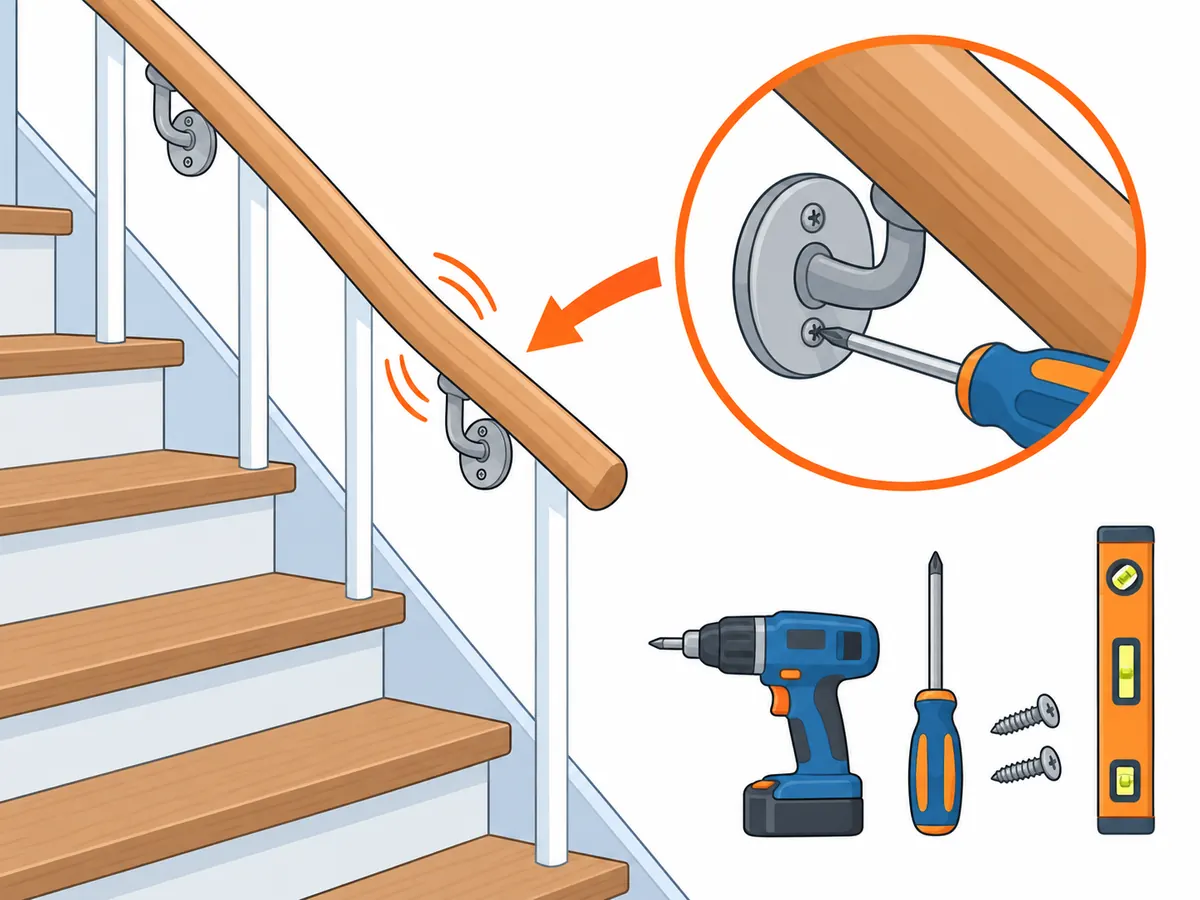
- Difficulty
- Easy to medium
- Time
- 30 to 90 minutes
- Tools
- Drill and bits, screwdrivers, socket set, level, tape measure, exterior screws or lag screws, wood filler, wood glue, hammer, awl or screwdriver for testing wood
- Call a pro if
- the posts are rotted or loose in the concrete, the steps are crumbling or the rail is on a high or long staircase
In this guide
- Ladder safety
- Wear protection
- Call 811 before digging
A handrail that moves when you grab it is a safety risk. The rail is there to catch you when you slip, and a loose one can fail at the wrong moment. Most wobbly handrail problems come from loose screws, worn brackets or rotted wood, and can be repaired in under an hour. This guide shows how to find the cause and fix it.
This guide is part of our wider guide to floor care.
Test the rail
1. Push and pull the rail in several places. Note where it moves.
2. Check the posts. If the post moves at its base, the problem is in the footing or the connection.
3. Check the brackets. Look at where the rail meets the wall or the post.
4. Poke the wood with a screwdriver in joints and at the bottom of posts. If it sinks in, the wood is rotted.
5. Look for rust and loose bolts on metal rails.
Step by step: tighten the connections
1. Tighten all visible screws and bolts. Use the right size driver, so you do not strip the heads.
2. Fix stripped screw holes. Remove the screw, fill the hole with wood glue and a few toothpicks or a dowel, and let it dry. Trim the extra, and drive the screw again. Or use a longer, thicker exterior screw that bites into solid wood.
3. Check the rail brackets on a wall. If they are loose in brick or concrete, use new masonry anchors. In wood, make sure the screws go into a stud or solid framing.
4. Add a metal bracket or an angle brace at loose joints. Use exterior rated hardware.
5. Test again by pushing hard on the rail.
Repair a loose post
1. Check how the post is attached. It may be bolted to the side of the step or the deck, set in concrete or fixed to a plate on the ground.
2. Tighten the bolts that hold the post. If a bolt is loose in the wood, replace it with a longer bolt and add washers.
3. Add blocking behind the post if the frame is hollow.
4. For a post set in concrete, if the concrete is cracked or loose, the post may need to be reset. This is a larger job.
Repair rot
Small areas of soft wood can be cut out and filled with a wood epoxy made for exterior repairs. Remove the rotted wood back to solid material, treat the area with a wood preservative and fill it as the label says. If the rot is deep or in a post or a structural part, replace the part. Check the steps, too. See Wobbly deck railing: how to fix for deck railing repairs.
Signs that point to each cause
A rail that moves at the base of the post has a loose connection or rot. A rail that moves in the middle has loose rail to post joints. A rail that pulls away from a wall has bad anchors. A rail that creaks may have rusty fasteners. A rail on a metal frame that rattles may have loose bolts. A rail that bends under weight may be too weak and needs replacing.
Check the height and spacing
A rail should be about 34 to 38 inches above the step edges, though local codes vary. Gaps between balusters should be small enough so that a child cannot pass through, typically under four inches. If your rail does not meet current code, consider upgrading it. Check with your local building department.
Seal and protect
After repairs, seal or paint wood to protect it from rain. Use a stain or a sealer made for outdoor use. See How to seal a wood deck. Touch up metal with rust-resistant paint after you wire brush the rust.
Prevention
Check the rail every spring and fall. Tighten fasteners. Seal the wood. Keep soil and plants away from the posts. Clear snow and ice carefully.
When to replace the whole rail
If the rail is bent, cracked or has several rotted parts, replacing it is safer than patching it. Measure the length and the angle of the steps, and choose a rail that suits the material of the steps. Brick and concrete steps need anchors made for masonry. Use exterior rated, rust resistant hardware, and ask a pro to check any rail that guards a tall drop.
Related guides
- How to Repair a Cracked Concrete Step: Cracks and Chips
- How to Fix a Squeaky Cabinet Door: Hinges, Catches and Wood Rub
- How to Fix a Squeaky Door in 10 Minutes
- Loose Stair Handrail: How to Make It Solid Again
FAQ
Why is my railing loose?
Fasteners loosen, and wood rots with moisture.
Can I use nails?
Use screws or bolts, since they hold better.
What height should a handrail be?
Often 34 to 38 inches, but check local code.
When should I replace it?
When posts or rails are rotted, bent or cracked.
More from this topic
- How to Fix a Loose Newel Post Without Rebuilding the Stair: How to fix a loose newel post: find why it moves, tighten or replace the bolt, add blocking and brackets, and...
- How to Repair a Loose Brick on a Step: Learn how to repair a loose brick on a step: chip out the old mortar, reset the brick level with fresh mortar...
- Wobbly Deck Railing: How to Fix It Safely: Wobbly deck railing can fail under weight. Learn how to find loose posts, tighten bolts, add blocking and...
- How to Fix a Loose Baluster: How to fix a loose baluster: find out why it worked free, tighten or reset the joint, and make the railing...
- Loose Stair Handrail: How to Make It Solid Again: A loose stair handrail is a fall risk. Find the studs, replace weak screws with longer ones and learn when a...
 Doors and WindowsHow to Fix a Loose Newel Post Without Rebuilding the StairHow to fix a loose newel post: find why it moves, tighten or replace the bolt, add blocking and brackets, and check the handrail so the stair is safe again.
 Garage and OutdoorsHow to Repair a Loose Brick on a StepLearn how to repair a loose brick on a step: chip out the old mortar, reset the brick level with fresh mortar and repoint the joint so it stays put.
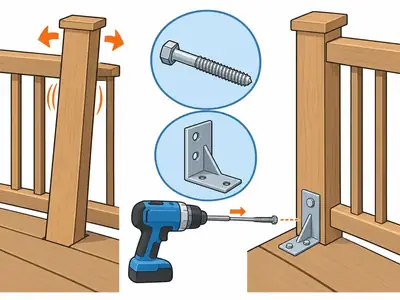 Garage and OutdoorsWobbly Deck Railing: How to Fix It SafelyWobbly deck railing can fail under weight. Learn how to find loose posts, tighten bolts, add blocking and when to call a pro. Steps and safety.
 SafetyHow to Fix a Loose BalusterHow to fix a loose baluster: find out why it worked free, tighten or reset the joint, and make the railing solid again without replacing the whole run.
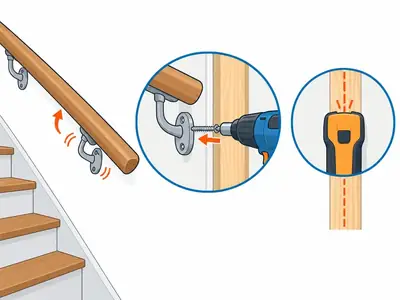 Doors and WindowsLoose Stair Handrail: How to Make It Solid AgainA loose stair handrail is a fall risk. Find the studs, replace weak screws with longer ones and learn when a railing needs a carpenter.