
How to Fix a Cabinet Drawer Front That Is Loose or Crooked
Part of: Kitchen · Also in: The Complete Guide to Kitchen and Appliance Care at Home
- Difficulty
- Easy
- Time
- 20 to 60 minutes per drawer
- Tools
- Screwdriver, clamp or a strap, wood glue, wooden toothpicks, drill and bits, a straight edge, a small square, felt bumpers, a helper
- Call a pro if
- The drawer box itself is split or falling apart, the front is delaminating, or the cabinet face frame is cracked, since those need glue-up or replacement rather than adjustment.
In this guide
- Wear protection
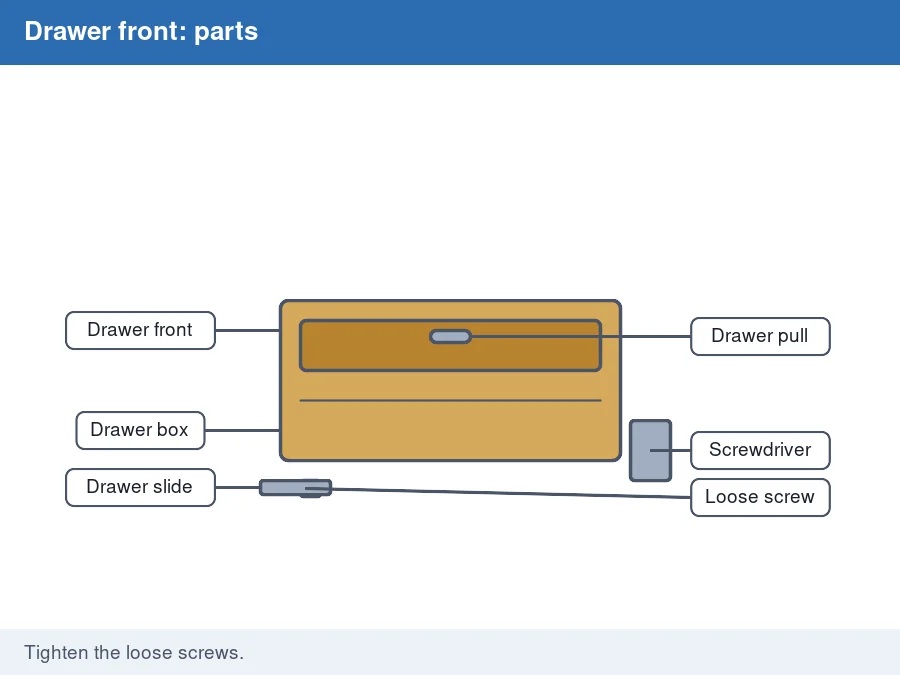
A drawer front that has come loose or gone crooked is one of the most common kitchen annoyances. It usually starts with one screw working loose, then the front pulls at an angle, the drawer binds, and eventually the screws tear out of the box. The fix is quick if you catch it early. Here is how to fix a cabinet drawer front.
This guide is part of our wider guide to kitchen cabinets, countertops and storage.
1. Empty the drawer and take it out
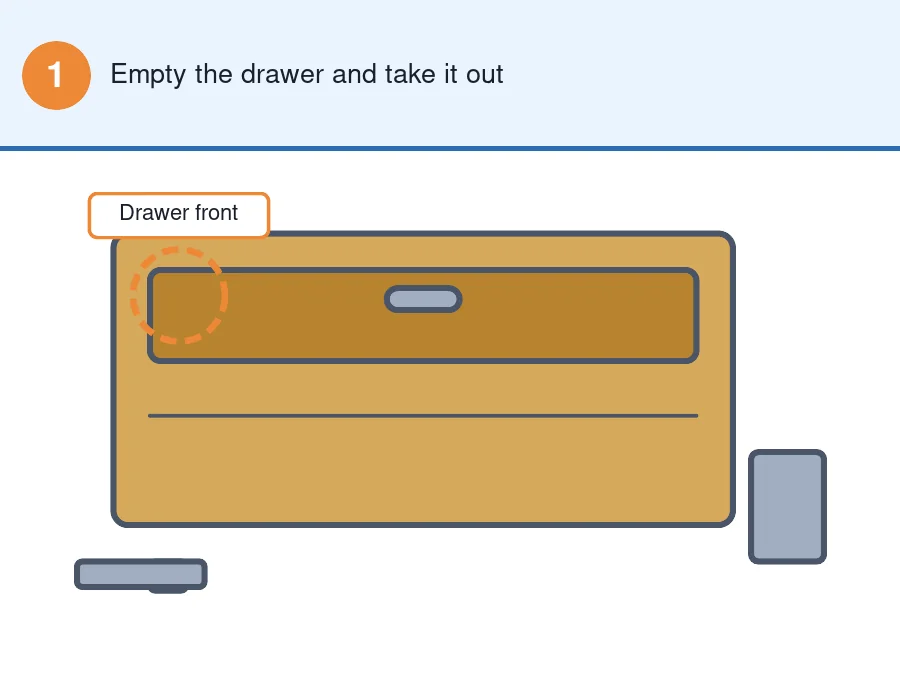
Take everything out, pull the drawer to its stop, and release it from the slides. On side-mount slides, press the levers; on undermount slides, squeeze the clips under the box.
Set it on a flat surface and look at the front from above and from the side. A front that is crooked is obvious from above; a front that has separated shows a gap at one corner.
2. Find the loose screws
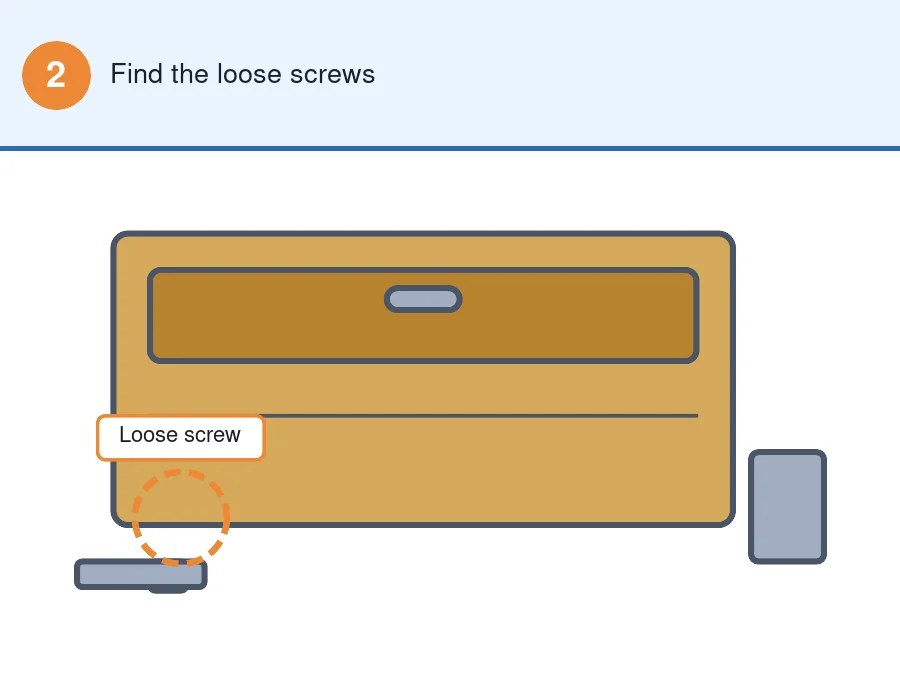
Turn the drawer over and look at the inside of the front, where the screws pass from the box into the front panel. Loose screws are usually obvious, and a screw that spins means the hole is stripped.
Check the screws from inside the box, not just the ones at the front, since some designs fasten from the inside.
3. Tighten or reset the screws
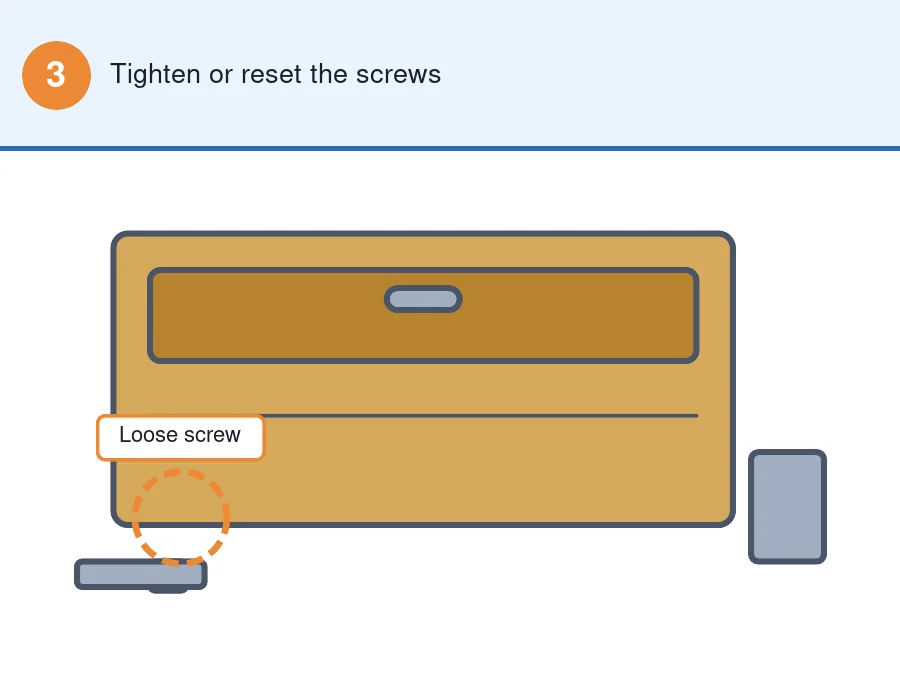
1. Tighten every screw that holds the front, working evenly.
2. If a screw spins, take it out, clean the hole, and push in two glued toothpicks.
3. Snap them off, let the glue set for an hour, then refit the screw.
4. For a badly enlarged hole, drill it out, glue in a short dowel, then pilot drill and refit.
This is the same repair as a stripped hinge screw, and it lasts.
4. Realign the front
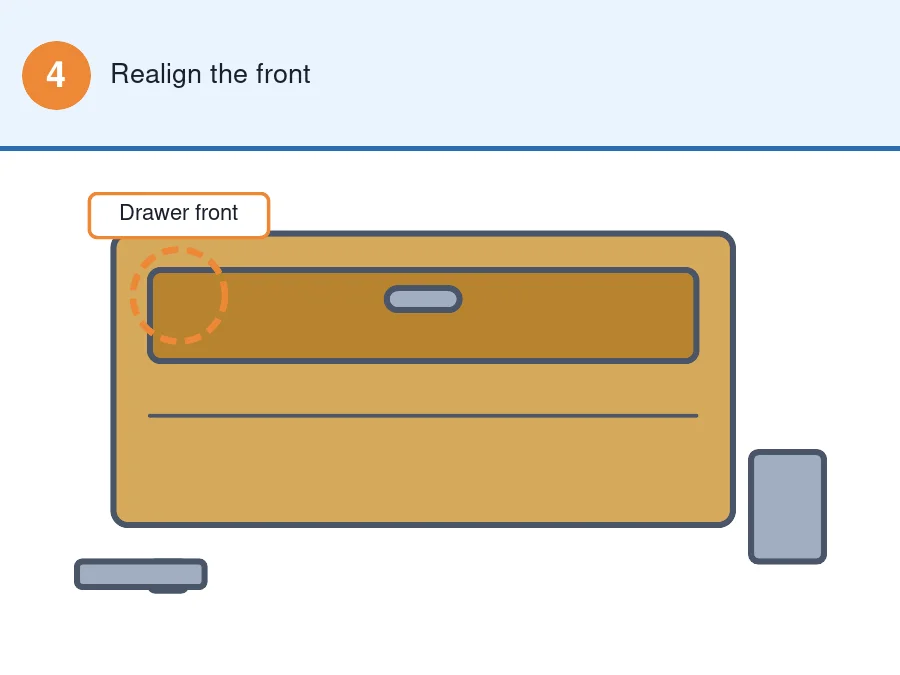
If the front is tight but crooked:
1. Loosen the screws slightly, so the front can move.
2. Align the front with the drawer above or below, using a straight edge across the cabinet face.
3. Check the gap at each side is even.
4. Tighten the screws, alternating to keep it square.
5. Refit the drawer and check the alignment with it closed.
Some drawer fronts have slotted holes or adjustable clips that allow a few millimeters of movement. Use them before drilling anything new.
5. Deal with a separated joint
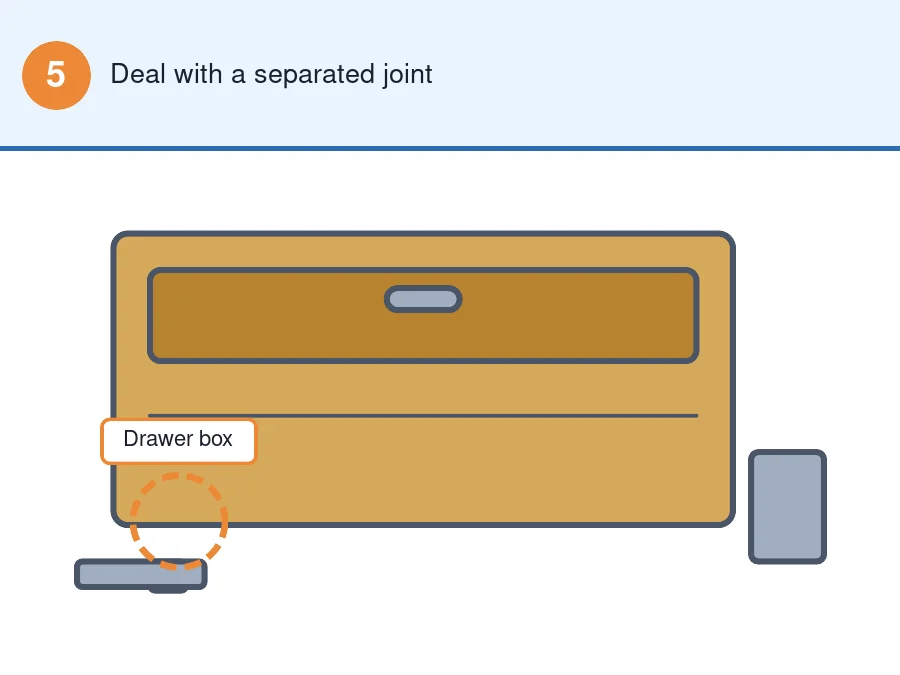
If the front has pulled away from the box at one corner:
1. Clean the old glue out of the joint as far as you can.
2. Apply wood glue and work it into the joint.
3. Clamp the joint, or wrap a strap around the drawer to pull it square.
4. Check the drawer is square before the glue sets, using the diagonals.
5. Leave it clamped for the full glue cure time.
A drawer box that is out of square will bind on the slides no matter how the front is aligned.
6. Fix a front that has torn out
If the screws have torn through the front panel, the holes are too big for toothpicks.
1. Fill the holes with a two-part wood filler or epoxy.
2. Let it harden fully.
3. Drill new pilot holes.
4. Refit the screws, or move the fixing points slightly if there is room.
For a drawer front with no material left to hold a screw, a small metal repair plate or a new front is the practical answer.
7. Check the slides
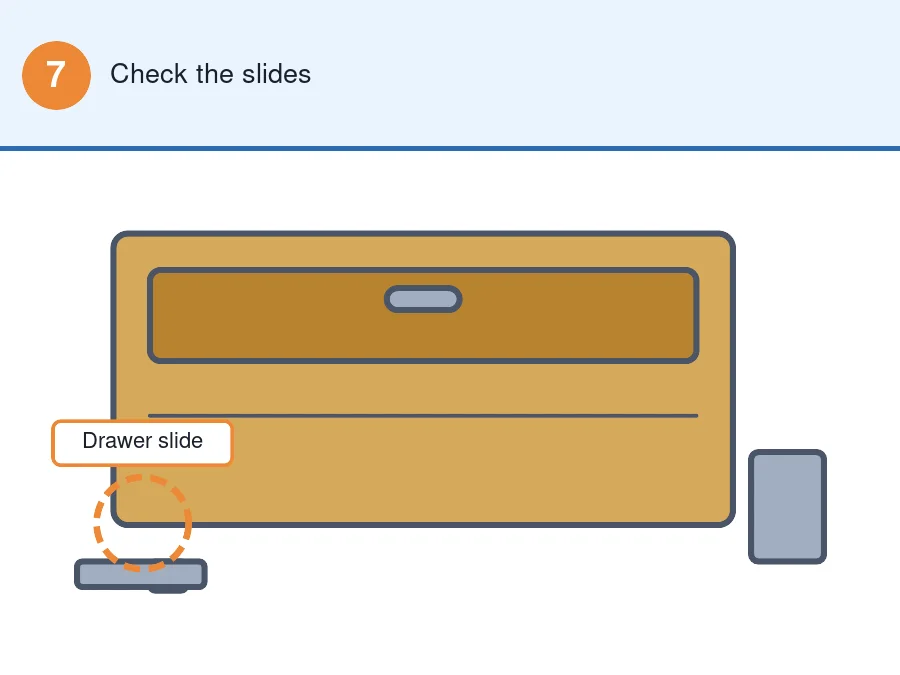
A drawer front that keeps coming loose may be fighting the slides. Check that:
- Both slides are at the same height.
- The drawer box sits square in the opening.
- The slides are not worn or bent.
Our guide on fixing a kitchen drawer that sticks covers the slide adjustments.
8. Refit and test
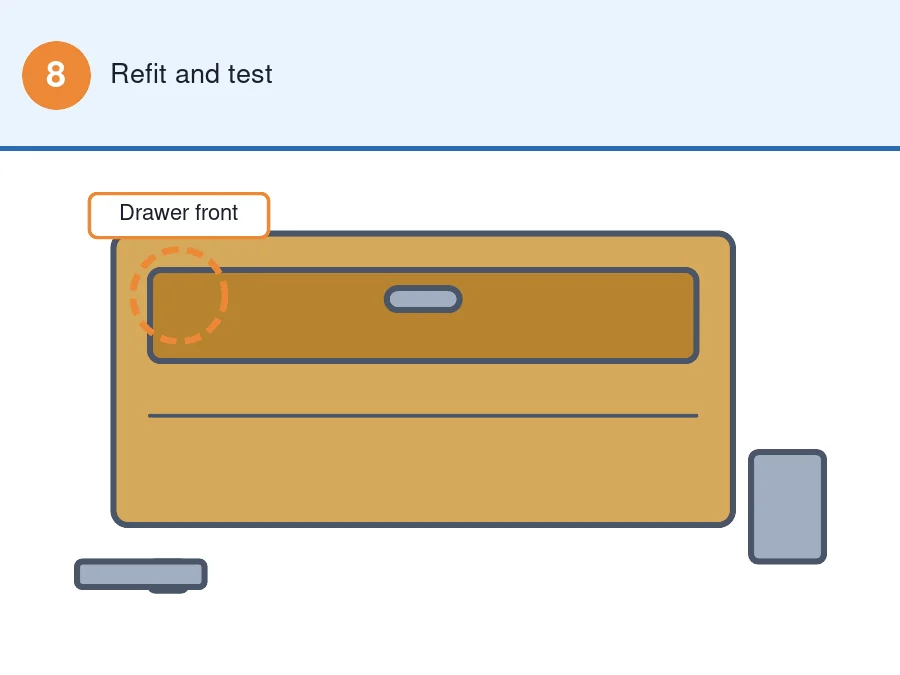
Slide the drawer in and out several times and watch the front. It should run parallel to the cabinet face and close flush. If it rubs, adjust the slides or the front position.
Add felt bumpers on the drawer front where it meets the cabinet, which stops the bang and protects the finish.
Common mistakes
- Tightening a spinning screw without filling the hole.
- Aligning a front with the drawer above when that one is also crooked; use a straight edge across several.
- Gluing a joint without checking the drawer is square.
- Overtightening screws and crushing the front panel.
- Ignoring worn slides that keep pulling the front loose.
Related guides
- How to Fix a Cabinet Shelf Bracket That Came Loose or Broke
- How to Fix a Cabinet Hinge: Loose, Sagging and Stripped Screw Holes
- How to Fix Loose Cabinet Door: Tighten Hinges and Realign
- How to Fix a Sagging Cabinet Shelf
FAQ
Why does my drawer front keep coming loose?
Usually one screw has stripped its hole, so the load shifts to the others and they loosen in turn. Fix the stripped hole and tighten the rest evenly.
Can I fix a drawer front without taking the drawer out?
Sometimes, for a simple tighten. For alignment or a stripped screw, taking it out is faster and gives a better result.
How do I align a drawer front with the others?
Loosen the screws slightly, use a straight edge across the cabinet face, set the gaps even and tighten in a cross pattern.
What if the drawer box is falling apart?
Glue and clamp it, checking it is square. If the joints are too damaged, a new drawer box or a new drawer is the practical fix.
More from this topic
- How to Fix a Cabinet Shelf Bracket That Came Loose or Broke: Learn how to fix a cabinet shelf bracket: find why it failed, repair a stripped hole, replace a broken pin or...
- How to Fix a Kitchen Drawer That Sticks: How to fix a kitchen drawer that sticks: empty it, find the obstruction, square the box, adjust or replace...
- How to Fix a Kitchen Toe kick That Has Come Away: Learn how to fix a kitchen toe kick that has come away: refit the clips, straighten a bowed board, deal with...
- How to Replace a Drawer Slide: Learn how to replace a drawer slide: match the length and type, mount the cabinet member level, and set the...
- How to Fix a Cabinet Door That Rubs: Learn how to fix a cabinet door that rubs: find the contact point, adjust the hinge, sand or seal a swollen...
 KitchenHow to Fix a Cabinet Shelf Bracket That Came Loose or BrokeLearn how to fix a cabinet shelf bracket: find why it failed, repair a stripped hole, replace a broken pin or clip, and add support so the shelf stops sagging.
 KitchenHow to Fix a Kitchen Drawer That SticksHow to fix a kitchen drawer that sticks: empty it, find the obstruction, square the box, adjust or replace the slides, treat swollen runners.
 KitchenHow to Fix a Kitchen Toe kick That Has Come AwayLearn how to fix a kitchen toe kick that has come away: refit the clips, straighten a bowed board, deal with an uneven floor and cut around pipes cleanly.
 KitchenHow to Replace a Drawer SlideLearn how to replace a drawer slide: match the length and type, mount the cabinet member level, and set the drawer member so it closes flush.
 KitchenHow to Fix a Cabinet Door That RubsLearn how to fix a cabinet door that rubs: find the contact point, adjust the hinge, sand or seal a swollen edge, and correct a cabinet that is out of square.