
How to Install a Door Stop Without Damaging the Door
Part of: Floors, walls and doors
- Difficulty
- Easy
- Time
- 15 to 30 minutes
- Tools
- Screwdriver, drill and bits, pencil, tape measure, door stop of choice, wall anchors if needed, vacuum
- Call a pro if
- The door swings so far that it damages the frame or the hinges, since that is an alignment problem rather than a missing stop.
In this guide
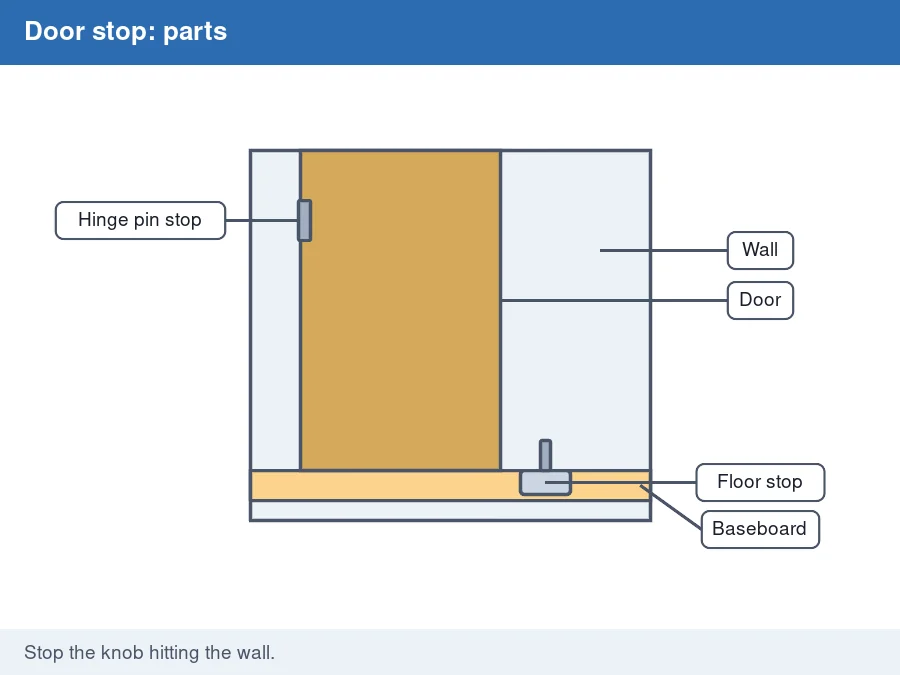
A door without a stop eventually puts its handle through the drywall. A door stop is a cheap fitting that prevents that, and it takes minutes to install. The only real decision is which type suits the door. Here is how to install a door stop.
1. Choose the type
- Hinge pin stop: fits over the hinge pin, no drilling, adjustable, ideal for most interior doors.
- Baseboard board stop: screws to the baseboard, protects the wall, good where the door opens against a wall.
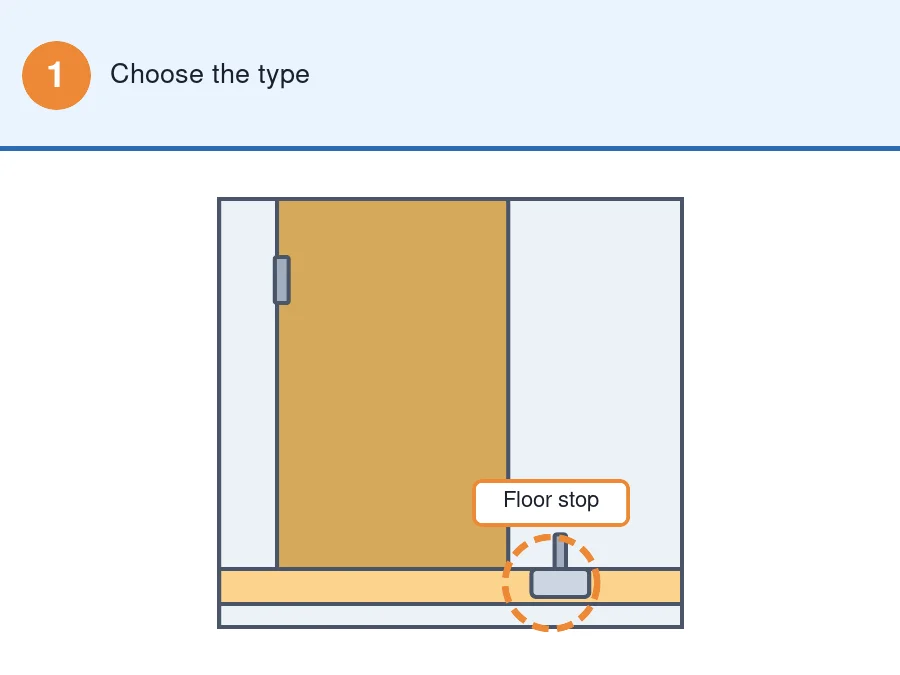
- Floor stop: screws into the floor, good for heavy doors and where the wall is tiled or delicate.
- Wall or door-mounted bumper: a small rubber buffer, simplest of all but least adjustable.
- Overhead stay: holds the door open, useful on a door that swings shut.
2. Position it correctly
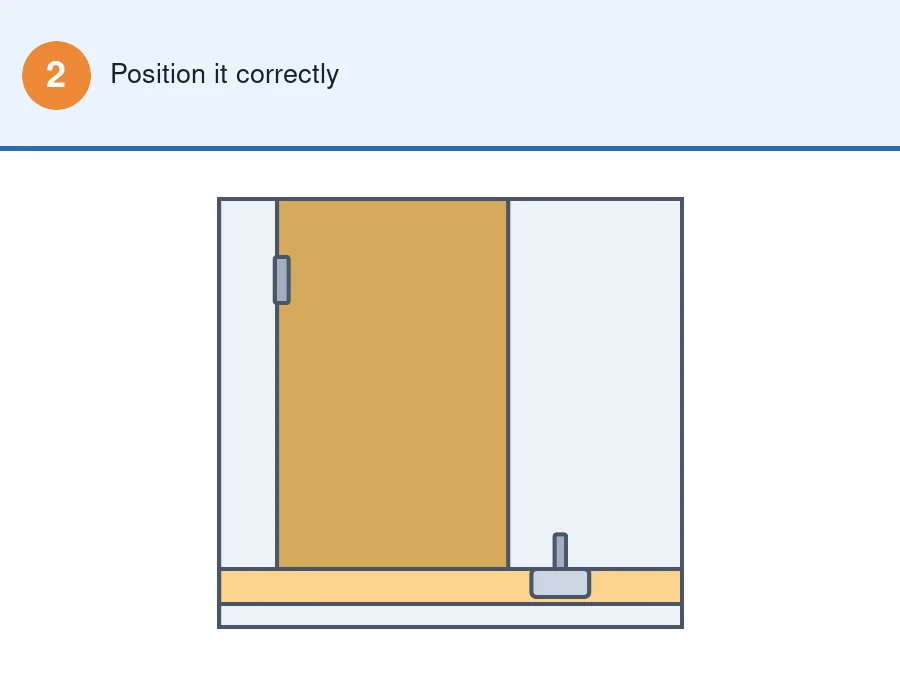
1. Open the door to the angle you want it to stop at, usually about 90 degrees or just short of the wall.
2. Mark where the door edge meets the floor or the baseboard.
3. For a floor stop, place it so the door face touches the bumper, not the handle.
4. For a baseboard stop, mark at a height where the door will hit the bumper squarely.
5. Check the stop does not foul a rug, a threshold or a cable.
3. Fit a hinge pin stop
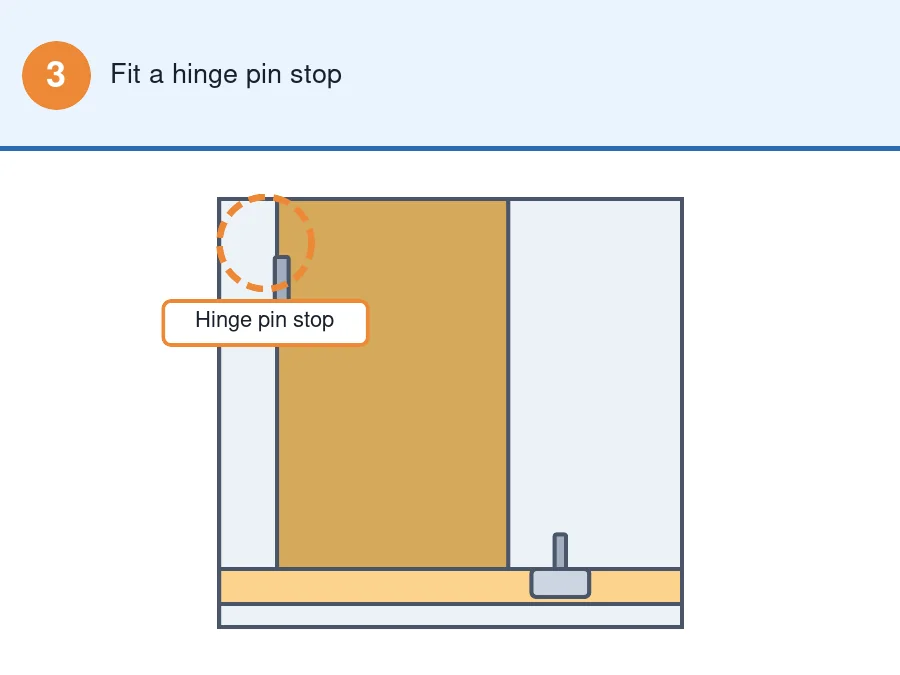
1. Tap the hinge pin up and out of the top hinge.
2. Slide the stop over the pin.
3. Refit the pin through the stop.
4. Adjust the angle with the screw on the stop, and test.
This is the easiest type and leaves no holes. It works on standard loose pin hinges; check the pin diameter matches.
4. Fit a baseboard or wall stop
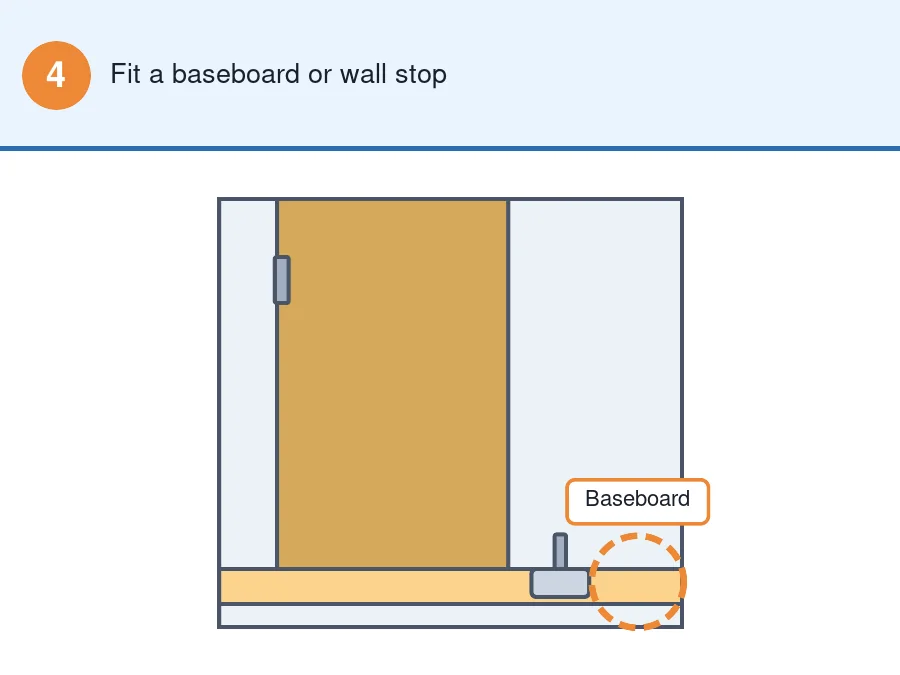
1. Hold the stop against the baseboard at the marked height.
2. Mark the screw holes with a pencil.
3. Drill pilot holes, and use wall anchors if the baseboard is thin or hollow.
4. Screw the stop in place.
5. Test the door; adjust the bumper length so the door stops before the wall.
5. Fit a floor stop
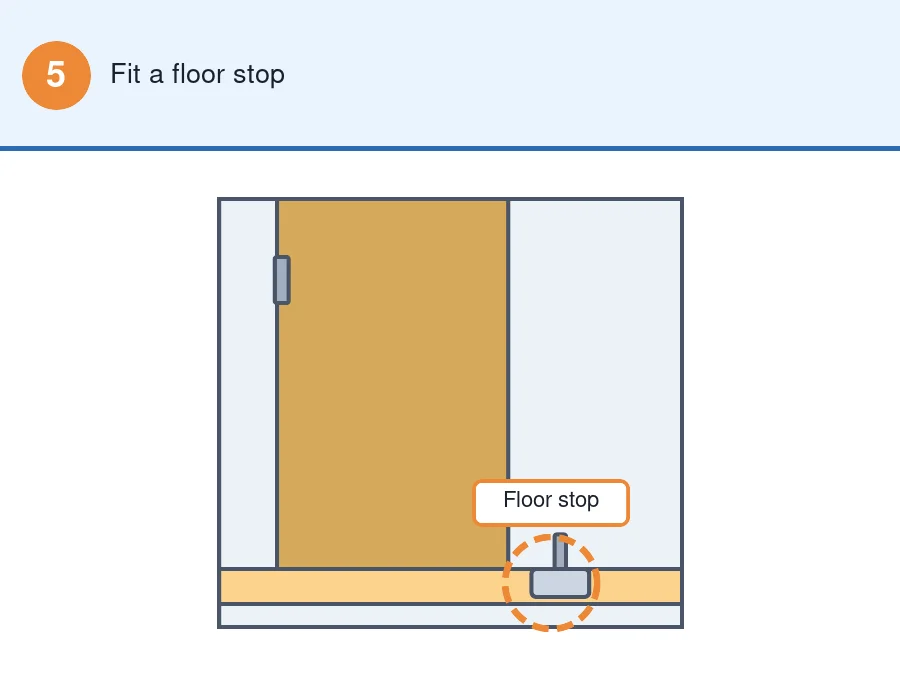
1. Mark the position on the floor.
2. Check there is no pipe or cable beneath, especially underfloor heating.
3. Drill and fit a plug if the floor is tile or concrete.
4. Screw the stop down, or use an adhesive pad type on a hard floor.
5. Test the swing and adjust.
Our guide on fixing a door that rubs the frame covers what to do if the door still catches.
6. Protect the wall as well
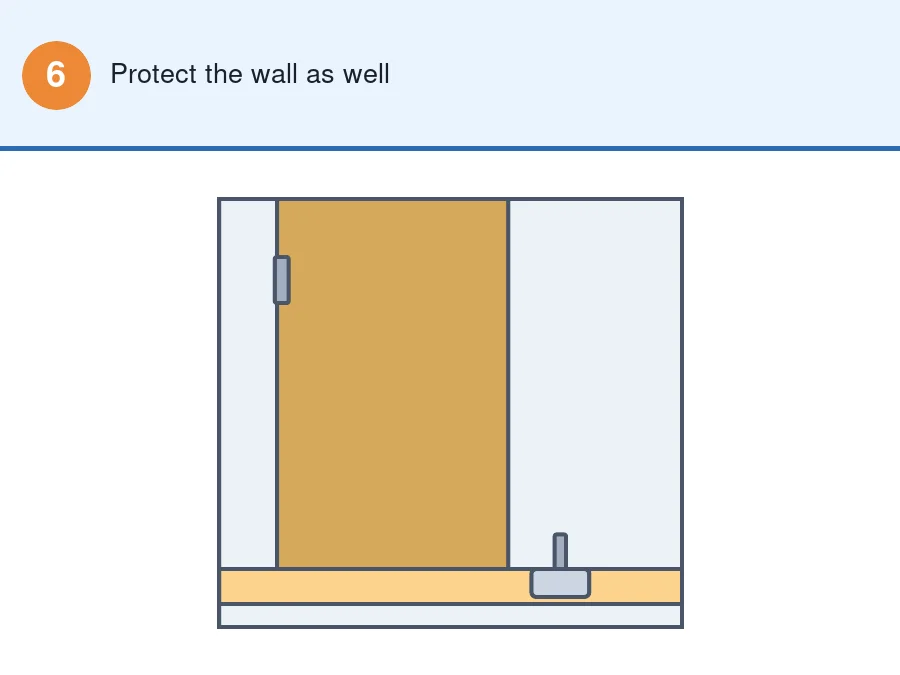
- A door stop stops the door, but a handle can still mark the wall.
- Fit a small wall buffer where the handle lands.
- On a hollow drywall wall, a self-adhesive buffer spreads the load.
- In a bathroom, use a stop with a rubber bumper that does not rust.
7. Check the door does not strain the hinges
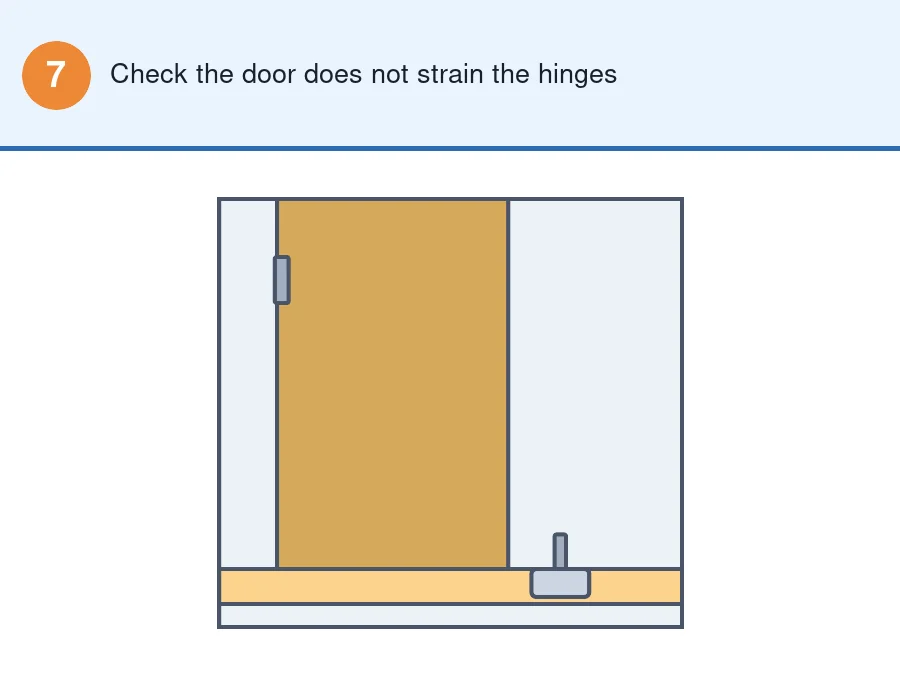
A door that swings past 90 degrees puts load on the hinges.
1. Open the door fully and watch the top hinge.
2. If the hinge plates lift or the door drops, fit the stop earlier in the swing.
3. On a heavy door, use a floor stop rather than a hinge stop.
8. Make it last
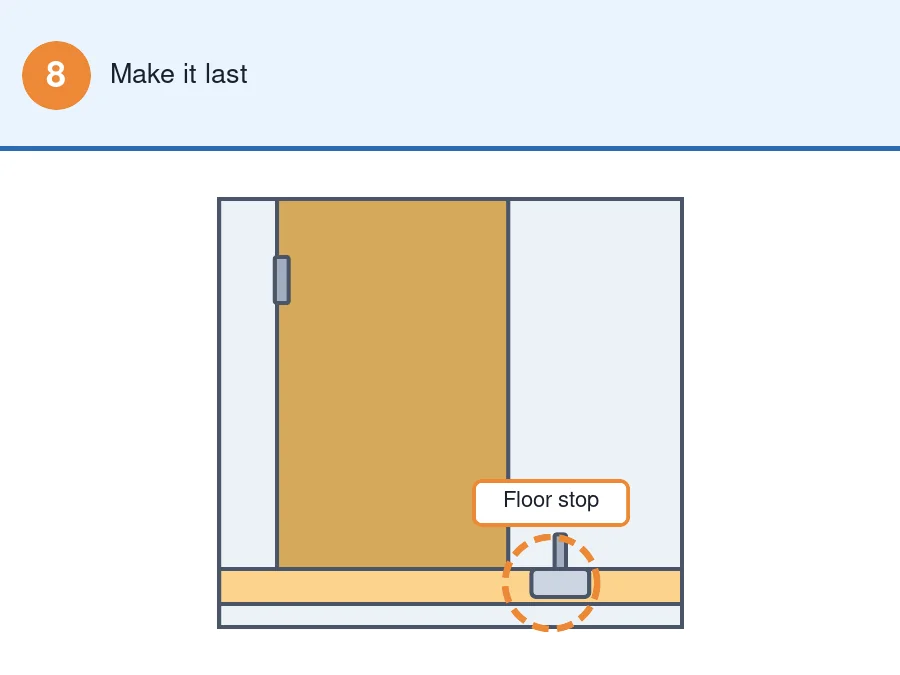
- Check the screws every few months; a loose stop stops working.
- Replace a worn rubber bumper rather than the whole stop.
- Keep the floor clear around a floor stop so nobody trips.
- Do not fit a stop where a child could catch a finger between door and stop.
Common mistakes
- Fitting the stop so the door hits the handle first.
- Drilling into a pipe or cable behind the baseboard.
- Putting a floor stop in a walkway.
- Using a hinge stop on a hinge type it does not fit.
- Setting the stop so the door cannot open fully to the wall where that is needed.
Related guides
- How to Remove Old Caulk Without Damaging the Surface
- How to Replace a Door Hinge Without Taking the Door Off Its Frame
- How to Remove a Door
- How to Install a Storm Door
- How to Stop a Door From Slamming or Banging
FAQ
What is the easiest door stop to install?
A hinge pin stop. It needs no drilling and fits in a minute.
Where should a door stop be positioned?
Where the door edge meets the floor or wall at the angle you want, so the door face hits the bumper.
Will a door stop damage my floor?
A screw-fixed floor stop leaves small holes. An adhesive pad type leaves none but is less secure.
Can I fit a door stop on a tiled floor?
Yes, with a suitable drill bit and plug, or with an adhesive type to avoid drilling.
More from this topic
- How to Install a Kick Plate on a Door: Learn how to install a kick plate on a door at the right height, with the screws, template and edge clearance...
- How to Install a Door Sweep to Stop Drafts, Water and Pests: Learn how to install a door sweep: measure the gap, choose the right type, cut it to fit, fix it to the door...
- How to Replace a Door Hinge: How to replace a door hinge: match the size and radius, support the door, swap one hinge at a time, and fix...
- How to Stop a Bathroom Door From Swinging Shut: Learn how to stop a bathroom door from swinging shut: check the frame for plumb, adjust the top hinge, free...
- How to Install a Mail Slot: How to install a mail slot in a front door or wall: cut the opening clean, fit the sleeve, seal it, and keep...
 Doors and WindowsHow to Install a Kick Plate on a DoorLearn how to install a kick plate on a door at the right height, with the screws, template and edge clearance that keep it flat and clean.
 Doors and WindowsHow to Install a Door Sweep to Stop Drafts, Water and PestsLearn how to install a door sweep: measure the gap, choose the right type, cut it to fit, fix it to the door without blocking the swing and seal the ends.
 Doors and WindowsHow to Replace a Door HingeHow to replace a door hinge: match the size and radius, support the door, swap one hinge at a time, and fix stripped screw holes so the new hinge holds tight.
 Doors and WindowsHow to Stop a Bathroom Door From Swinging ShutLearn how to stop a bathroom door from swinging shut: check the frame for plumb, adjust the top hinge, free stiff hinges and add a hold-open that suits it.
 Doors and WindowsHow to Install a Mail SlotHow to install a mail slot in a front door or wall: cut the opening clean, fit the sleeve, seal it, and keep the flap swinging freely.