
Window Condensation: Why Your Windows Sweat and What to Do
Part of: Floors, walls and doors · Also in: The Complete Guide to Doors and Windows: Repairs at Home
- Difficulty
- Easy
- Time
- 15 minutes to start
- Tools
- Hygrometer, dehumidifier if needed, microfiber cloth, window cleaner, weatherstripping, towel
- Call a pro if
- Moisture appears between the glass panes, you see mold on the frames, the wood or drywall around the window is damp or stained, or humidity stays high even with fans.
In this guide
- Wear protection
- Chemical safety
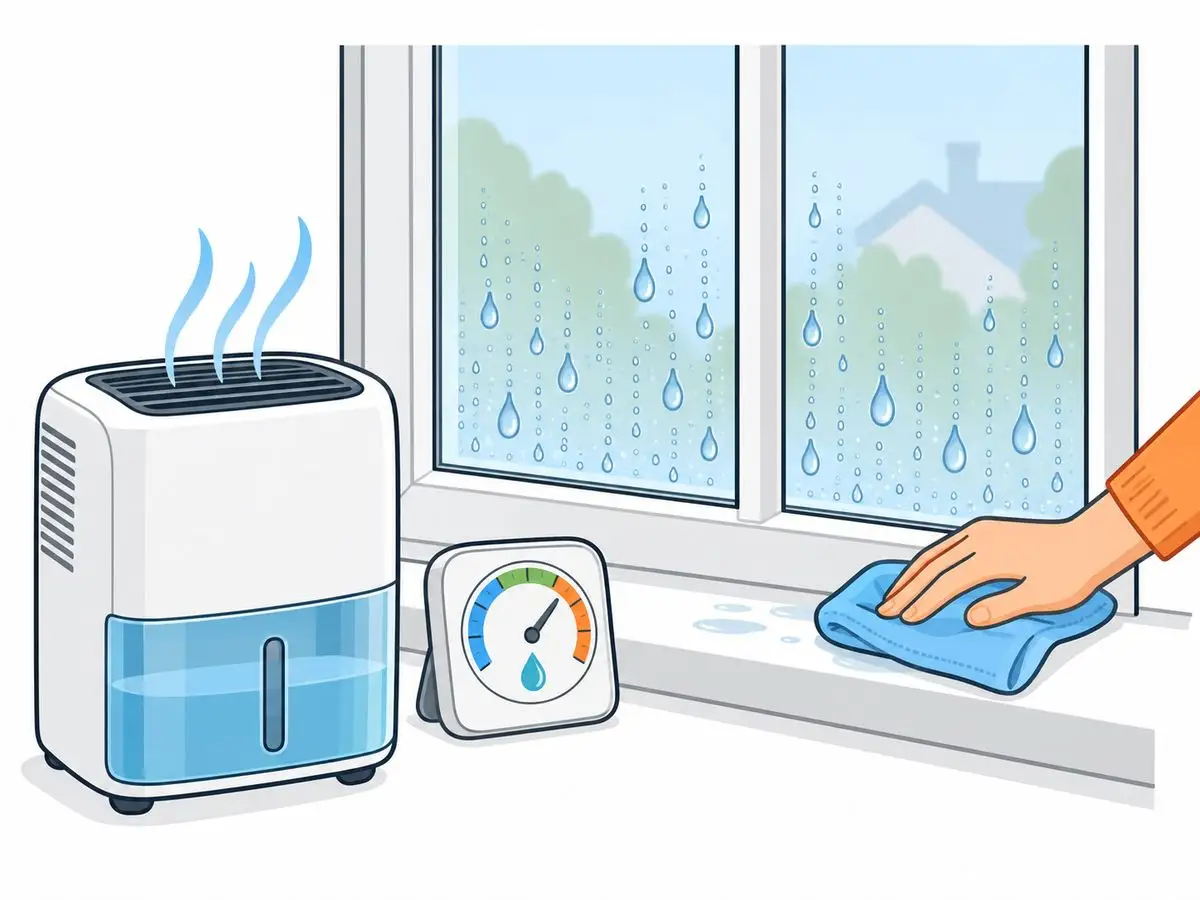
On a cold morning you wake up and find the windows wet. Droplets slide down the glass and pool on the sill. This is window condensation, and it is more of a clue than a defect. It tells you that the air in your home holds a lot of moisture and the glass is cold enough to turn it into water.
This guide is part of our wider guide to doors and windows.
Where is the moisture?
First, find out which side of the glass is wet.
- On the inside surface: This is normal in cold weather if the room is humid. The fix is to lower the humidity or warm the glass.
- On the outside surface: This happens on mild, humid nights, and it is a sign your windows are doing a good job of keeping the glass cool. It is not a problem.
- Between the panes: The seal on a double-pane window has failed, and moist air has leaked in. The window will not fix itself. It needs a repair or replacement of the glass unit.
Measure the humidity
A small hygrometer from a hardware store shows the relative humidity in the room. For most homes, 30 to 50 percent is a comfortable range in winter. In very cold weather, you may need to be near the lower end. If the reading is above 50 percent and the glass is fogged, the air is too wet.
Lower the humidity
- Run bathroom and kitchen fans while you shower and cook, and for a while after. See our guide to a bathroom fan that is not working or very loud.
- Vent the clothes dryer outside, and do not dry laundry indoors in a closed room.
- Cover pots when you cook.
- Use a dehumidifier in a damp room or basement.
- Fix leaks and wet spots. Moisture from a basement or crawl space can raise the humidity of the whole house.
- Move houseplants away from windows or reduce watering a little in winter.
Warm the glass
Keep curtains and blinds open during the day so warm air can reach the glass. Heavy drapes trap cold air behind them. A little air movement from a ceiling fan on low also helps. A window insulation film can raise the temperature of the inside surface. See how to seal a drafty window for sealing the edges.
Wipe and dry
Wipe condensation off the glass and frames each morning with a dry microfiber cloth. Wet frames and sills can rot or grow mold. If the sill is wood, check the paint for peeling or dark spots.
Check for mold
If you see dark spots on the frames or the caulk, clean them with soap and water, and let the area dry. For more on mold, see the EPA guide at EPA mold and moisture guide. If mold keeps coming back, look for the moisture source.
When to call a pro
If you have fogging between panes, a window with a failed seal can often be fixed by replacing the glass unit, and the rest of the window stays. A window company can tell you. If wood around the window is soft, a carpenter should look.
A quick daily routine
You do not need to do much each day. Open the blinds in the morning. Run the kitchen fan while you cook and the bathroom fan when you shower. Wipe any wet glass before it runs onto the sill. Check the hygrometer once a day for a week, so you learn what usually pushes the number up in your home. Once you see the pattern, such as laundry day or a long shower, you can adjust that one habit and leave the rest alone.
Related guides
- How to Fix a Foggy Double Pane Window: What Works and What Does Not
- How to Replace Window Weatherstripping to Stop Drafts and Rattles
- How to Apply Window Insulation Film for a Warmer Winter Home
- How to Fix a Torn Window Screen or Replace the Mesh
- How to Install a Window Lock
- How to Fix a Sticking Window That Will Not Open or Slide
FAQ
Is window condensation dangerous?
Not by itself. Repeated wetting can lead to mold or rot.
Will new windows stop it?
They help keep the glass warmer, but humidity still matters.
What humidity should I aim for?
Often 30 to 50 percent. Lower in very cold weather.
More from this topic
- How to Fix a Foggy Double Pane Window: What Works: Learn how to fix a foggy double pane window: why seals fail, quick checks, options like defogging or glass...
- How to Winterize Windows: How to winterize windows before the cold: find the drafts, caulk and weatherstrip the gaps, and add film or...
- How to Clean Window Tracks and Keep Windows Gliding: Dirty window tracks make windows stick and let in drafts. Learn how to clean window tracks with a vacuum,...
- How to Fix a Window That Won't Open: Learn how to fix a window that won't open: free a painted-shut sash, clean the tracks, lubricate and fix...
- How to Install a Storm Window Over an Existing Window: How to install a storm window: measure the opening, fit the frame and panels, seal the edges without trapping...
 Doors and WindowsHow to Fix a Foggy Double Pane Window: What WorksLearn how to fix a foggy double pane window: why seals fail, quick checks, options like defogging or glass replacement, and when to call a window pro.
 SeasonalHow to Winterize WindowsHow to winterize windows before the cold: find the drafts, caulk and weatherstrip the gaps, and add film or storm panels for the winter.
 Doors and WindowsHow to Clean Window Tracks and Keep Windows GlidingDirty window tracks make windows stick and let in drafts. Learn how to clean window tracks with a vacuum, vinegar and a small brush, and clear weep holes.
 Doors and WindowsHow to Fix a Window That Won't OpenLearn how to fix a window that won't open: free a painted-shut sash, clean the tracks, lubricate and fix swollen frames without breaking the glass.
 Doors and WindowsHow to Install a Storm Window Over an Existing WindowHow to install a storm window: measure the opening, fit the frame and panels, seal the edges without trapping moisture, and keep the weep holes open.