
Bathroom Fan Not Working or Very Loud?
Part of: Basic plumbing
- Difficulty
- Easy to moderate
- Time
- 20 to 45 minutes
- Cost
- Cleaning is free. A replacement fan or motor is a modest hardware store purchase, so check current local prices.
- Tools
- Step stool, screwdriver, vacuum with brush, soft cloth, flashlight, voltage tester
- Call a pro if
- The fan has no power even after you check the switch and breaker, you see burnt wires, or the duct needs to be rerouted.
In this guide
- Why a bathroom fan gets noisy or stops
- Step 1: Turn off power
- Step 2: Remove and clean the cover
- Step 3: Check the blade and motor
- Step 4: Tighten the housing
- Step 5: Check the duct and the outside vent
- Step 6: Fan runs but does not pull air
- When the fan will not turn on at all
- Replace or repair?
- Related guides
- FAQ
- When to call a pro
- Power off first
A bathroom fan not working or very loud is one of the most common small repairs in a new home. Most of the time the cause is dust, a loose part or a clogged duct, and you can fix it in under an hour. A working fan matters because it removes moisture that causes mold and peeling paint.
This guide is part of our wider guide to bathroom fixtures, tile and grout.
Why a bathroom fan gets noisy or stops
Dust builds up on the blades and the motor. That adds weight, throws the blades off balance and makes a rattling or humming noise. Loose mounting screws let the housing vibrate against the ceiling. A blocked duct or a stuck damper makes the motor work harder and push less air. Old motors also wear out and grind.
If the fan will not run at all, the cause is usually power: a tripped breaker, a bad wall switch or a failed motor.
Step 1: Turn off power
Switch off the wall switch, then turn off the breaker for the bathroom. Test the fan with the switch to be sure it is dead. Use a voltage tester before you touch any wires.
Step 2: Remove and clean the cover
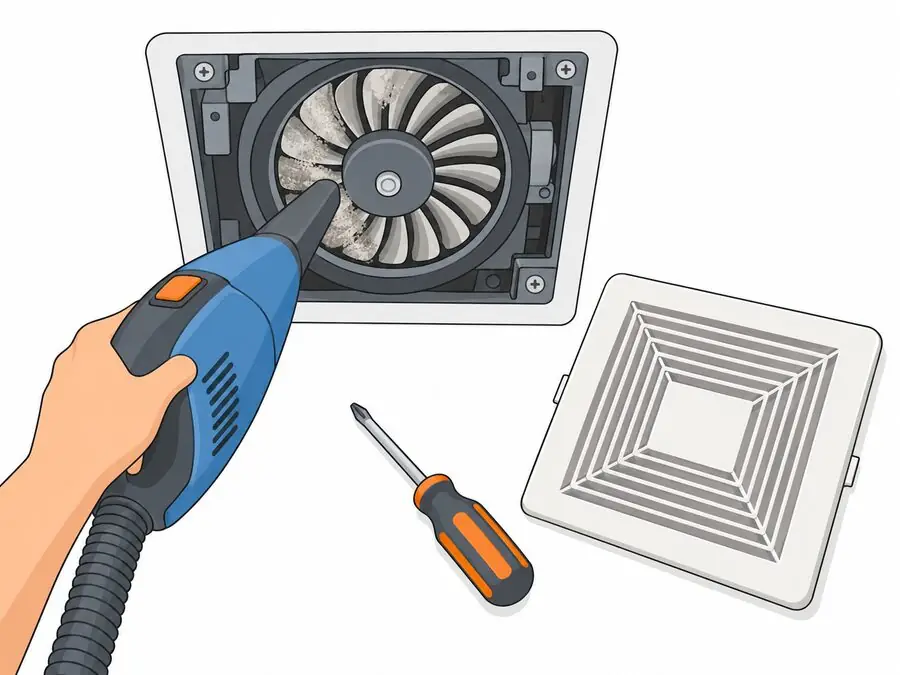
Pull the grille down gently. Most are held by two spring clips, so squeeze and lower. Wash the grille in warm soapy water. Vacuum the dust off the blades and the housing, then wipe with a damp cloth. Do not soak the motor.
Step 3: Check the blade and motor
Spin the fan blade by hand. It should move freely and quietly. If it scrapes or wobbles, look for a bent blade or something stuck. A smooth spin with little noise means the motor may be fine.
Step 4: Tighten the housing
Look for screws or nails that hold the housing to the joist. Tighten them. If the housing rattles, a small piece of rubber or foam between the housing and the joist can calm the vibration. Do not block the vent opening.
Step 5: Check the duct and the outside vent
A fan should push air outside, not into the attic. Go outside and look at the vent cap. Make sure the flap opens. Clear bird nests or lint. If the duct is crushed or has long sags, moisture can collect and the fan will be loud and weak.
Step 6: Fan runs but does not pull air
Hold a single sheet of toilet paper near the grille with the fan on. If it does not stick to the grille, the fan is not moving enough air. That points to a clog, a stuck damper or a motor that is slowing down.
When the fan will not turn on at all
- Check the breaker and the wall switch first.
- Try flipping the switch a few times and listen for a click.
- If the switch is fine and the motor gets no power, the wiring or the motor needs work.
- If it hums but does not spin, the motor is likely seized.
Do not guess with wiring. Replacing a fan unit is a reasonable DIY job for someone comfortable with electrical basics, but call a licensed electrician if you are not sure. See how to replace an outlet for basic safety habits when working with power.
Replace or repair?
A cheap fan motor that is more than 10 to 15 years old is often better replaced than repaired. A new fan is also quieter. Look at the rating in CFM, which is airflow, and in sones, which is noise. A lower sone number is quieter. Match the size to your bathroom, and make sure the new fan fits the existing hole in the ceiling.
Related guides
- How to Stop Bathroom Mirror From Fogging Up
- How to Remove Mold from a Bathroom Ceiling and Stop It Coming Back
- How to Paint a Bathroom Vanity So It Survives the Steam
- How to Replace a Bathroom Exhaust Fan
- How to Fix a Bathroom Fan That Does Not Clear Steam
- How to Install a Bathroom Exhaust Fan the Right Way
FAQ
How often should I clean a bathroom fan?
Twice a year is a good habit. Dust builds up quietly, and a clean fan runs better and lasts longer.
Should the fan vent into the attic?
No. Moist air in the attic can cause mold and rot. The duct should lead outside through a roof or wall vent.
How long should I leave the fan on after a shower?
Many guides suggest 15 to 20 minutes after a shower so moisture can clear. A timer switch makes this easy.
More from this topic
- How to Fix a Bathroom Exhaust Fan That Rattles or Buzzes: Learn how to fix a bathroom exhaust fan that rattles: tighten the housing and grille, balance or replace the...
- How to Clean a Bathroom Exhaust Fan to Restore Its Airflow: How to clean a bathroom exhaust fan twice a year: wash the grille, vacuum the blower and housing, check the...
- How to Fix a Bathroom Fan That Does Not Clear Steam: How to fix a bathroom fan that does not clear steam: check airflow, clean the grille and blade, seal duct...
- How to Fix a Shower Base That Creaks Underfoot: Learn how to fix a shower base that creaks: find whether the noise is the base flexing, the drain or the...
- How to Fix a Vanity Light: How to fix a vanity light that is dead, flickering or dim: check the bulbs and switch, test the socket,...
 BathroomHow to Fix a Bathroom Exhaust Fan That Rattles or BuzzesLearn how to fix a bathroom exhaust fan that rattles: tighten the housing and grille, balance or replace the blade, clear debris and stop the duct vibrating.
 BathroomHow to Clean a Bathroom Exhaust Fan to Restore Its AirflowHow to clean a bathroom exhaust fan twice a year: wash the grille, vacuum the blower and housing, check the flap and test airflow, keeping water off the motor.
 BathroomHow to Fix a Bathroom Fan That Does Not Clear SteamHow to fix a bathroom fan that does not clear steam: check airflow, clean the grille and blade, seal duct leaks and run it long enough.
 BathroomHow to Fix a Shower Base That Creaks UnderfootLearn how to fix a shower base that creaks: find whether the noise is the base flexing, the drain or the frame, add proper support and reseal the edges.BathroomHow to Fix a Vanity LightHow to fix a vanity light that is dead, flickering or dim: check the bulbs and switch, test the socket, tighten connections, replace the fixture safely.