
How to Control Basement Humidity and Keep the Air Dry
Part of: Tools and everyday fixes

- Difficulty
- Easy to moderate
- Time
- 1 to 2 hours to set up, then ongoing
- Tools
- Digital hygrometer, dehumidifier, fan, flashlight, plastic sheet, tape, gloves, drain hose
- Call a pro if
- You see standing water, active leaks through the walls or floor, widespread mold, bowed walls, or humidity stays high after you try the steps here.
In this guide
- Power off first
- Wear protection
- Chemical safety
A basement that feels damp usually is. High humidity makes a room smell musty, helps mold grow, and can damage stored items. You can often turn it around with a few steps. Here is how to control basement humidity and keep it from creeping back.
Measure first
Guessing is not enough. Put a digital hygrometer in the basement and watch it for a few days. A range of about 30 to 50 percent is a good target for most homes. If the reading stays above 60 percent, mold and dust mites like it. Our digital hygrometer comparison can help you pick one.
Find the moisture source
Moisture gets into basements in a few ways.
- Groundwater seeping through walls or floors
- Gutters and downspouts dumping water near the foundation
- Plumbing leaks from pipes, water heaters, or washers
- Condensation when warm, humid air meets cold concrete
- Clothes dryer or bath fans that vent into the basement
Do a simple test. Tape a square of plastic sheet to a bare patch of wall or floor, sealing all four edges. Wait a day or two. Moisture under the plastic means it comes from the ground. Moisture on the outside of the plastic means it is condensation from the air.
Step by step
1. Fix outside water first. Clean gutters and extend downspouts several feet from the wall. See how to clean gutters and downspout drainage. Soil near the house should slope away.
2. Fix leaks inside. Check pipes, the water heater, and the washer. See how to find a water leak in your house.
3. Vent appliances outside. Dryers and bath fans must exhaust outdoors.
4. Insulate cold pipes. Sweating pipes add moisture. See sweating pipes: how to stop water drips.
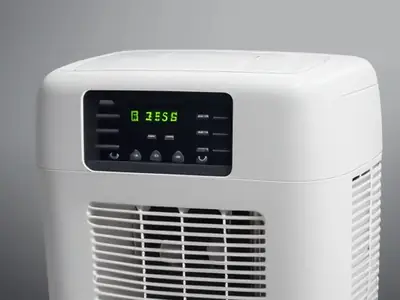
5. Run a dehumidifier. Choose one sized for the space and set it to about 45 to 50 percent. Place it with space on all sides. Use a drain hose to a floor drain or sump so you do not have to empty a bucket.
6. Move the air. A small fan helps stop damp pockets. Keep boxes and furniture a few inches from the walls.
7. Use the weather. Open windows only on dry, cool days. In humid summer weather, outside air can add moisture.
8. Clean mold. Small patches on hard surfaces can be cleaned with detergent and water. See how to get rid of a musty basement smell.
Keep the dehumidifier healthy
Empty the bucket, clean the filter, and wipe the coils each month. If it ices up or runs nonstop, check the setting and the room temperature. Some models do not work well in cold spaces.
Storage tips
Keep stored items off the floor on shelves. Use plastic bins instead of cardboard. Avoid storing paper, fabric, and wood goods against walls.
When to get help
Call a pro if water comes through the wall, the floor is wet after rain, or the humidity remains high. A drainage system, sump pump, or waterproofing may be needed. If you already have a sump pump, test it. See sump pump not working.
Related guides
FAQ
What humidity level is too high for a basement?
Above about 60 percent is a risk for mold.
Will a dehumidifier fix a wet basement?
It helps with damp air, but it cannot stop an active water leak.
Should I seal the walls with paint?
Waterproof paint may help with minor dampness, but it is not a fix for leaks.
Do I need to run it all year?
Often only in warm, humid months. Watch the hygrometer.
More from this topic
- How to Install a Basement Dehumidifier: Learn how to install a basement dehumidifier: size it for the space, set it on a level spot, run the drain...
- How to Dry Out a Damp Basement: Learn how to dry out a damp basement: find the moisture source, improve airflow, run a dehumidifier, fix...
- How to Keep a Shed Dry: Learn how to keep a shed dry: fix the roof and floor damp, clear the vents and stop condensation with airflow...
- How to Fix a Wet Basement Corner: Learn how to fix a wet basement corner: find where the water comes from, fix the grade and downspouts, seal...
- How to Organize a Basement Storage Area That Stays Dry: How to organize a basement storage area: fix moisture, keep everything off the floor, use metal shelving, and...
 First HomeHow to Install a Basement DehumidifierLearn how to install a basement dehumidifier: size it for the space, set it on a level spot, run the drain and set the humidity so the basement stays dry.
 PlumbingHow to Dry Out a Damp BasementLearn how to dry out a damp basement: find the moisture source, improve airflow, run a dehumidifier, fix drainage and check for mold before it spreads.
 SeasonalHow to Keep a Shed DryLearn how to keep a shed dry: fix the roof and floor damp, clear the vents and stop condensation with airflow and a raised base.
 First HomeHow to Fix a Wet Basement CornerLearn how to fix a wet basement corner: find where the water comes from, fix the grade and downspouts, seal the corner and dry the wall out properly.
 First HomeHow to Organize a Basement Storage Area That Stays DryHow to organize a basement storage area: fix moisture, keep everything off the floor, use metal shelving, and store in sealed labeled bins.