
How to Seal Gaps Around Pipes and Wires in Walls and Floors
Part of: Heating and cooling
- Difficulty
- Easy
- Time
- 1 to 2 hours for the obvious gaps
- Tools
- Caulk gun, fire rated caulk, acrylic caulk, copper mesh or steel wool, escutcheons, foam caulk, flashlight, utility knife, gloves
- Call a pro if
- The gap is around a flue, a gas line, or a fire rated wall or ceiling assembly, or you cannot tell what a pipe carries.
In this guide
- Find the gaps worth sealing
- Know what not to seal
- Choose the right material
- Seal under sinks and behind fixtures
- Seal the basement and crawl space penetrations
- Seal the attic top plates
- Handle the ducts and vents carefully
- Seal around cables and wires
- Check the work with a cold day
- Common mistakes
- FAQ
- When to call a pro
- Gas safety
Every pipe and wire that passes through a wall, floor, or ceiling leaves a gap. The quickest win in how to seal gaps around pipes and wires is to work from the attic and the basement. Those gaps are small, but there are dozens of them in a house, and together they let in cold air, let out heat, and give mice a route.
Sealing them is quick work with the right materials, but the wrong caulk in the wrong place can be a real problem.
1. Find the gaps worth sealing
Walk the house with a flashlight and look at:
- Under every sink, where the supply and drain pipes pass through the cabinet floor or wall.
- Where pipes enter the basement or crawl space through the foundation.
- The top plates in the attic, where wires and pipes go up.
- Around the electrical panel and the meter.
- Where the dryer vent, range hood duct, and bath fan duct pass through.
- Around cable and phone lines entering the house.
Mark the ones that go through to an unconditioned space, since those matter most.
2. Know what not to seal
Some openings must stay open.
- A flue or chimney needs clearance and ventilation. Do not seal it.
- A gas appliance vent needs its specified clearance.
- Combustion air openings must stay open.
- A dryer vent must stay clear and sealed only where the manufacturer allows.
- Any gap that provides makeup air for a furnace or water heater.
If you are unsure what a pipe carries, leave it alone and ask.
3. Choose the right material
- Acrylic caulk for small interior gaps around pipes and wires in dry locations.
- Fire rated caulk, usually red, for penetrations through fire rated walls and ceilings, and for the top plate between a garage and the house.
- Copper mesh or steel wool for larger gaps where mice are a problem, packed in first and then sealed.
- Foam caulk for bigger openings, using the minimal expanding type.
- Escutcheons, the metal plates, for pipes under sinks and behind radiators, which cover the gap and look finished.
4. Seal under sinks and behind fixtures
1. Look under the cabinet at the floor and the back wall.
2. Fill the gap around each pipe with acrylic caulk or a small piece of foam.
3. Fit an escutcheon around the pipe where it meets the wall or floor.
4. Check the drain pipe, which often has the largest gap.
This is the easiest place to start, and it stops both air and insects.
5. Seal the basement and crawl space penetrations
Where pipes and wires enter through the foundation, the gap can be large.
1. Pack the gap with copper mesh or steel wool to stop rodents.
2. Fill over it with a caulk made for masonry and metal.
3. Check the rim area and the sill plate for other gaps.
Do not seal a foundation drain or a weep path.
6. Seal the attic top plates
The top plate is where the wall meets the attic floor, and it is a major air leak.
1. Look along the top plate for gaps where wires and pipes pass.
2. Seal small gaps with acrylic caulk or foam.
3. Use fire rated caulk where the wall is a fire separation, such as between a garage and the house.
4. Do not block the soffit ventilation path.
7. Handle the ducts and vents carefully
- Seal the joints in the ductwork with mastic, not tape alone.
- Seal where the duct passes through a wall or ceiling with a flexible caulk that allows movement.
- Do not seal the grille itself, which needs airflow.
- Keep the required clearance around a flue or a metal chimney.
8. Seal around cables and wires
Where a cable passes through wood framing, a small bead of acrylic caulk is enough.
- Do not fill an electrical box.
- Do not seal a cable so tightly that it cannot be serviced.
- Where a bundle passes through a fire separation, use fire rated caulk.
9. Check the work with a cold day
On a windy day, feel around the spots you sealed, and around the ones you skipped.
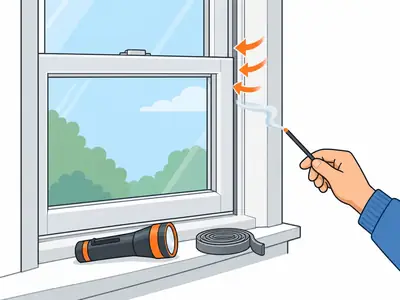
A tissue held near a gap will flutter if air is moving. Seal what still leaks, and note anything you could not seal for a professional to look at.
Common mistakes
- Sealing around a flue or gas vent and creating a carbon monoxide risk.
- Using the wrong caulk in a fire separation.
- Filling an electrical box with foam.
- Sealing a weep path or a combustion air opening.
- Leaving a large gap around a drain pipe because it is hidden in a cabinet.
FAQ
What is fire rated caulk used for?
Penetrations through fire rated walls and ceilings, such as the wall between a garage and a house. It expands and seals when exposed to heat.
Can I use expanding foam around pipes?
Only the minimal expanding type, and only where the gap is large. Regular foam can bow frames and crush delicate fittings.
Should I seal around a chimney?
No. A chimney needs clearance from combustible material. Sealing it can be a fire and carbon monoxide hazard.
How do I stop mice coming in around pipes?
Pack the gap with copper mesh or steel wool first, then seal over it. Mice cannot chew through metal mesh.
Related guides
- How to Stop Drafts From Electrical Outlets and Switches: How to stop drafts from electrical outlets: use foam gaskets, seal the box to the wall, add safety plugs, and...
- How to Air Seal an Attic: How to air seal an attic: find the bypasses at the ceiling plane, seal them with foam and caulk, and keep...
- How to Stop a Cold Draft From a Fireplace: How to stop a cold draft from a fireplace: check the damper and ash door, seal an unused firebox safely, and...
- How to Find Air Leaks in Your Home and Where to Seal First: Learn how to find air leaks in your home with simple checks: where drafts hide, how to test with incense or a...
- How to Seal Leaky Ductwork and Stop Wasting Heat: Learn how to seal leaky ductwork: find the leaks, seal joints with mastic and foil tape, and know which ducts...
 Heating and CoolingHow to Air Seal an AtticHow to air seal an attic: find the bypasses at the ceiling plane, seal them with foam and caulk, and keep insulation and vents clear.Heating and CoolingHow to Stop a Cold Draft From a FireplaceHow to stop a cold draft from a fireplace: check the damper and ash door, seal an unused firebox safely, and add glass doors without blocking the flue.
 Heating and CoolingHow to Find Air Leaks in Your Home and Where to Seal FirstLearn how to find air leaks in your home with simple checks: where drafts hide, how to test with incense or a tissue, and which gaps to seal first.
 Heating and CoolingHow to Seal Leaky Ductwork and Stop Wasting HeatLearn how to seal leaky ductwork: find the leaks, seal joints with mastic and foil tape, and know which ducts are safe for a homeowner to reach.