
How to Prevent Ice Dams on Your Roof Before Winter
Part of: Seasonal maintenance
- Difficulty
- Moderate to hard
- Time
- Quick actions in an hour; permanent fixes take days
- Tools
- Roof rake with a long handle, ladder with a stabilizer, flashlight, rigid foam or caulk for air sealing, insulation, weatherstripping, work gloves, eye protection
- Call a pro if
- Ice dams form every winter, water is dripping into the ceiling, there are icicles with heavy ice buildup, the roof is steep, or you need to climb on the roof.
In this guide
- Ladder safety
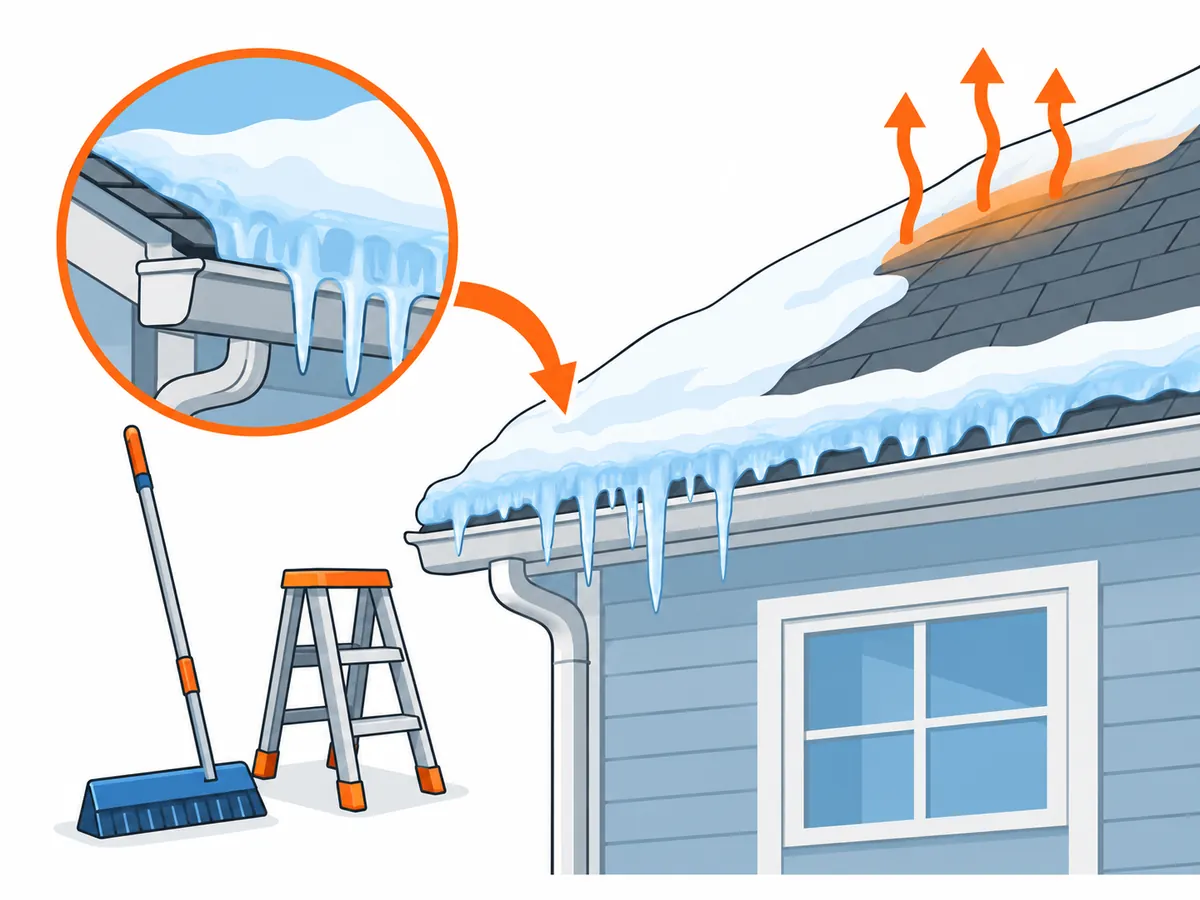
An ice dam is a ridge of ice that forms at the edge of a roof. It blocks melting snow from draining, so water backs up under the shingles and into the house. The result can be stained ceilings, wet insulation and damaged walls. The way to prevent ice dams on your roof is to find out why the snow melts unevenly, and fix that.
This guide is part of our wider guide to seasonal home maintenance.
What causes an ice dam
Snow on the upper part of a roof melts because heat from the house escapes into the attic and warms the roof. The meltwater runs down to the colder eaves, where it refreezes. Over time a ridge builds. So heat loss and poor attic ventilation are the real causes. Gutters do not cause ice dams, though clogged gutters can make them worse.
Quick action when it is happening
- Clear snow from the roof edge. Use a long-handled roof rake from the ground. Pull snow down gently, without scraping the shingles. Remove the first few feet from the eave.
- Make a channel. Some people fill a nylon stocking with calcium chloride ice melt and lay it across the dam, so it melts a channel for water to drain. Place it from the ground with a long pole, or ask a pro. Avoid rock salt, which can harm metal and plants.
- Protect the inside. If water is dripping through the ceiling, put a bucket under it and move items away. Stay away from any wet fixture or outlet, and turn off the breaker for that circuit if water is near wiring.
- Call a pro. A roofer or snow removal service can steam the ice off safely.
The long-term fix: stop heat leaks
Go to the attic on a cold day and look. If you see frost, wet insulation or melted spots in snow on the roof, heat is escaping. Fix these:
1. Air seal first. Seal gaps around attic hatches, wiring holes, plumbing vents, the top of interior walls and light fixtures with caulk or foam. See our guide to insulating an attic hatch. Do not seal around flues or fixtures not rated for it.
2. Add insulation. After sealing, add insulation on the attic floor to the depth recommended for your climate. Do not cover soffit vents.
3. Ventilate. Keep soffit and ridge vents clear so cold air can flow under the roof deck. Use baffles to keep insulation from blocking the vents.
4. Check exhaust ducts. Bathroom and kitchen fans should vent outside, not into the attic. See our guide to a bathroom fan that is not working or very loud.
What about heat cables?
Electric heat cables on the roof edge can melt a path for water. They use electricity and need to be installed correctly. They treat symptoms rather than the cause. Use only products made for roofs and follow the instructions, or hire a pro.
Roofing underlayment
A roofer can add a self-adhering waterproof membrane under the shingles at the eaves when the roof is replaced. This can limit damage from backed-up water but does not stop the dam from forming.
When to call for help
Call a pro if water is coming in, if the ice is heavy or if you cannot safely reach the roof edge. If you see mold or wet insulation, deal with it quickly.
Related guides
- How to Clean Up Fall Leaves Fast and What to Do With Them
- How to Store Patio Furniture for Winter and Keep It Looking New
- How to Seal Small Cracks in a Basement Wall and When to Call a Pro
- How to Prepare a Basement for Heavy Rain and Reduce Flood Risk
- First Time Homeowner Checklist: 15 Things to Do Right Away
FAQ
Are icicles a sign of ice dams?
Often, though not always. Big icicles along the eave suggest uneven melting.
Will clearing the gutters help?
It helps drainage, but the main fix is to reduce heat loss.
Is salt safe for roofs?
Rock salt can damage shingles, metal and plants. Use products made for the purpose, sparingly.
More from this topic
- How to Install a Downspout Heat Cable: Learn how to install a downspout heat cable: measure the run, fit the cable inside or along the downspout,...
- How to Install Attic Ventilation Baffles: How to install attic ventilation baffles so insulation stays out of the soffit vents: fit them at each rafter...
- How to Install Snow Guards on a Roof: How to install snow guards on a roof: pick the right type for the roof, place them over doors and walks, and...
- How to Remove Snow and Ice From a Deck Safely: How to remove snow and ice from a deck safely: use the right tools, avoid damage to the surface, and keep the...
- How to Store Patio Furniture for Winter: Learn how to store patio furniture for winter: clean each material, dry it, fix damage, and cover or stack it...
 SeasonalHow to Install a Downspout Heat CableLearn how to install a downspout heat cable: measure the run, fit the cable inside or along the downspout, secure it and control it so ice cannot block flow.
 SeasonalHow to Install Attic Ventilation BafflesHow to install attic ventilation baffles so insulation stays out of the soffit vents: fit them at each rafter bay and keep the air path open.
 SeasonalHow to Install Snow Guards on a RoofHow to install snow guards on a roof: pick the right type for the roof, place them over doors and walks, and fasten them without causing leaks.
 SeasonalHow to Remove Snow and Ice From a Deck SafelyHow to remove snow and ice from a deck safely: use the right tools, avoid damage to the surface, and keep the deck structure out of the danger zone.
 SeasonalHow to Store Patio Furniture for WinterLearn how to store patio furniture for winter: clean each material, dry it, fix damage, and cover or stack it in a dry place so it lasts for years.