
How to Remove Snow and Ice From a Deck Safely
Part of: Seasonal maintenance · Also in: The Complete Guide to Seasonal Home Maintenance
- Difficulty
- Easy
- Time
- 1 to 2 hours per storm
- Tools
- plastic snow shovel, broom, plastic scraper, calcium chloride ice melt made for decks, bucket, gloves, boots with grip, eye protection
- Call a pro if
- The deck feels bouncy, a beam or post looks cracked, snow is piled against a door or a window, or the deck is attached with a ledger that shows rust or rot.
In this guide
Snow looks light and weighs a lot. Plastic tools and no metal on the ice are the rules for how to remove snow and ice from a deck safely. A wet snow can add thousands of pounds to a deck in a single storm, and the structure underneath was probably designed for people, furniture, and a grill, not a winter's worth of ice.
Clearing it is simple if you use the right tools and stay off the surface when it is icy.
1. Know the load limits
A typical deck is designed for a live load of about 40 to 60 pounds per square foot, with some margin. A foot of wet snow can weigh 10 to 20 pounds per square foot, and ice is heavier. Add a hot tub or a pile of firewood and the margin disappears. That is why clearing matters, and why piling snow on the deck is a bad idea.
2. Use plastic tools only
A plastic snow shovel or a broom is the right tool. Metal blades and garden spades gouge the boards, cut into composite surfaces, and catch on screw heads. A plastic scraper handles thin ice.
3. Clear in layers
Push snow off the deck in layers rather than trying to lift a full shovel. Push it away from the house, not toward it, so it does not pile against the wall or the door.
4. Keep the door and vents clear
Clear snow from around doors, windows, and any vent or intake at the deck level. Blocked vents can cause carbon monoxide problems or push moisture into the wall.
5. Do not chip ice with metal
Chipping with a metal blade or an ice spade damages the surface and can crack a board. Use a plastic scraper or an ice melt product made for decks. Sand gives traction without damaging anything.
6. Choose ice melt carefully
Rock salt can damage metal fasteners and harm plants, and it leaves a mess indoors. Calcium chloride works at lower temperatures but also needs care. Products labeled safe for decks and plants are the better choice, and use as little as possible. Never use fertilizer as ice melt: it is an oxidizer and can be dangerous.
7. Watch the structure while you work
While you are out there, look at the posts, the beams, and the ledger where the deck attaches to the house. Rust streaks, soft wood, or a bouncy feel underfoot mean the deck needs a closer look. Clear the snow, then get it inspected before spring.
8. Do not pile snow against the house
A snow pile against the siding holds moisture and can cause rot and water intrusion when it melts. Push snow off the far edge, or into a spot away from the foundation.
9. Check for ice dams at the deck edge
Ice that builds up along the house side of the deck, or under a door, means water is trapped. Clear it carefully and check the door threshold and the flashing above for problems.
10. Plan for the next storm
Keep the plastic shovel and a bucket of deck safe ice melt near the door. Clear snow after each storm rather than waiting for a thaw, since compacted snow turns to ice and becomes much harder to remove.
Keep a path clear from the door to the stairs as you work, and clear the stairs themselves before you carry anything across them. If the deck has a hot tub, a grill, or heavy planters, clear around them carefully rather than dragging them through the snow, since the load on the deck changes as you move things. After the thaw, check the boards and the fasteners for damage from the winter, and how to remove ice from a walkway without damage covers the paths around the house.
Common mistakes
- Using a metal shovel and gouging the boards.
- Chipping ice with an ax or a spade.
- Piling snow against the siding and the door.
- Using rock salt that damages fasteners and plants.
- Waiting until the snow turns to ice.
- Ignoring a deck that feels bouncy underfoot.
FAQ
Can I use a regular snow shovel on a deck?
Only if it has a plastic or rubber edge. Metal blades damage wood and composite.
What is the safest ice melt for a deck?
One labeled safe for decks and plants, used sparingly. Sand is the safest for traction.
How much snow is too much for a deck?
It depends on the deck and the snow. Wet snow over about a foot is a lot of weight. Clear it in stages rather than testing the limit.
Should I shovel the deck at night?
Only with good lighting. Slips and falls are the main risk, and a dark deck is a bad place to work.
Can snow damage a composite deck?
The surface resists moisture, but the structure still carries the load, and a metal shovel still scratches it.
Related guides
- How to Prevent Ice Dams on Your Roof Before Winter: Learn how to prevent ice dams on your roof: why they form, how to remove snow safely, and how air sealing,...
- How to Store a Window Air Conditioner for Winter: Store a window air conditioner for winter by removing it or covering it in place, then clean, dry and seal it...
- How to Winterize a Fire Pit: Learn how to winterize a fire pit: clean out ash, protect metal and stone, cover it right, and prevent rust...
- How to Remove Ice From a Walkway Without Damage: Learn how to remove ice from a walkway without damage: shovel early, pick a de-icer safe for concrete, and...
- How to Check a Roof After Winter: Learn how to check a roof after winter: inspect from the ground and attic first, look for lifted shingles and...
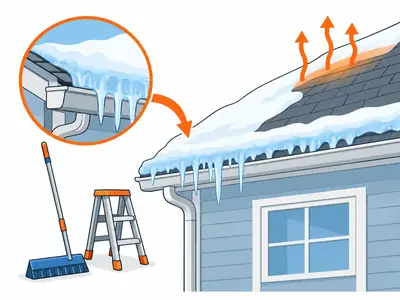 SeasonalHow to Prevent Ice Dams on Your Roof Before WinterLearn how to prevent ice dams on your roof: why they form, how to remove snow safely, and how air sealing, insulation and ventilation fix the cause.
 SeasonalHow to Store a Window Air Conditioner for WinterStore a window air conditioner for winter by removing it or covering it in place, then clean, dry and seal it so cold air stays out and it starts in spring.
 SeasonalHow to Winterize a Fire PitLearn how to winterize a fire pit: clean out ash, protect metal and stone, cover it right, and prevent rust and cracks.
 Garage and OutdoorsHow to Remove Ice From a Walkway Without DamageLearn how to remove ice from a walkway without damage: shovel early, pick a de-icer safe for concrete, and avoid the tools that crack slabs and kill plants.
 SeasonalHow to Check a Roof After WinterLearn how to check a roof after winter: inspect from the ground and attic first, look for lifted shingles and ice damage, and know when to call a roofer.