
How to Clean and Unclog an AC Condensate Drain Line
Part of: Heating and cooling
- Difficulty
- Easy
- Time
- 20 to 40 minutes
- Tools
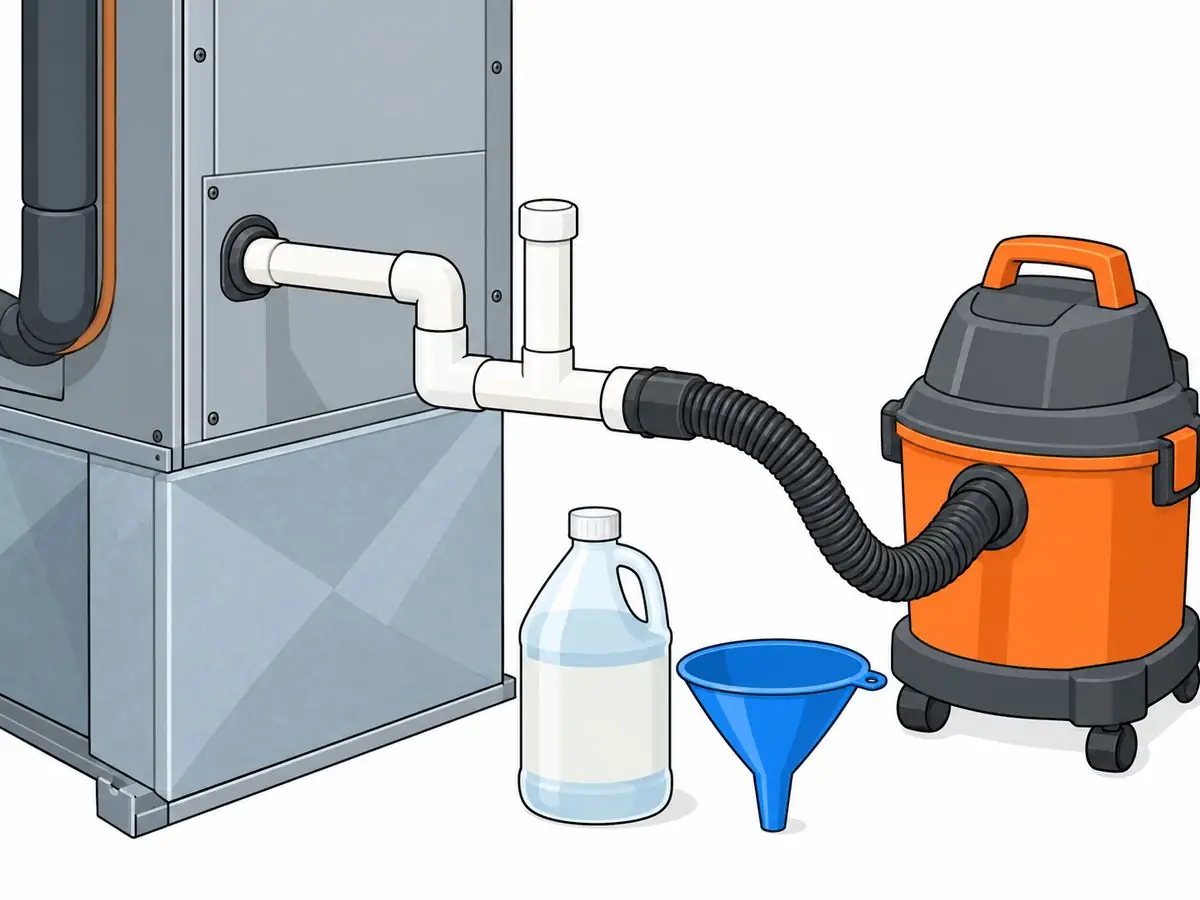
- Wet/dry vacuum, white vinegar, small funnel, rag, flashlight, duct tape, gloves
- Call a pro if
- water leaks from the indoor unit after cleaning, you cannot find the drain, or the unit is in an attic and the pan is full of water
In this guide
- Power off first
Your air conditioner removes moisture from the air and sends it out through a small pipe. When algae clogs that pipe, water backs up and can leak onto the floor or shut the system off. Here is how to clean and unclog an AC condensate drain line in about 30 minutes.
This guide is part of our wider guide to heating, cooling and air quality.
Signs of a clogged line
Water pooling near the air handler, a musty smell near the unit, or an AC that shuts down in hot weather are signs. Many systems have a float switch that turns the unit off when the pan fills.
Step by step
1. Turn off the system. Set the thermostat to off. Also turn off the breaker for the air handler.
2. Find the drain line. It is a white or gray PVC pipe near the indoor unit, often with a T-shaped vent and a cap. The pipe's other end usually exits outside near the outdoor unit, low on the wall.
3. Check the drain pan. If water is standing in the pan under the unit, soak it up with towels first.
4. Clear the outdoor end. Look for a clog, algae or insect nests at the pipe opening. Hold the wet/dry vac hose over it, seal with duct tape or a rag, and run it for about a minute.
5. Open the access vent. Remove the cap on the T near the unit.
6. Flush with vinegar. Pour a quarter cup of white vinegar into the vent through a funnel. Wait 30 minutes. Vinegar helps kill algae.
7. Flush with water. Pour a cup of warm water to push out loosened gunk.
8. Check the outlet. Look for water coming out of the outdoor end. Slow flow means a partial clog, so vacuum again.
9. Replace the cap. Turn the power back on.
10. Test. Run the AC for 15 minutes and look at the pan and the pipe outlet.
Prevent clogs
Pour a quarter cup of vinegar into the line every month during cooling season. Change your air filter on schedule, since dirty filters let more dust into the coil and drain. See How to change a furnace filter for the filter basics.
Do not use bleach
Bleach can damage metal parts in the drain pan and coil, and its fumes are unpleasant. Vinegar does the job.
Which type of system do you have
Central air conditioners and heat pumps have an indoor coil and a condensate drain. Window and portable units drain differently. Many window units drip outside on purpose, and a portable unit has a tank or a hose. This guide is for central systems. If your unit has a safety switch, it may stop the AC when the pan is full. That switch protects your ceiling from water damage, so do not bypass it.
Where the drain ends
Follow the drain line outside. It should end in a safe spot, such as near the foundation or in a drain. If the line ends under a deck or against the wall, water can pool near the house. Check that the end is not buried in soil or blocked by plants. If the line runs to a floor drain or sink, make sure the connection is open.
Maintenance schedule
Clean the line at the start of the cooling season, then pour vinegar in once a month. A drain pan tablet in the pan can also help, but check that it is made for HVAC. Change your filter on schedule to keep the coil clean.
When the pan has overflowed
If water has already spilled, dry the area and check for damage. Turn off the AC until the clog is cleared. Look for mold or wet insulation near the unit. If ceiling or wall materials are wet, dry them out quickly, and call a pro if the damage is large.
Related guides
- How to Clean an Air Conditioner Filter to Improve Cooling and Airflow
- How to Keep Your House Cool in Summer Without Running the AC All Day
- How to Control Basement Humidity and Keep the Air Dry
- How to Get Rid of a Musty Basement Smell by Fixing the Cause
- How to Unclog a Floor Drain: Basement and Garage
FAQ
How often should I clean the drain line?
At the start of each cooling season and monthly during peak use.
Why does my AC keep shutting off in summer?
A full drain pan can trip the float switch. That points to a clog.
Can I clear the line without a vacuum?
You can try a flush of vinegar and water, but a wet/dry vac works faster for a stubborn clog.
What if the line is buried or hard to reach?
Call an HVAC technician rather than digging.
More from this topic
- How to Prepare Your Air Conditioner for Summer: Learn how to prepare your air conditioner for summer: change the filter, clean the outdoor unit, clear the...
- How to Clean Air Vents and Registers: Learn how to clean air vents and registers: vacuum the dust, wash the covers and check the nearby ducts so...
- How to Clean Evaporator Coils on Your Air Conditioner: Learn how to clean evaporator coils: access the indoor coil safely, brush and rinse away buildup, and keep...
- How to Clean a Ceiling Fan Without Spreading Dust Everywhere: Learn how to clean a ceiling fan: trap dust with a pillowcase or brush, wash the blades, clean the motor...
- Air Conditioner Not Cooling? Checks to Make: An air conditioner not cooling is often a dirty filter, a setting or a tripped breaker. Check these safe...
 Heating and CoolingHow to Prepare Your Air Conditioner for SummerLearn how to prepare your air conditioner for summer: change the filter, clean the outdoor unit, clear the drain line and test it before the heat.
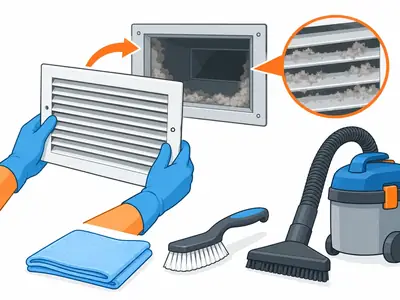 Heating and CoolingHow to Clean Air Vents and RegistersLearn how to clean air vents and registers: vacuum the dust, wash the covers and check the nearby ducts so air flows freely and rooms stay fresh.
 Heating and CoolingHow to Clean Evaporator Coils on Your Air ConditionerLearn how to clean evaporator coils: access the indoor coil safely, brush and rinse away buildup, and keep your AC cooling efficiently.
 Heating and CoolingHow to Clean a Ceiling Fan Without Spreading Dust EverywhereLearn how to clean a ceiling fan: trap dust with a pillowcase or brush, wash the blades, clean the motor housing and stop wobble-causing buildup.
 Heating and CoolingAir Conditioner Not Cooling? Checks to MakeAn air conditioner not cooling is often a dirty filter, a setting or a tripped breaker. Check these safe items, then know when to call an HVAC tech.