
How to Clean Hardwood Floors Without Damaging the Finish
Part of: Floors, walls and doors · Also in: The Complete Guide to Home Wall and Floor Repair
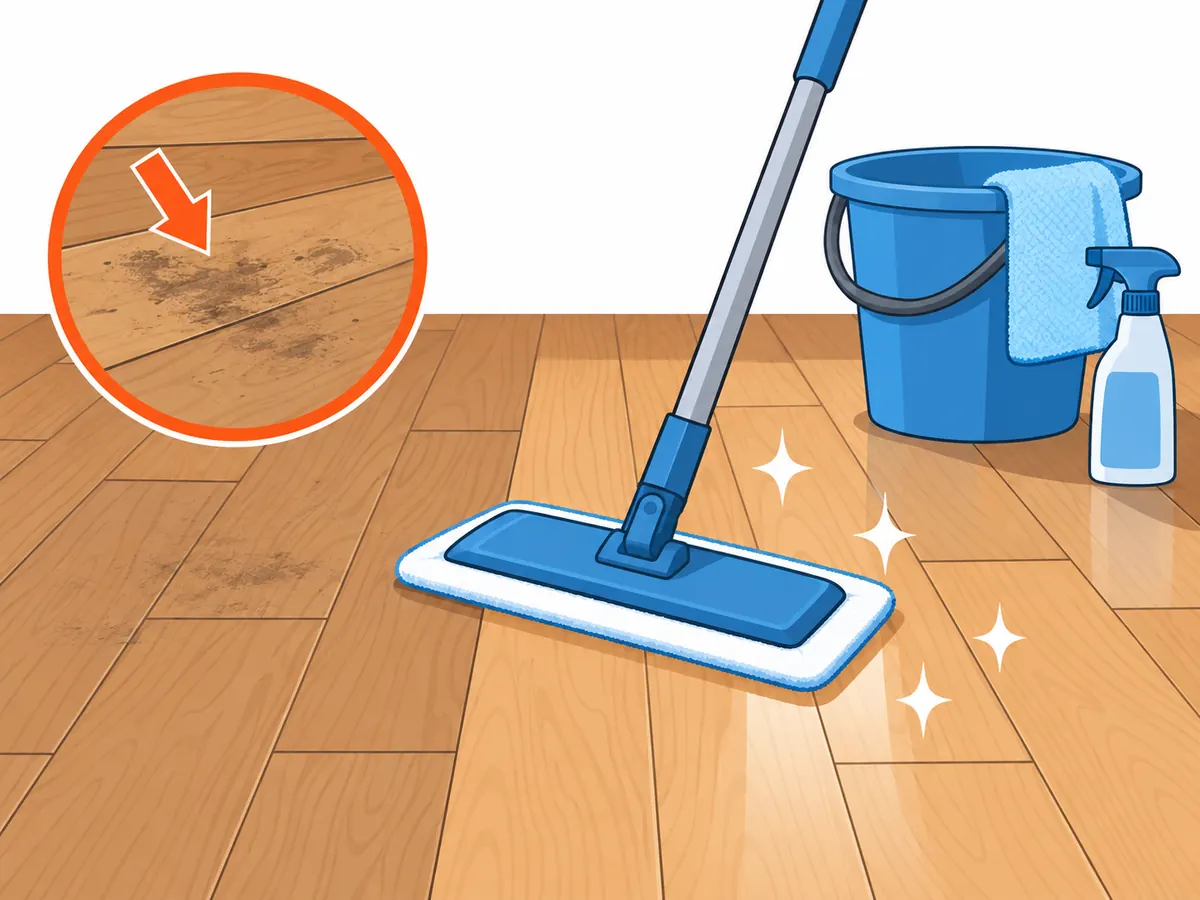
- Difficulty
- Easy
- Time
- 30 to 45 minutes
- Tools
- Soft broom or vacuum with a hard-floor setting, microfiber mop, spray bottle, pH-neutral hardwood floor cleaner, soft cloths, felt pads
- Call a pro if
- The floor is cupped or buckled, you see black stains under the finish, the boards are soft, or water has been sitting on the floor for a long time.
In this guide
- Chemical safety
Hardwood floors take a lot of daily wear, but they do not like water. Standing water can seep into the seams, swell the boards and ruin the finish. The goal of cleaning is to remove grit and dirt without leaving the floor wet. Here is how to clean hardwood floors in a way that protects the finish.
This guide is part of our wider guide to floor care.
Know your finish
Most modern hardwood floors have a surface finish, often polyurethane. That layer protects the wood and is what you clean. Older floors may be waxed or oiled, which need different care. A simple test is to put a drop of water on a hidden spot. If it beads up, the surface is sealed. If it soaks in and darkens the wood, the finish is worn or the floor is waxed. If you are unsure, ask the installer or the maker, and test any product in a hidden spot.
Step 1: Remove grit first
Dirt and sand scratch hardwood like sandpaper. Sweep with a soft broom or use a vacuum set for hard floors, with the brush roll off. Do this often, even daily in busy areas. Pay attention to doorways and under tables.
Step 2: Use a damp microfiber mop
A flat microfiber mop picks up dust and dirt well. Wring the pad so it is only damp, and do not leave visible water on the floor. Work in the direction of the boards. Change the pad when it gets dirty, and wash pads after each use without fabric softener.
Step 3: Use the right cleaner
Pick a cleaner made for sealed hardwood floors, and follow the label. A neutral cleaner is gentler on the finish. Spray a light mist on the pad or the floor and wipe. Avoid oil soaps on a surface finish, since they can leave a film. Skip wax-based or polish products unless the maker of your floor says to use them. Do not use a steam mop, since the heat and moisture can damage the wood and the finish.
Step 4: Deal with spills right away
Wipe up spills at once with a soft cloth. For sticky spots, dampen a cloth with a little cleaner and rub gently. For dried food, scrape carefully with a plastic card. Dry the area with a clean cloth.
What about vinegar?
Many people use vinegar and water, but some floor makers advise against it because acid can dull some finishes over time. Check the maker's care instructions. A purpose-made cleaner is the safer choice.
Step 5: Protect the floor
Put felt pads under furniture legs and replace them when worn. Use mats at doors to catch grit, and take off shoes, especially high heels. Keep pet nails trimmed. Use area rugs in busy areas, with a breathable pad, because some rubber backs can stain a finish. Keep indoor humidity steady, about 30 to 50 percent, to limit gaps and cupping. Our guide on fixing a scratch on hardwood floors helps if damage happens.
How often to clean
Sweep or vacuum daily or every few days. Damp mop weekly or every couple of weeks, depending on traffic. Deep clean only as needed.
Mistakes to avoid
Do not soak the floor. Do not use abrasive pads or steel wool. Do not use bleach or ammonia. Do not let pets' accidents sit. Do not drag furniture.
Related guides
- How to Care for Natural Stone Floors: Cleaning, Sealing, and Stain Prevention
- How to Install a Floor Transition Strip Where Two Floors Meet
- How to Remove Carpet and Tack Strips Without Damaging the Subfloor
- How to Fix Squeaky Floorboards Without Tearing Up the Floor
- How to Clean Laminate Floors Without Warping or Streaks
- How to Vacuum Carpet Correctly for Deeper Cleaning and Longer Wear
FAQ
Can I use a steam mop?
Most floor makers advise against it.
How do I get rid of a cloudy look?
It could be a film from a product. Switch to a neutral cleaner and rinse with a damp cloth.
When should I refinish?
When the finish is worn through to bare wood in places. A flooring pro can tell you.
More from this topic
- How to Clean Laminate Floors Without Warping or Streaks: Learn how to clean laminate floors safely: sweep, use a barely damp mop and mild cleaner, handle stains, and...
- How to Clean Vinyl Plank Floors and Keep Them Looking New: Learn how to clean vinyl plank floors with simple steps: sweep, mop with a mild cleaner, remove scuffs and...
- How to Care for Engineered Hardwood Floors and Avoid Damage: Learn how to care for engineered hardwood floors: sweep and vacuum, use a barely damp mop and the right...
- How to Clean Tile Floors Without Streaks: Learn how to clean tile floors with the right cleaner, mop method, and drying steps so ceramic and porcelain...
- How to Fix a Scratch on Hardwood Floors Without Refinishing: Learn how to fix a scratch on hardwood floors with simple tools. Match the depth, use a wax stick or stain...
 FloorsHow to Clean Laminate Floors Without Warping or StreaksLearn how to clean laminate floors safely: sweep, use a barely damp mop and mild cleaner, handle stains, and avoid water that swells the seams and edges.
 FloorsHow to Clean Vinyl Plank Floors and Keep Them Looking NewLearn how to clean vinyl plank floors with simple steps: sweep, mop with a mild cleaner, remove scuffs and stains, and avoid products that dull the finish.
 FloorsHow to Care for Engineered Hardwood Floors and Avoid DamageLearn how to care for engineered hardwood floors: sweep and vacuum, use a barely damp mop and the right cleaner, handle spills, and avoid water and heat damage.
 FloorsHow to Clean Tile Floors Without StreaksLearn how to clean tile floors with the right cleaner, mop method, and drying steps so ceramic and porcelain look bright and grout stays safe.
 FloorsHow to Fix a Scratch on Hardwood Floors Without RefinishingLearn how to fix a scratch on hardwood floors with simple tools. Match the depth, use a wax stick or stain pen and keep the repair from showing.