
How to Clean Tile Floors Without Streaks
Part of: Floors, walls and doors · Also in: The Complete Guide to Home Wall and Floor Repair
- Difficulty
- Easy
- Time
- 30 to 60 minutes
- Tools
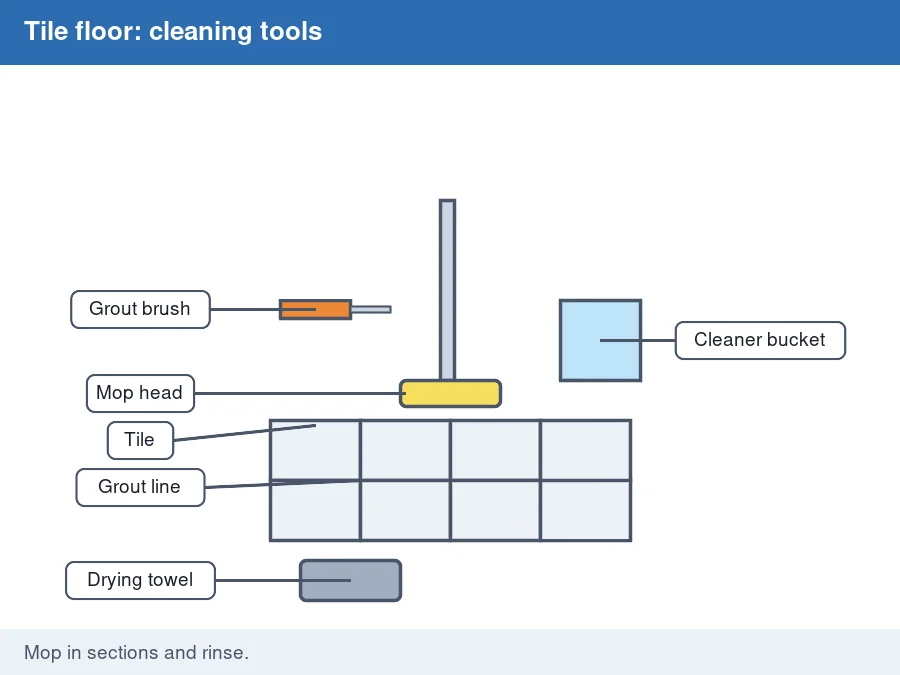
- Vacuum or soft broom, mop and two buckets, mild pH neutral cleaner, microfiber cloth, soft brush, old toothbrush, towels
- Call a pro if
- Tiles are cracked or loose, grout is crumbling, you see mold under tiles, or water stains keep coming back from a leak.
In this guide
- Chemical safety
Tile is tough, but it can look dull and streaky if you use the wrong cleaner or too much water. The dirt that gets stuck in grout also makes the floor look old. Here is how to clean tile floors so they look fresh and stay that way.
Know your tile
Ceramic and porcelain tile handle most mild cleaners. Natural stone tile, such as marble or travertine, can be damaged by acid, including vinegar and lemon. If you are not sure, check with the installer or use a stone safe cleaner. Glazed tile resists stains. Unglazed or textured tile holds dirt more.
Gather the right products
- A pH neutral floor cleaner or a few drops of mild dish soap in warm water
- A clean mop head and two buckets, one for cleaner and one for rinse water
- A soft brush for grout lines
Skip wax, oil soaps, and abrasive powders. They leave a film or scratch the glaze.
Step by step
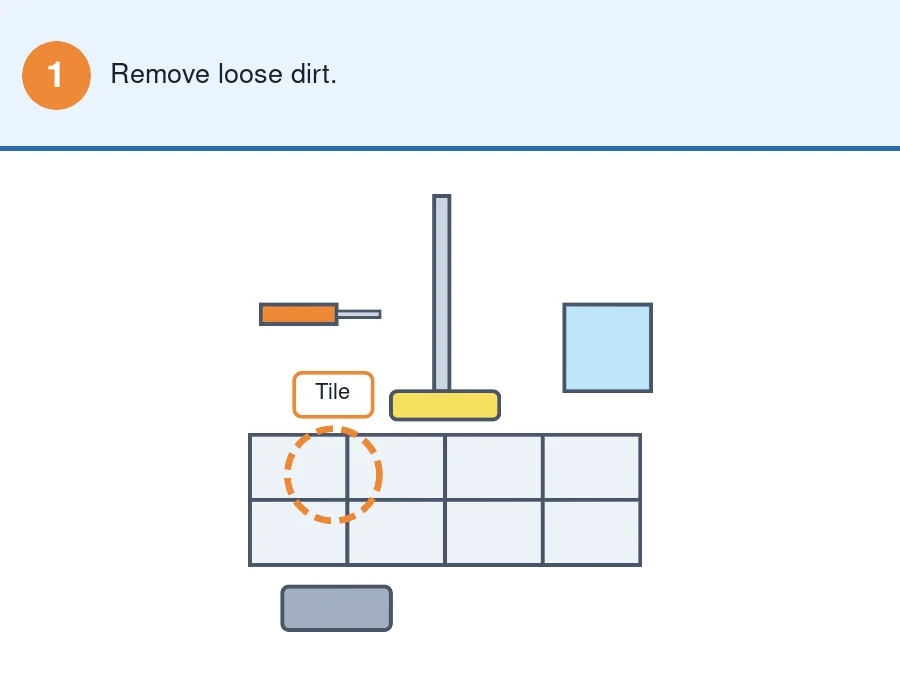
1. Remove loose dirt. Vacuum or sweep. Grit scratches tile when you mop.
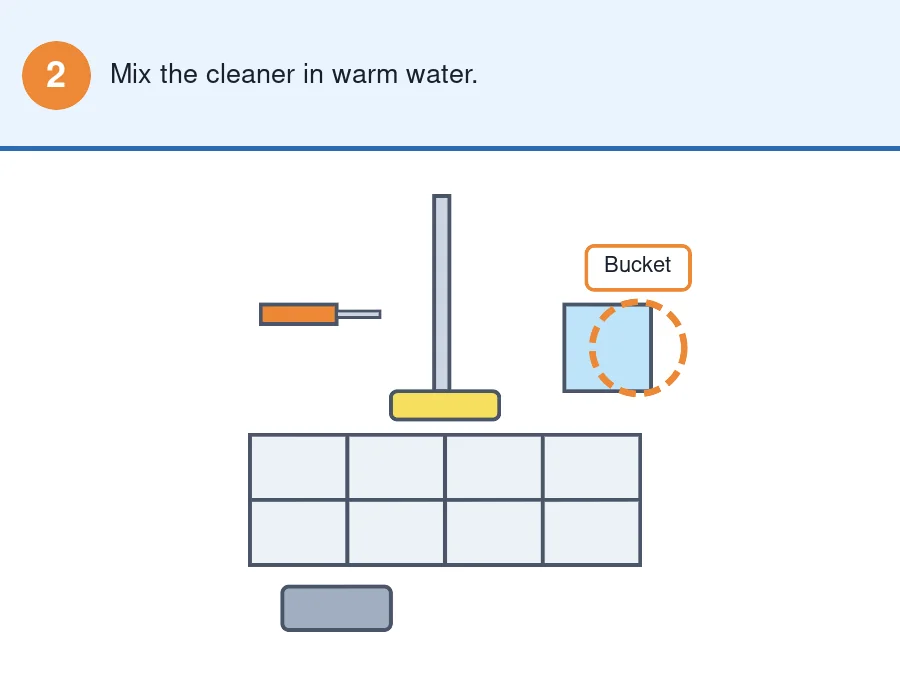
2. Mix the cleaner in warm water. Use less than you think, since too much soap leaves a film.
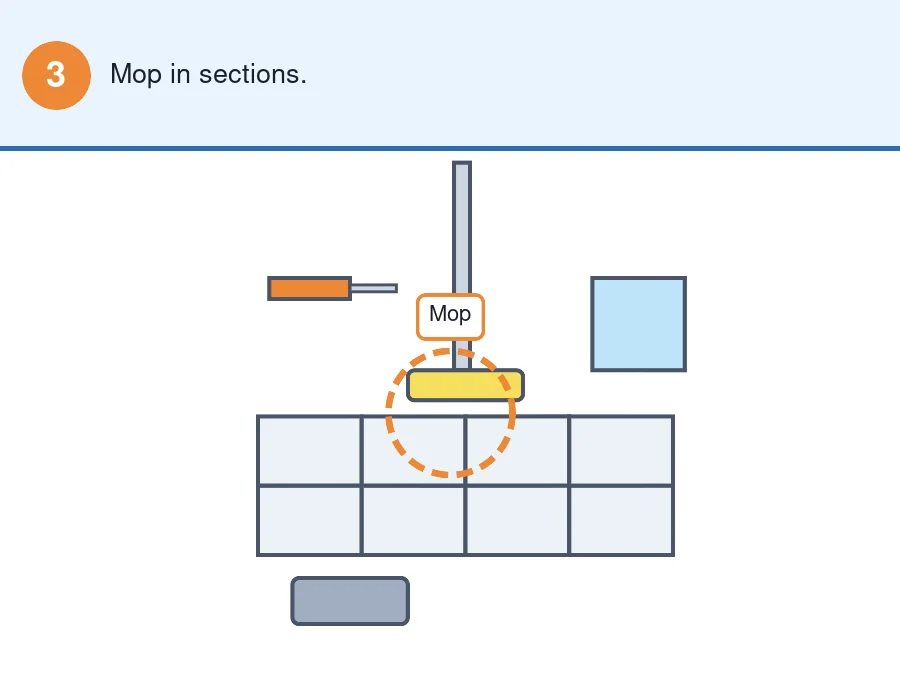
3. Mop in sections. Dip the mop, wring it well, and mop with the long lines of the tile. Work away from the door.
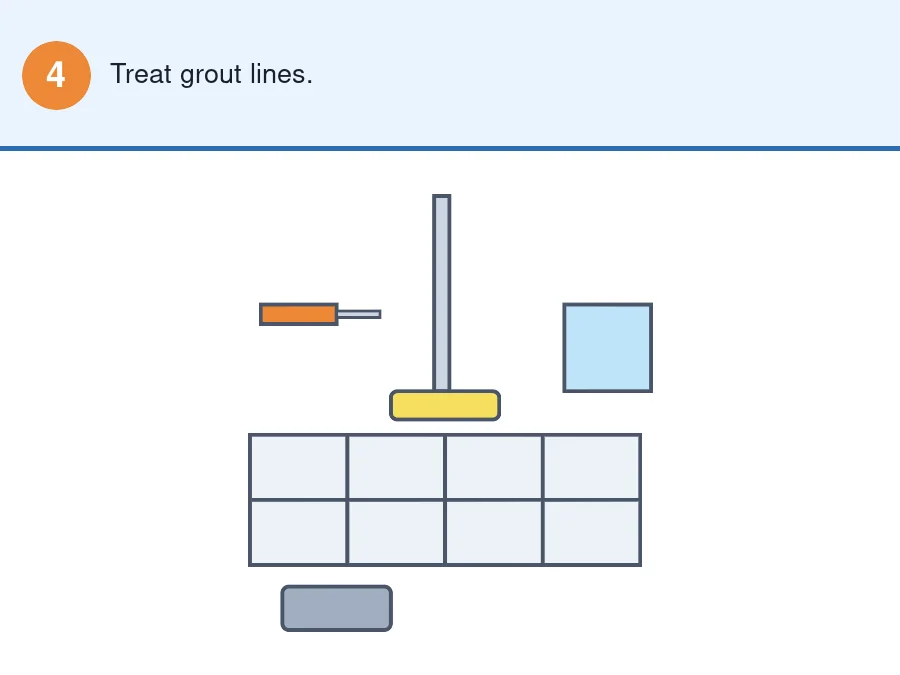
4. Treat grout lines. Brush the grout with a soft brush and the cleaning solution. See how to clean grout lines.
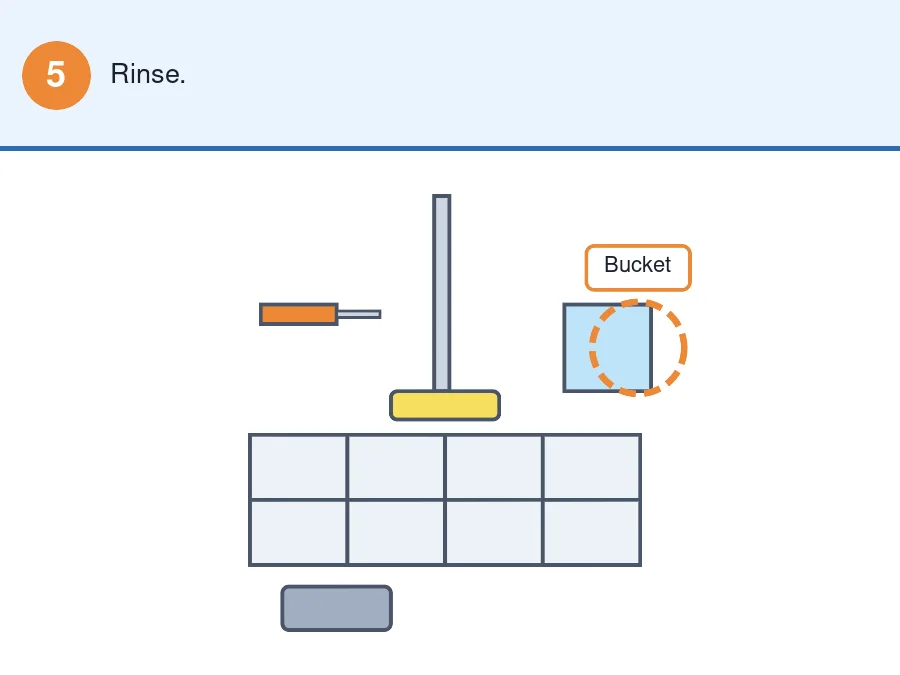
5. Rinse. Mop again with clean water from the second bucket. Change the water when it gets cloudy.
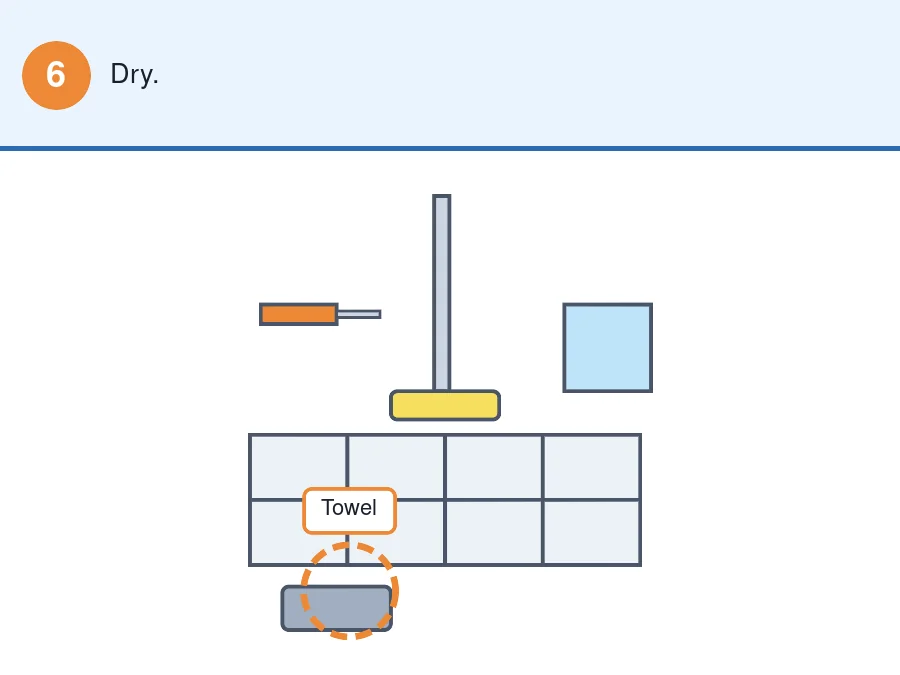
6. Dry. Use a dry mop or microfiber cloth, or let the floor air dry with a fan. Drying prevents streaks and water spots.
Handle stains
- Grease: use dish soap and warm water.
- Hard water spots: a diluted vinegar solution works on ceramic and porcelain, but never on natural stone.
- Rust: use a cleaner made for rust and test in a hidden spot.
- Dark grout: use a baking soda paste and a brush.
Keep it clean
- Put mats at doors.
- Sweep often.
- Wipe spills right away.
- Do not use steam on loose tile or old grout.
- Reseal grout if the maker advises.
Check for damage
While you clean, look for cracked or loose tiles and crumbling grout. Loose tile can hide moisture. See how to fix a loose floor tile and how to fix a cracked tile without replacing it. If a bathroom shows black spots, see how to remove mildew from shower grout.
Protect the surface
Use felt pads under furniture. See how to protect floors from furniture scratches. Place rugs in busy areas. Do not drag heavy items across the tile.
FAQ
Why is my tile floor streaky?
Too much cleaner or dirty mop water. Use less cleaner and change the rinse water.
Can I use vinegar on all tile?
Not on natural stone. Even on ceramic, use a dilute mix and rinse.
How often should I mop?
Weekly in busy areas and as needed elsewhere.
Is a steam mop safe?
For sealed ceramic with good grout it can be fine, but check the tile maker's guidance.
Related guides
- How to Clean Laminate Floors Without Warping or Streaks: Learn how to clean laminate floors safely: sweep, use a barely damp mop and mild cleaner, handle stains, and...
- How to Clean a Backsplash: Learn how to clean a backsplash of grease and splatter, with the right method for ceramic, glass and stone...
- How to Clean Stainless Steel Appliances Without Streaks: Learn how to clean stainless steel appliances: wipe with the grain, use mild soap or vinegar, remove...
- How to Remove Scuff Marks From Floors Without Dulling: Learn how to remove scuff marks from floors on vinyl, laminate, tile, and sealed wood with a tennis ball,...
- How to Clean Mirrors Without Streaks: Learn how to clean mirrors without streaks: the right cloth, solution and technique for a spotless, lint-free...
 FloorsHow to Clean Laminate Floors Without Warping or StreaksLearn how to clean laminate floors safely: sweep, use a barely damp mop and mild cleaner, handle stains, and avoid water that swells the seams and edges.
 TileHow to Clean a BacksplashLearn how to clean a backsplash of grease and splatter, with the right method for ceramic, glass and stone plus the grout lines.
 KitchenHow to Clean Stainless Steel Appliances Without StreaksLearn how to clean stainless steel appliances: wipe with the grain, use mild soap or vinegar, remove fingerprints and stains, and finish with a light buff.
 FloorsHow to Remove Scuff Marks From Floors Without DullingLearn how to remove scuff marks from floors on vinyl, laminate, tile, and sealed wood with a tennis ball, baking soda paste, and mild cleaners.
 Tools and BasicsHow to Clean Mirrors Without StreaksLearn how to clean mirrors without streaks: the right cloth, solution and technique for a spotless, lint-free shine.