
How to Fix a Loose Floor Tile
Part of: Basic plumbing
- Difficulty
- Moderate
- Time
- 1 to 2 hours of work, plus a day of curing
- Tools
- Grout saw or oscillating tool, putty knife, chisel, hammer, notched trowel, thin-set mortar, grout, sponge, bucket, painter's tape, knee pads
- Call a pro if
- Several tiles in one area are loose, the subfloor feels soft or springy, or you find signs of water damage or mold under the tile.
In this guide
- Wear protection
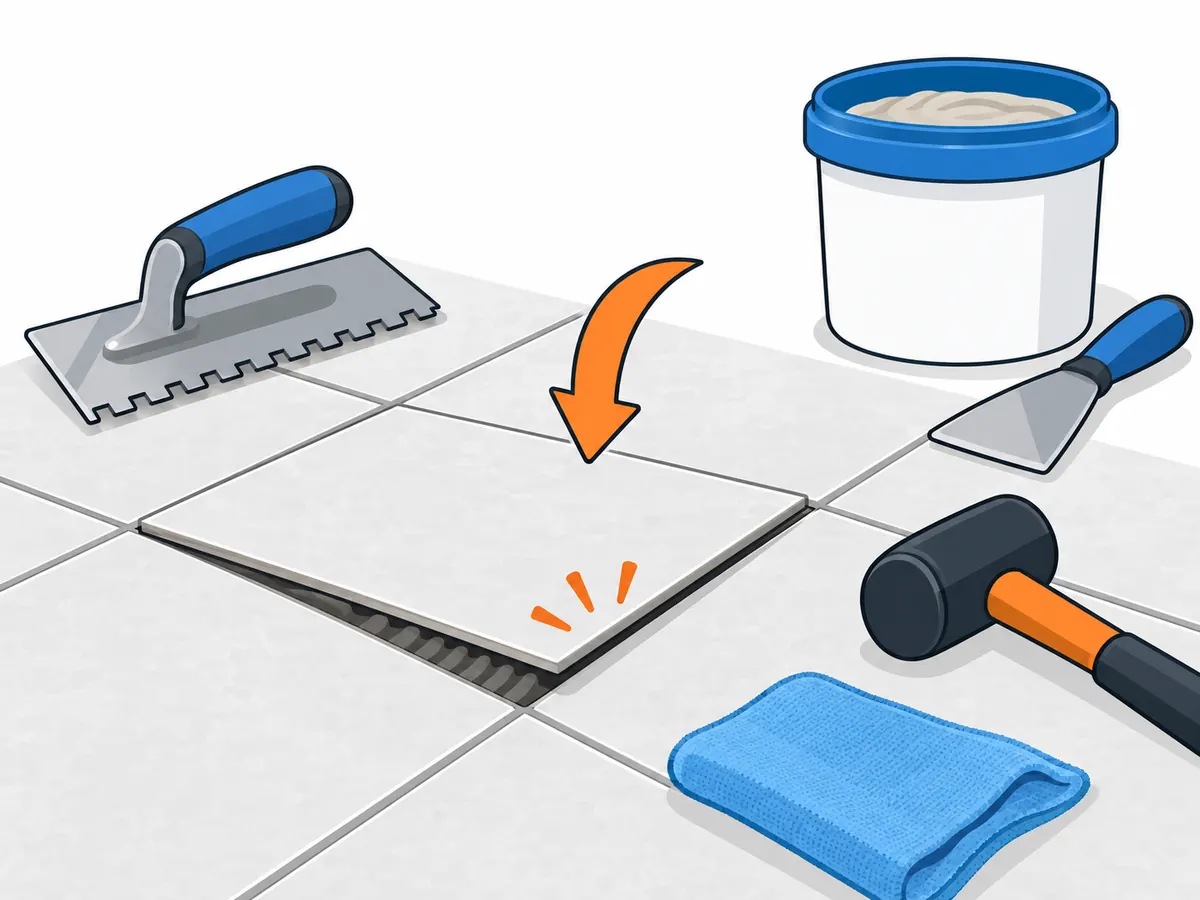
A single loose floor tile is annoying but very fixable. Tiles come loose when the adhesive underneath fails, usually from a subfloor that flexes, moisture creeping in, or an adhesive bed that was too thin to begin with. One loose tile is a repair; a whole field of them is a symptom. Here is how to fix a loose floor tile properly so it stays put.
This guide is part of our wider guide to bathroom fixtures, tile and grout.
Step 1: Confirm the scope of the problem
Press and tap around the loose tile and its neighbors. A hollow sound means the bond has failed there too. Mark every hollow tile with painter's tape. If only one or two tiles are loose and the rest of the floor is solid, a spot repair makes sense. If the hollow sound spreads, stop and think about why, because moisture or a moving subfloor will undo your repair.
Step 2: Remove the grout around the tile
Cut the grout lines around the loose tile with a grout saw or an oscillating multi-tool with a grout blade. Work slowly and keep the blade inside the grout line so you do not chip the neighboring tiles' glaze. Vacuum out the dust.
Step 3: Lift the tile
If the tile is fully loose, it may lift out by hand. Otherwise, slide a putty knife under an edge and pry gently. For a stuck tile, lay a cloth over it and tap with a hammer to crack it into pieces you can lift out, protecting your eyes. If the tile is intact and you want to reuse it, patience beats force. Warm the tile with a hair dryer to soften the adhesive and make removal easier.
Step 4: Clean the tile and the floor
Scrape the old adhesive off the back of the tile and off the subfloor with a putty knife and chisel. The floor needs to be flat and clean for the new bond. Vacuum every bit of dust. Old ridges of mortar hold the tile up too high, so take the surface down to flat.
Step 5: Check the subfloor
Look at what the tile was stuck to. Cement board or concrete is a good base. Plywood is acceptable if it is rigid. If the subfloor flexes when you press it, feels soft, or shows dark water staining, that is the real problem. A small soft area in a bathroom often traces back to a leak at the toilet, tub or vanity, so find and fix the water source first.
Step 6: Re-set the tile
Mix a small batch of thin-set mortar to a peanut-butter consistency. Spread it with a notched trowel, held at about 45 degrees, so the ridges are even. Butter the back of the tile with a thin layer too. Press the tile into place with a slight twisting motion until it sits level with its neighbors. A straight edge laid across the tiles tells you instantly if one corner sits proud.
Tape the tile to its neighbors to keep it from drifting, and wipe any mortar out of the grout lines before it hardens.
Step 7: Regrout
Let the thin-set cure for the time on the bag, usually a day. Then press grout into the joints with a rubber float held at an angle. Wipe the face of the tile with a damp sponge, rinsing often, and buff off the haze after it dries. Our guides on regrouting shower tile and cleaning grout lines cover grout technique in more detail.
Common mistakes
- Re-gluing over a soft or wet subfloor. The repair fails and the hidden damage grows.
- Leaving old adhesive ridges under the tile, so it rocks or sits high.
- Walking on the tile before the mortar cures.
- Using premixed mastic on a bathroom floor. Thin-set handles moisture far better.
Related guides
- How to Install a Shower Shelf Without Damaging Tile or Waterproofing
- How to Fix a Cracked Grout Line Before Water Gets Behind the Tile
- How to Install a Tile Backsplash on a Kitchen Wall
- How to Clean Tile Floors Without Leaving Streaks or Dull Film
FAQ
Can I just glue the tile back down with construction adhesive?
It will hold for a while, but it is not made for floors and can stay slightly flexible, so the tile works loose again. Thin-set mortar is the right material and costs little.
What if the tile cracked when I lifted it?
Home centers and tile shops stock common sizes, and bringing a piece helps match color. If your tile is discontinued, check the attic or garage for spares left by the installer, or pull a tile from a hidden spot like inside a closet and use the new tile there.
How long before I can walk on the repair?
Follow the mortar bag, but a full day is the safe minimum, and longer before heavy furniture or a full bucket of mop water.
More from this topic
- How to Remove Tile Without Damaging the Subfloor: How to remove tile without damaging the subfloor: cut the grout first, work the chisel at a shallow angle,...
- How to Seal a Shower Floor and Keep Water Out of the Wall: Learn how to seal a shower floor: check the grout and tray joint, clean and dry the surface, seal porous tile...
- How to Anchor Into Tile: Learn how to anchor into tile so a fixing holds: drill a clean hole, pick the right anchor for the wall...
- How to Cut Tile Around a Toilet Flange: Learn how to cut tile around a toilet flange: mark the circle from the flange, cut from the back and keep the...
- How to Fix a Hollow Sounding Tile Before It Comes Loose: Learn how to fix a hollow sounding tile: confirm it has debonded, check grout and substrate, reattach it with...
 BathroomHow to Remove Tile Without Damaging the SubfloorHow to remove tile without damaging the subfloor: cut the grout first, work the chisel at a shallow angle, and know when to stop and replace the underlayment.
 BathroomHow to Seal a Shower Floor and Keep Water Out of the WallLearn how to seal a shower floor: check the grout and tray joint, clean and dry the surface, seal porous tile and grout, and fix leaks sealing cannot solve.
 BathroomHow to Anchor Into TileLearn how to anchor into tile so a fixing holds: drill a clean hole, pick the right anchor for the wall behind, and seal it against water.
 BathroomHow to Cut Tile Around a Toilet FlangeLearn how to cut tile around a toilet flange: mark the circle from the flange, cut from the back and keep the cut inside the bowl line.
 BathroomHow to Fix a Hollow Sounding Tile Before It Comes LooseLearn how to fix a hollow sounding tile: confirm it has debonded, check grout and substrate, reattach it with injected adhesive or replace it.