
How to Install a Towel Bar That Stays on the Wall
Part of: Basic plumbing
- Difficulty
- Easy
- Time
- 30 to 60 minutes
- Tools
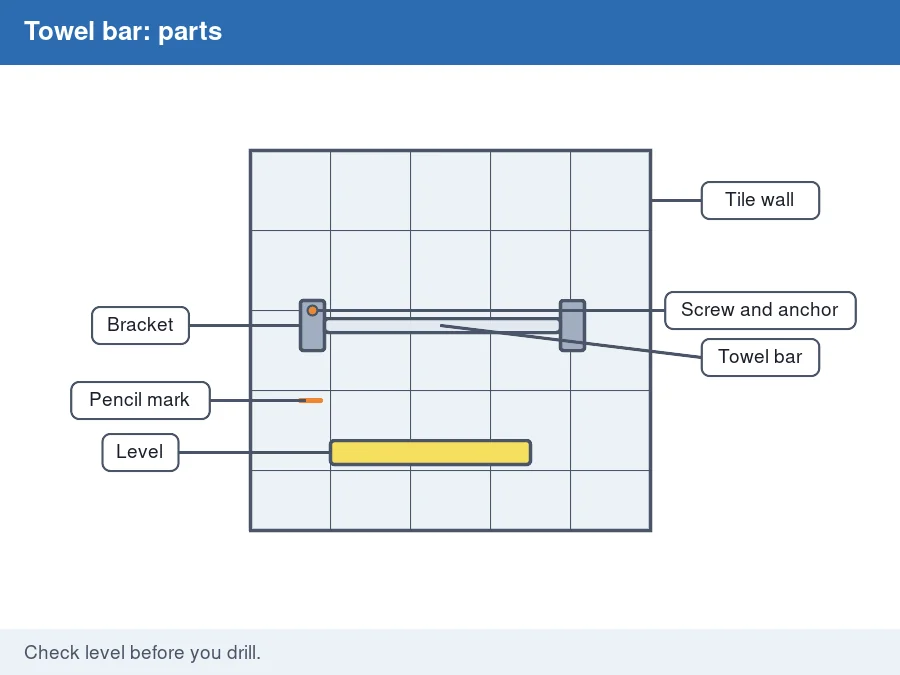
- Tape measure, pencil, level, stud finder, drill with tile and wood bits, wall anchors, screwdriver, silicone sealant, masking tape, a helper to hold the bar
- Call a pro if
- The wall is tile over drywall with no studs where the bar must go and the towel will be pulled hard, or the wall is loose, soft or water damaged where the bar needs to be fixed.
In this guide
- Wear protection
A towel bar is one of those jobs that seems too simple to get wrong, and yet a bar that pulls out of the wall, with a chunk of tile and drywall attached, is one of the most common small repairs in a bathroom. The bar is not the problem; the mounting is. Get the mounting right and a towel bar lasts for decades. How to install a towel bar starts with the position, within reach of where you dry your hands or step out of the shower.
This guide is part of our wider guide to bathroom fixtures, tile and grout.
1. Choose the position
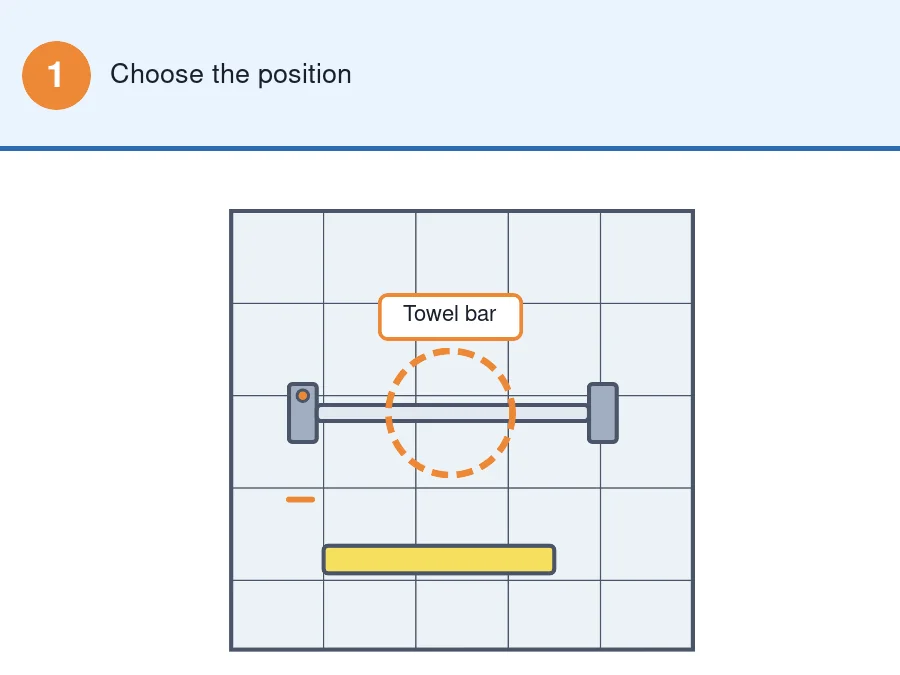
A towel bar wants to be within easy reach of where you dry your hands or step out of the shower, and clear of the door swing, the toilet and anything that swings open.
Height: about 48 inches from the floor for a hand towel by a sink, and about 48 to 52 inches for a bath towel near a shower, measured to the center of the bar. If children use the bathroom, a lower second bar or a hook at their height helps.
Hold the bar in place and step back. Check that a towel hanging on it will not touch the floor, the toilet tank or a radiator.
2. Decide how it will be fixed
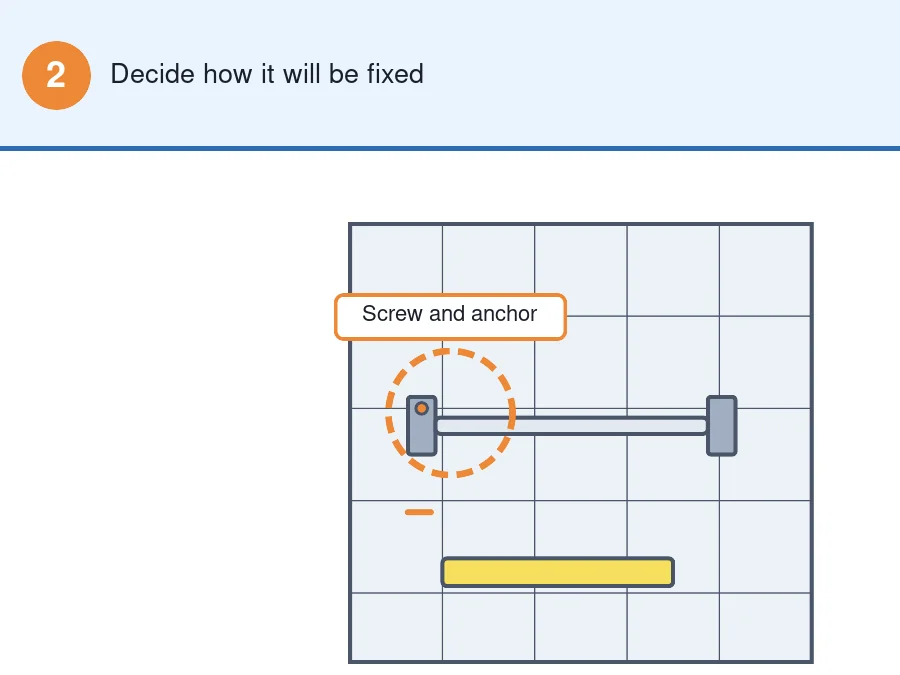
Into studs. Best. A towel bar pulled by a wet towel or a child generates real force, and studs take it.
Into a solid backing. Tile over cement board with framing behind is effectively as good as a stud.
Into drywall with anchors. Acceptable for a light bar in a dry spot, with good anchors. Not ideal in a wet area.
Into tile over drywall with no framing. The hardest case. Use a proper hollow-wall anchor rated for the load, and consider moving the bar to where there is framing.
3. Mark the holes accurately
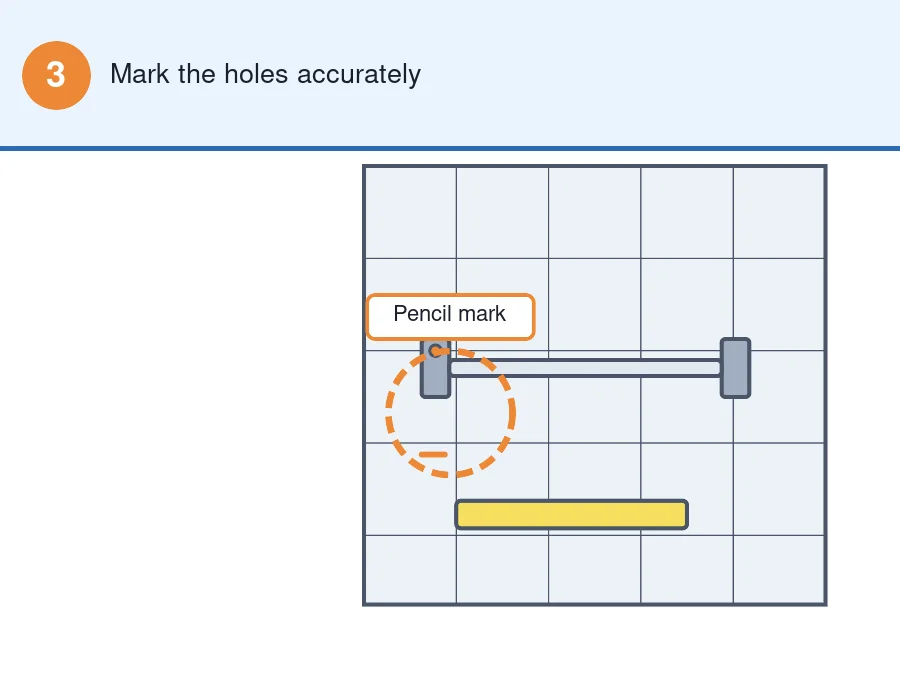
Most towel bar brackets come with a paper template. Tape it to the wall, level it, and mark the holes with a pencil or a center punch. If there is no template, measure the bracket centers, mark both ends, and check with a level across the two marks.
Double check the marks against the bar itself before you drill. An extra hole in tile is a permanent mark.
4. Drill without cracking the tile
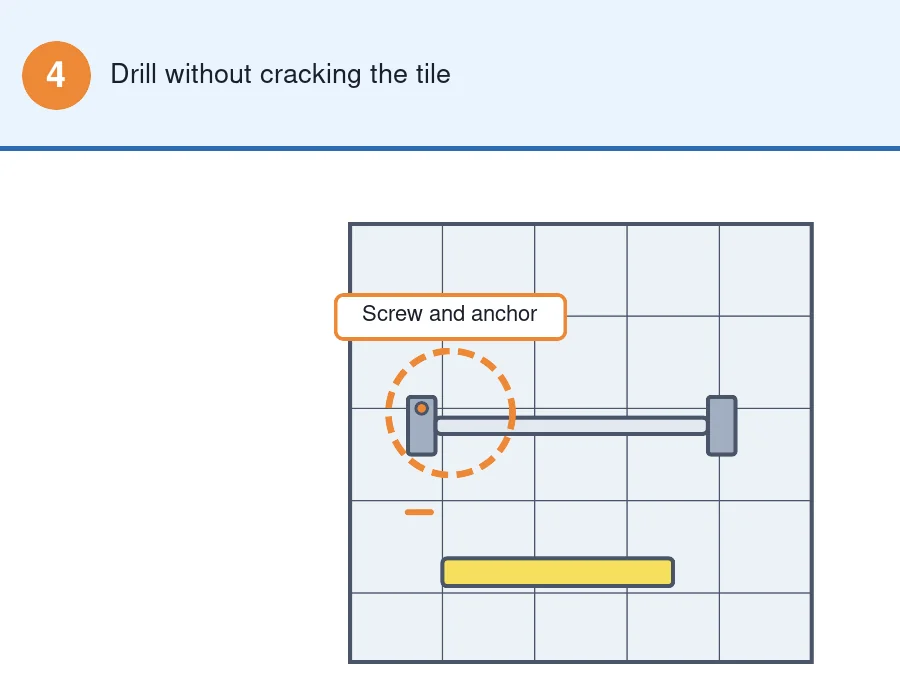
Put masking tape over the tile at each mark so the bit does not skate. Use a carbide or diamond tile bit at low speed with no hammer action, and keep the bit cool with a little water.
Drill through the tile, then switch to a bit suited to the material behind: a wood bit for studs, a masonry bit for block, or a bit sized for your anchor in drywall.
5. Fit the anchors and the brackets
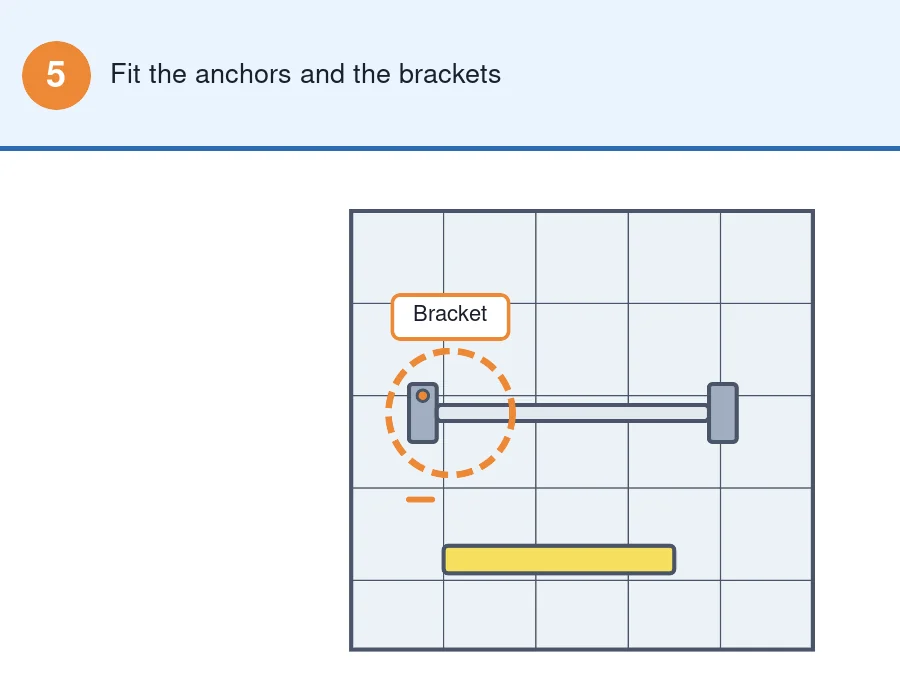
Push the anchor into the hole to the correct depth, following the anchor's instructions. Screw the bracket to the wall, then check it with a level before final tightening.
If you are fixing into a stud, use a screw long enough to bite into the stud but not so long that it reaches a pipe or a cable on the other side. A 1 1/4 inch screw is usually right for a bracket plus drywall into a stud.
6. Seal the holes in wet areas
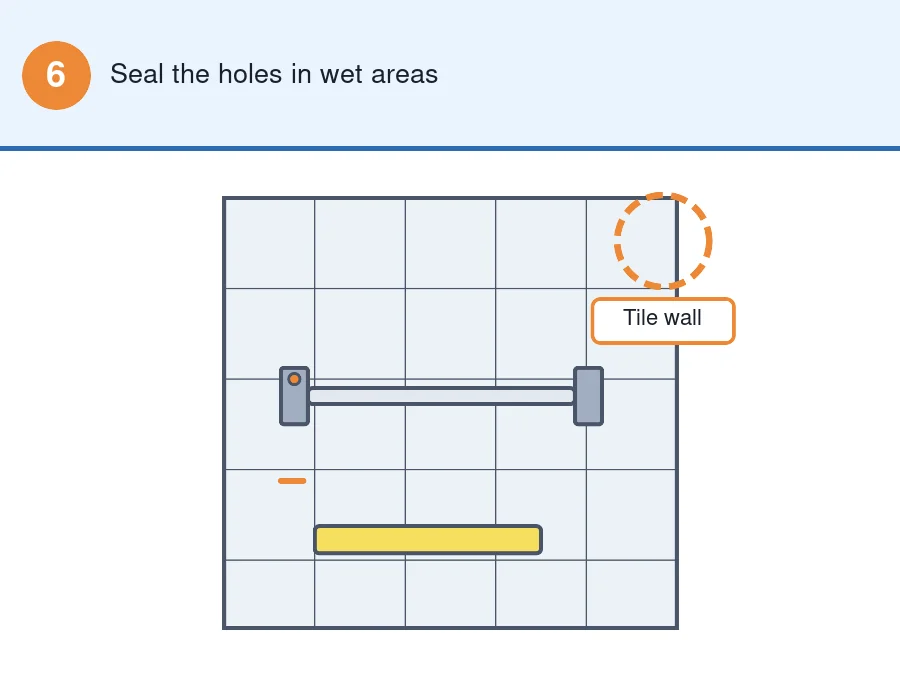
In a bathroom, especially inside a shower or near the tub, put silicone into each hole before the screw goes in and run a small bead around the bracket base. Smooth it with a wet finger and wipe the excess before it sets.
This is the step that stops water getting behind the tile, which is what actually ruins bathroom walls.
7. Fit the bar and test it
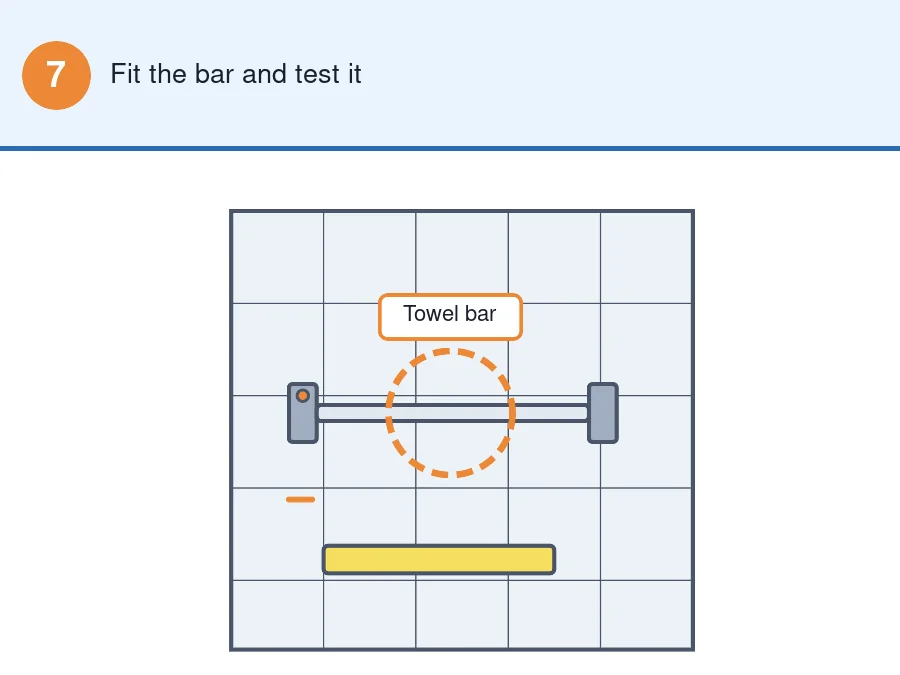
Set the bar into the brackets and tighten the retaining screws. Then test it honestly: pull down and outward with your body weight, and hang a wet towel on it. If the brackets move or the bar flexes at the wall, one of the fasteners is not holding, and you need to redo it before someone else uses it.
8. Add the small extras that make it work
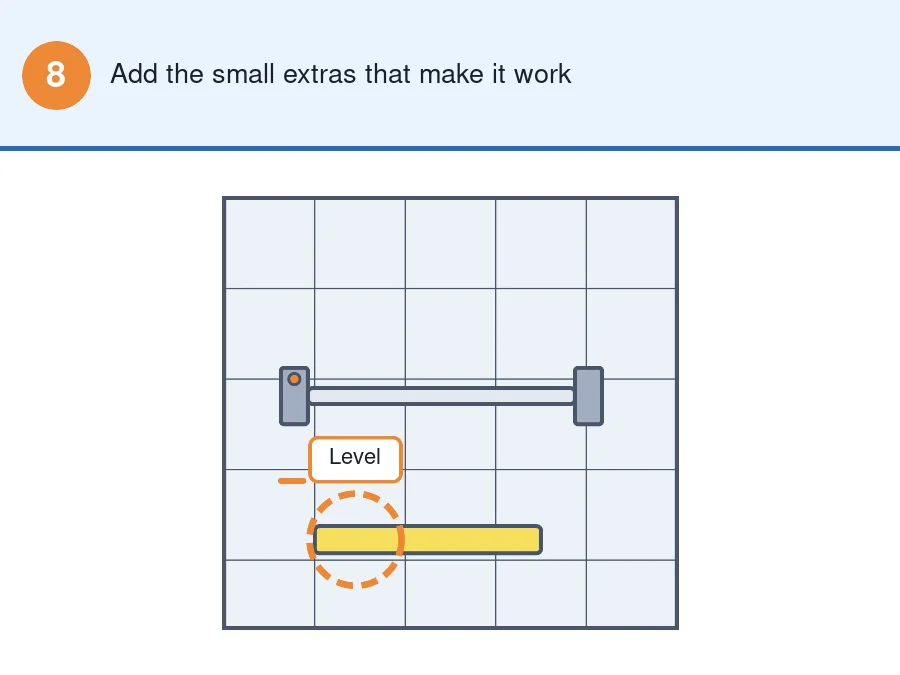
- A towel bar near the sink and a hook near the shower often works better than one long bar.
- A double bar holds more but dries towels more slowly, because the towels touch.
- Hooks are better than bars for children and for heavy bath sheets.
- Match the finish and style to the other bathroom hardware so the room looks deliberate.
Common mistakes
- Drilling into tile with a hammer drill and cracking it.
- Using the small plastic plugs that come with a cheap bar in drywall.
- Fixing a bar where there is no framing and expecting it to hold a wet towel.
- Skipping the silicone in a shower or tub area.
- Marking one end and assuming the other is level.
Related guides
- How to Fix a Towel Bar That Came Off the Wall
- How to Install a Grab Bar in the Bathroom So It Holds Body Weight
- How to Install a Bidet Seat on Your Toilet Step by Step
- How to Install a Bathroom Vanity Top and Sink
- How to Fix a Towel Warmer That Won't Heat Up
FAQ
How do I install a towel bar without drilling?
Adhesive-mounted bars exist and work on smooth, clean tile for light towels. They will not hold a heavy wet towel pulled hard, and they can fail without warning. In a rental they are a reasonable compromise.
What is the best anchor for a towel bar in drywall?
A metal toggle or a heavy-duty self-drilling anchor rated well above the load. Ordinary plastic plugs are not enough for a bar that gets pulled.
How high should a towel bar be?
Around 48 inches to the center for a hand towel, and 48 to 52 inches for a bath towel. Adjust for the people using it.
Will a towel bar hold on tile?
Yes, if the fixing reaches framing or a proper anchor, and the holes are sealed. The tile itself is strong in compression but brittle at the edges, so drill carefully.
More from this topic
- How to Anchor Into Tile: Learn how to anchor into tile so a fixing holds: drill a clean hole, pick the right anchor for the wall...
- How to Fix a Towel Bar That Came Off the Wall: Learn how to fix a towel bar that came off the wall: repair the holes, choose anchors that hold, refit the...
- How to Remove a Towel Bar From a Wall: Learn how to remove a towel bar from a wall, find the hidden set screws, lift the brackets and repair the...
- How to Install a Towel Ring on Drywall: Learn how to install a towel ring on drywall, from height and level to the anchors that keep it tight under...
- How to Hang Shelves on a Tile Wall: Learn how to hang shelves on a tile wall by drilling tile without cracking it and anchoring brackets that...
 BathroomHow to Anchor Into TileLearn how to anchor into tile so a fixing holds: drill a clean hole, pick the right anchor for the wall behind, and seal it against water.
 BathroomHow to Fix a Towel Bar That Came Off the WallLearn how to fix a towel bar that came off the wall: repair the holes, choose anchors that hold, refit the brackets and seal tile so water stays out.
 Walls and PaintHow to Remove a Towel Bar From a WallLearn how to remove a towel bar from a wall, find the hidden set screws, lift the brackets and repair the anchor holes cleanly.
 Walls and PaintHow to Install a Towel Ring on DrywallLearn how to install a towel ring on drywall, from height and level to the anchors that keep it tight under daily use.
 TileHow to Hang Shelves on a Tile WallLearn how to hang shelves on a tile wall by drilling tile without cracking it and anchoring brackets that stay tight.