
How to Clean Grout Lines on Floors and Walls
Part of: Basic plumbing
- Difficulty
- Easy to moderate
- Time
- 1 to 3 hours
- Tools
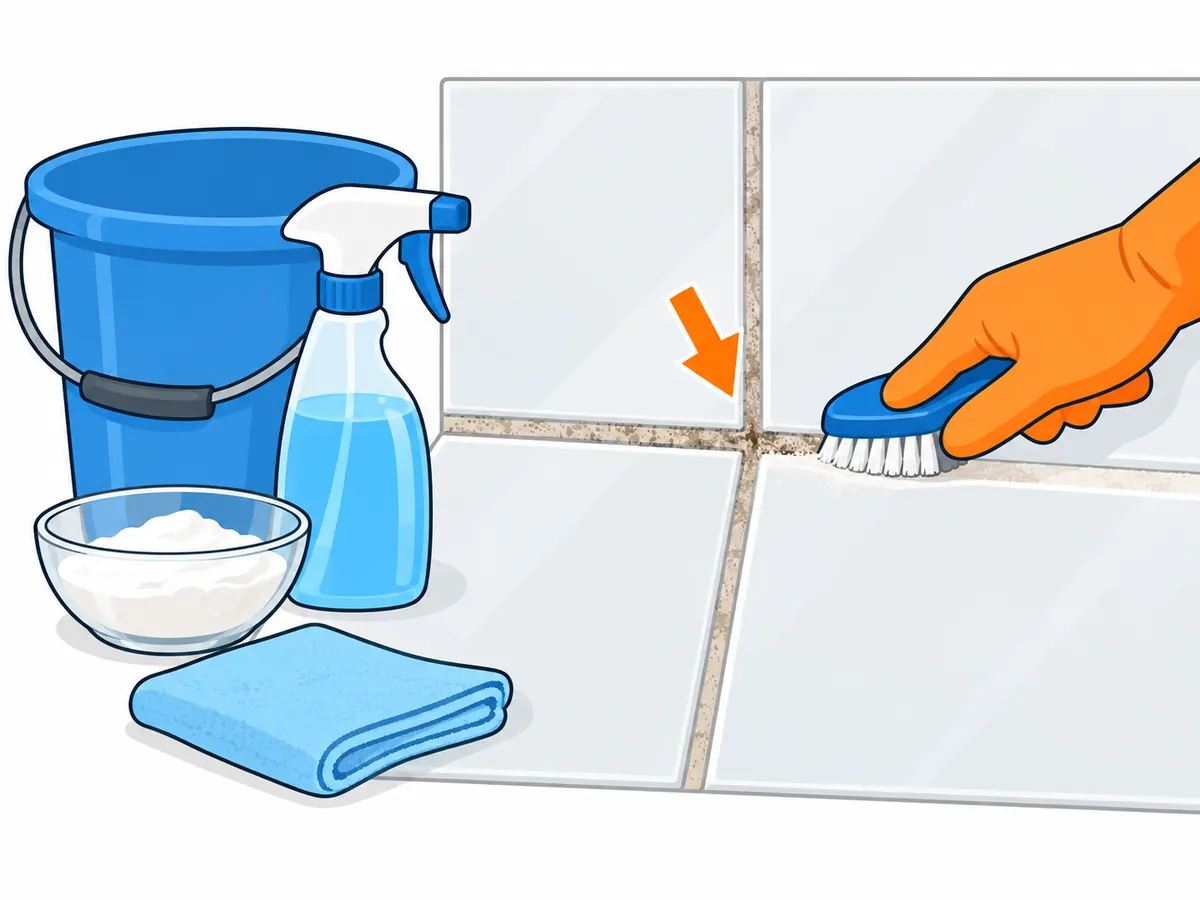
- Stiff nylon brush, old toothbrush, baking soda, oxygen bleach powder, spray bottle, microfiber cloths, bucket, rubber gloves, grout sealer
- Call a pro if
- The grout is cracked or crumbling, tiles are loose, there is mold behind the tile, or the floor is natural stone and you are unsure about cleaners.
In this guide
- Gas safety
- Wear protection
- Chemical safety
Grout is porous, so it absorbs dirt, spills and moisture. The tile can look clean while the grout lines are gray or brown. Cleaning is not hard, but you do need the right method for the kind of grout and tile. Here is how to clean grout lines without scrubbing for hours.
This guide is part of our wider guide to bathroom fixtures, tile and grout.
Know your surface
Check what the tile is made of. Ceramic and porcelain tile are tough and can handle most household cleaners. Natural stone such as marble, limestone and travertine can be etched by acids such as vinegar and lemon juice. Cement-based grout can also be affected by acid over time. If you are unsure, start with plain warm water and a mild pH-neutral cleaner, and check with the tile maker.
Step 1: Sweep and wipe
Vacuum or sweep first, so loose dirt does not turn to mud. Wipe the floor with warm water and a little dish soap, and let it dry. This removes the top layer so your cleaner can work on the grout.
Step 2: Baking soda paste
Mix baking soda with water to make a thick paste. Spread it along the grout lines and leave it for 10 to 15 minutes. Scrub with a stiff nylon brush or an old toothbrush along the grout line. Rinse with clean water and wipe dry. This is the gentlest method and works for light dirt.
Step 3: Oxygen bleach for stains
For deeper stains, mix oxygen bleach powder with hot water as the label says. Apply it to the grout, wait the time on the label, and scrub. Oxygen bleach is less harsh than chlorine bleach, but wear gloves and test it first. Rinse well. Do not follow it with vinegar or other products.
Step 4: Use a steam cleaner with care
A handheld steamer can lift dirt, but heat can harm some sealers and natural stone. Check the tile maker's guidance first, and do not use it on loose tile or old grout.
Step 5: Rinse and dry
Go over the area with clean water and a cloth to remove any residue. Leftover cleaner attracts dirt and makes grout look cloudy. Dry with a clean towel or let it air dry with a fan.
Step 6: Seal the grout
Once the grout is fully dry, which can take 24 hours or more, apply a grout sealer. Sealers fill the pores so that dirt and moisture stay on the surface. Follow the label for application and cure time. Seal grout about once a year in wet areas, or as the label says.
Showers and mold
In showers, black spots may be mildew. For this problem, see our guide on mildew on shower grout. If the grout is crumbling or loose, it is time to re-grout. See regrouting shower tile.
Keep it clean
Wipe up spills right away. Use a mild cleaner weekly in busy areas. Use mats at doors to catch dirt. Run the fan in bathrooms and squeegee the walls after a shower.
Common mistakes
Scrubbing with a wire brush, which scratches tile and wears grout. Using acid on stone. Mixing cleaners. Skipping the rinse. Sealing before the grout is clean and dry.
Related guides
- How to Clean a Glass Shower Door and Stop Hard Water Spots
- How to Clean Tile Floors Without Leaving Streaks or Dull Film
- How to Fix a Cracked Grout Line Before Water Gets Behind the Tile
- How to Caulk a Kitchen Sink for a Clean Seal
- How to Remove Grout Haze From Tile
- How to Use Tile Spacers
FAQ
Is vinegar safe for grout?
It is common, but acid can harm natural stone and some grout. Test first or use a neutral cleaner.
Why does grout get dirty so fast?
It is porous. Sealing helps.
Can I paint grout?
Grout paint and colorants exist. Follow the label and clean the grout first.
More from this topic
- How to Seal Grout So It Stays Clean Longer: How to seal grout: clean it properly, let it dry, apply an impregnating sealer, wipe the tile, and know when...
- How to Keep Shower Grout From Getting Moldy: Keep shower grout from getting moldy with daily squeegee habits, better ventilation, sealed grout, and fast...
- How to Keep Tile Joints Even: Learn how to keep tile joints even with a layout line, consistent spacers, a ledger board and a check as you...
- How to Seal a Shower Floor and Keep Water Out of the Wall: Learn how to seal a shower floor: check the grout and tray joint, clean and dry the surface, seal porous tile...
- How to Care for Natural Stone Floors: Learn how to care for natural stone floors like marble, travertine, and slate: use pH neutral cleaners, avoid...
 BathroomHow to Seal Grout So It Stays Clean LongerHow to seal grout: clean it properly, let it dry, apply an impregnating sealer, wipe the tile, and know when to reapply. Steps and safety tips included.
 BathroomHow to Keep Shower Grout From Getting MoldyKeep shower grout from getting moldy with daily squeegee habits, better ventilation, sealed grout, and fast attention to the first dark spots.
 BathroomHow to Keep Tile Joints EvenLearn how to keep tile joints even with a layout line, consistent spacers, a ledger board and a check as you go, so grout lines stay straight.
 BathroomHow to Seal a Shower Floor and Keep Water Out of the WallLearn how to seal a shower floor: check the grout and tray joint, clean and dry the surface, seal porous tile and grout, and fix leaks sealing cannot solve.
 FloorsHow to Care for Natural Stone FloorsLearn how to care for natural stone floors like marble, travertine, and slate: use pH neutral cleaners, avoid acids, wipe spills fast, and reseal as needed.