
Mildew on Shower Grout: How to Remove It and Keep It Away
Part of: Basic plumbing
- Difficulty
- Easy
- Time
- 30 to 60 minutes
- Tools
- Stiff grout brush, spray bottle, baking soda, hydrogen peroxide or white vinegar, rubber gloves, mask, towel
- Call a pro if
- The mold keeps returning, covers a large area, grout crumbles or tiles are loose, or there is a musty smell from behind the wall.
In this guide
- Step 1: Pick one cleaner
- Step 2: Let it sit
- Step 3: Scrub
- Step 4: Rinse and dry
- Step 5: Check the caulk
- Step 6: Seal the grout
- Step 7: Keep it dry
- Mistakes to avoid
- Keeping it from coming back
- Quick recap
- Grout color and stains that will not budge
- Related guides
- FAQ
- A simple routine to keep it from returning
- When to call a pro
- Gas safety
- Wear protection
- Chemical safety
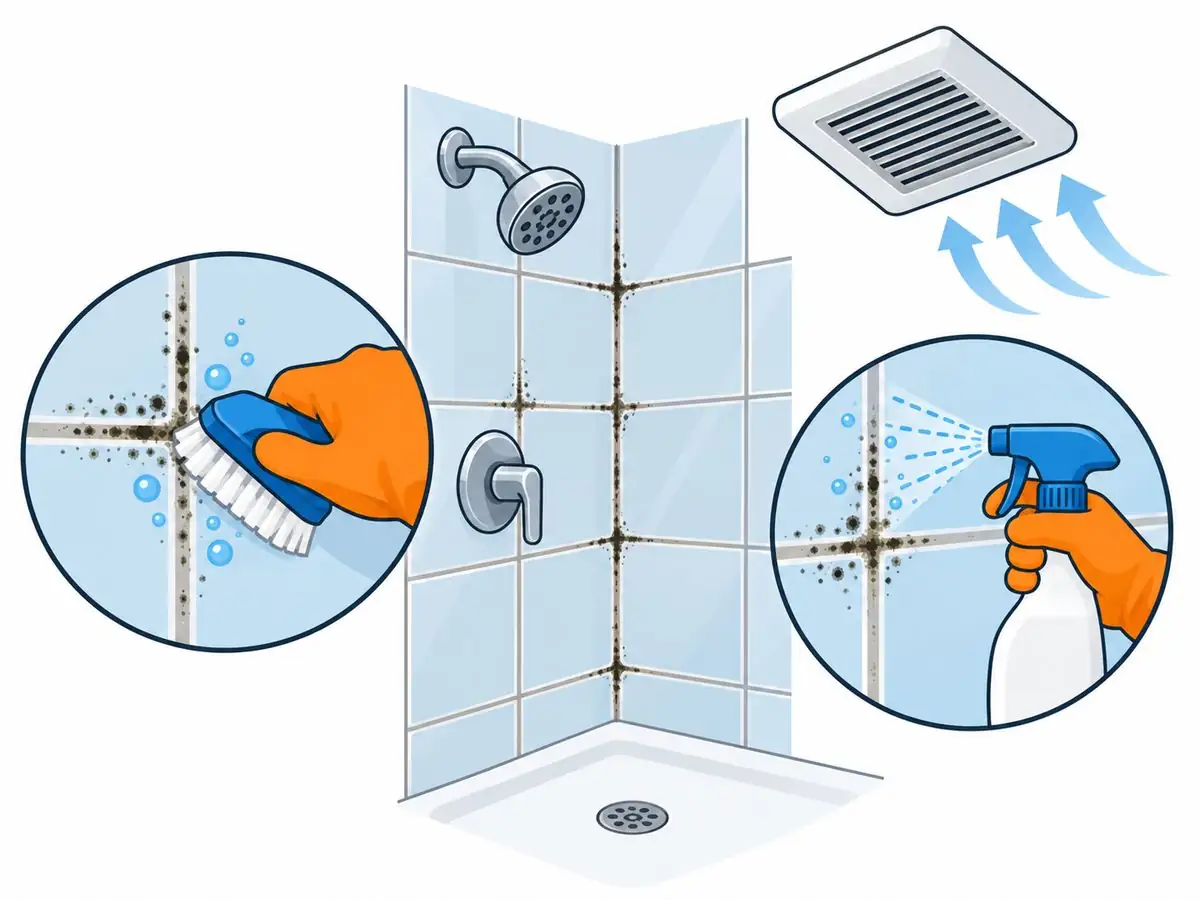
Mildew on shower grout shows as gray, black or pink spots. It grows where water stays and air is still. Cleaning it is simple. The long-term fix is keeping the area dry.
This guide is part of our wider guide to bathroom fixtures, tile and grout.
Step 1: Pick one cleaner
For light mildew, spray white vinegar or 3 percent hydrogen peroxide on the grout. Do not mix them in the same bottle. Skip vinegar on natural stone tile or stone grout sealers, since acid can etch stone, and use a cleaner the tile maker approves.
Step 2: Let it sit
Wait 10 to 15 minutes so it can break down the growth.
Step 3: Scrub
Scrub the grout lines with a stiff brush. For stains that stay, make a paste of baking soda and water, spread it on the grout and scrub again.
Step 4: Rinse and dry
Rinse with clean water and wipe the wall dry with a towel.
Step 5: Check the caulk
If the caulk at the corners and tub edge is black or peeling, it holds water. See our guide to caulking a bathtub.
Step 6: Seal the grout
Once clean and fully dry, apply a grout sealer as the label says. It slows water and stains.
Step 7: Keep it dry
Run the fan during and for 20 minutes after a shower. Wipe or squeegee walls and leave the door or curtain open. Check the fan, and read our guide on a bathroom fan that is not working or loud if it is weak.
Mistakes to avoid
Do not use a wire brush on grout, since it wears it down. Do not mix cleaners. Do not seal grout that is still damp, because it traps moisture. Do not ignore soft or missing grout. That lets water into the wall, which is a bigger problem than the mildew.
Keeping it from coming back
Squeegee the shower walls after use, run the fan, and keep shampoo bottles off the shower floor so water can drain. Wash the shower curtain liner often. Reseal grout about once a year. If the bathroom has no fan or a weak one, adding a working fan is the best long-term fix.
Quick recap
The routine is the same each time: choose one cleaner, let it work, scrub, rinse and dry the wall, then check the caulk and reseal the grout. If the stains return within weeks, look for a leak, a weak fan or a wet wall behind the tile before you scrub again.
Grout color and stains that will not budge
Some dark spots are stains inside the grout, not live mildew. If scrubbing with baking soda paste does not lift them after two rounds, stop scrubbing. Hard scrubbing wears grout down. Try an oxygen-based bathroom cleaner as its label says, using one product at a time. If the stains stay, a grout colorant or a fresh coat of sealer can even out the color. Be careful with colored grout, as harsh cleaners can fade it. Test any product on a small corner near the floor first, and give it a day before you judge the result.
Related guides
- How to Keep Shower Grout From Getting Moldy
- How to Remove Rust Stains From Bathtub Surfaces Without Scratching
- How to Regrout Shower Tile: A Beginner Guide to Fresh Grout Lines
- How to Seal a Shower Floor and Keep Water Out of the Wall
- How to Grout a Shower Wall
FAQ
Is mildew the same as mold?
Mildew is a type of mold that grows on surfaces. Treat it the same way and keep it dry.
Can I use bleach?
It can whiten, but it does not fix moisture, and it is risky near other cleaners. Start with vinegar or peroxide.
How often should I clean it?
A quick scrub every month or two prevents buildup.
A simple routine to keep it from returning
Mildew comes back wherever the shower stays damp. Leave the door or curtain open after a shower so the air can move, and run the fan for a while after you finish. Wipe down the wall and the grout lines with a squeegee or towel once a week. If you notice a spot early, a quick scrub with the same cleaner you used before stops it from spreading. Keep a note of the date you last sealed the grout so you know when it is time to do it again.
More from this topic
- How to Keep Shower Grout From Getting Moldy: Keep shower grout from getting moldy with daily squeegee habits, better ventilation, sealed grout, and fast...
- How to Clean a Shower Curtain Liner: Learn how to clean a shower curtain liner: wash the plastic or fabric liner, kill the mildew, dry it properly...
- How to Clean a Shower Drain and Keep It Draining Fast: Learn how to clean a shower drain: lift the strainer, clear the hair and soap scum, clean the trap, and use a...
- How to Remove Mold from a Bathroom Ceiling: Learn how to remove mold from a bathroom ceiling safely: protect yourself, clean with the right product, seal...
- How to Remove Grout Haze From Tile: How to remove grout haze from tile: buff the dry film first, then use a mild acid cleaner for cement grout,...
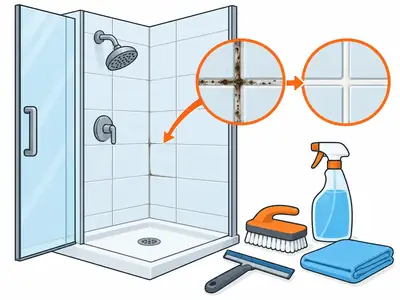 BathroomHow to Keep Shower Grout From Getting MoldyKeep shower grout from getting moldy with daily squeegee habits, better ventilation, sealed grout, and fast attention to the first dark spots.
 BathroomHow to Clean a Shower Curtain LinerLearn how to clean a shower curtain liner: wash the plastic or fabric liner, kill the mildew, dry it properly and know when it is past saving.
 BathroomHow to Clean a Shower Drain and Keep It Draining FastLearn how to clean a shower drain: lift the strainer, clear the hair and soap scum, clean the trap, and use a simple routine so the water never stands again.
 BathroomHow to Remove Mold from a Bathroom CeilingLearn how to remove mold from a bathroom ceiling safely: protect yourself, clean with the right product, seal and repaint, then fix the ventilation behind it.
 BathroomHow to Remove Grout Haze From TileHow to remove grout haze from tile: buff the dry film first, then use a mild acid cleaner for cement grout, and keep it off natural stone and epoxy grout.