
How to Remove Rust Stains From Bathtub Surfaces
Part of: Basic plumbing
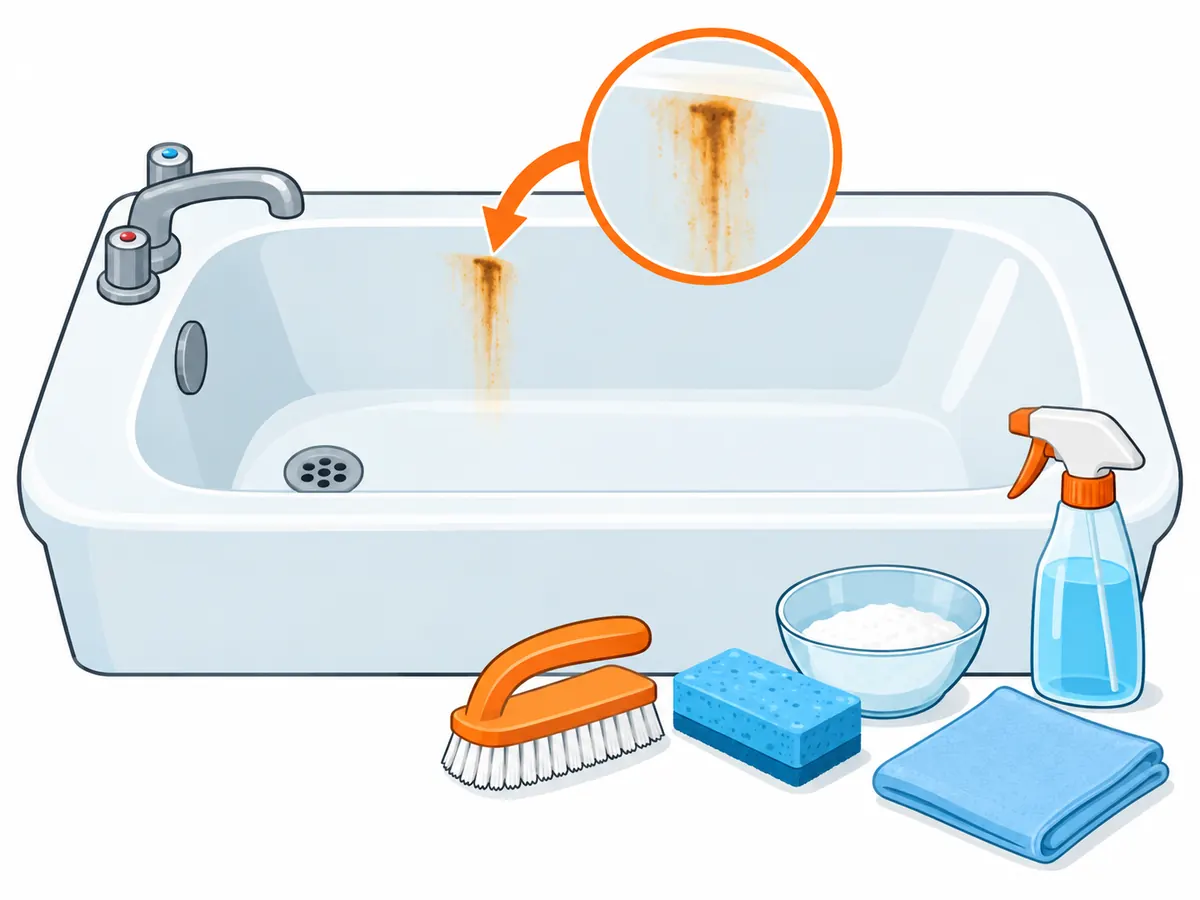
- Difficulty
- Easy
- Time
- 15 to 45 minutes, plus soaking time for old stains
- Tools
- Baking soda, lemon juice, table salt, soft cloths or sponges, an old toothbrush, spray bottle, dry towel, gloves
- Call a pro if
- The rust comes from a crack or chip that reaches the cast iron or steel under the enamel, because the tub needs refinishing, not just cleaning.
In this guide
- Wear protection
- Chemical safety
This guide shows how to remove rust stains from bathtub surfaces without harsh scrubbing, matched to the tub material. Rust stains in a bathtub usually come from one of three sources: a dripping faucet that leaves iron-rich water sitting in one spot, a metal can or razor left on the tub edge, or high iron content in the water itself. The orange or brown mark looks permanent, but in most cases it sits on the surface and lifts with mild household products. The method depends on your tub material, so start there.
This guide is part of our wider guide to bathroom fixtures, tile and grout.
Know your tub
- Porcelain-enameled cast iron or steel: hard, glossy, clinks when tapped. Tolerates slightly stronger treatment.
- Acrylic or fiberglass: lighter, slight flex underfoot, duller sound when tapped. Scratches easily, so stay gentle.
Step 1: Wash the area first
Clean the stain and the area around it with warm water and dish soap, then rinse and dry. Surface soap scum can hide how deep the rust mark really is, and starting clean lets your paste grip the stain instead of the grime.
Step 2: Treat the stain on a porcelain tub
For porcelain, make a paste of baking soda and a little water and spread it over the rust. For older or darker stains, sprinkle table salt over the stain, then squeeze half a lemon over the salt so it makes a gritty, acidic slurry. Let it sit for 15 to 30 minutes. Scrub gently with a soft cloth or an old toothbrush, working in circles. Rinse well and dry.
The acid in the lemon dissolves the rust, and the salt gives just enough abrasion to lift it. Repeat for stubborn marks instead of scrubbing harder.
Step 3: Treat the stain on acrylic or fiberglass
Skip the salt. Acrylic scratches with anything gritty. Instead, spray the stain with white vinegar or lemon juice and let it sit for 30 to 60 minutes. Wipe with a soft sponge, then spread a baking soda paste on top for the last of the discoloration. Rinse thoroughly.
Keep the paste wet while you wipe. Dry baking soda rubbed hard is more abrasive than the same paste used wet.
Step 4: Handle rust around the drain and fixtures
Rust rings around the drain often come from the drain fitting itself or from water sitting under the flange. Clean what you can reach with a toothbrush dipped in vinegar. If the metal of the drain is rusting through, that is a sign to replace the drain fitting, and our guide on a dripping tub spout or diverter covers a related drip that keeps the area wet.
Step 5: Stop the stain from coming back
A rust stain that returns in days means the source is still active. Check for a slow drip from the spout and fix it. Move metal cans and razors to a shelf or a rust-proof rack. If your water has high iron content, the stains will keep reappearing until the water is treated, which is a conversation with a plumber about filtration.
What not to do
- No bleach on rust. Chlorine bleach can set rust stains and make them darker.
- No abrasive powders or metal pads on acrylic or fiberglass.
- Do not leave acidic pastes on any tub for hours. Long acid exposure can dull enamel.
- Do not ignore a stain that keeps growing. It usually means an active drip or a failing finish.
Related guides
- How to Caulk a Bathtub (Remove Old Caulk First)
- How to Fix a Leaking Bathtub Drain and Stop the Drip Below
- How to Make a Bathtub Non-Slip
- How to Unclog a Bathtub Drain With a Hair Clog
- How to Remove Hard Water Stains from Glass Shower Doors
- How to Remove Rust Stains From Concrete
FAQ
Why did the stain come back after I removed it?
The source is still there. A dripping spout, a rusting can, or iron in the water will redraw the same mark. Remove the source and the stain stops returning.
Is a rust stain harmful?
The stain itself is cosmetic. But if it comes from a chip that lets water reach the metal under the enamel, the metal will keep corroding and the damage grows. Seal chips promptly.
Can I use a commercial rust remover?
Some are made for bathroom surfaces, but many are too harsh for acrylic. Check the label for your tub material and test in a hidden spot first.
More from this topic
- How to Resurface a Bathtub: Learn how to resurface a bathtub with an epoxy refinishing kit, from the acid etch and masking to the cure...
- How to Clean a Jetted Bathtub: Learn how to clean a jetted bathtub: flush the jets with the right cleaner, scrub the shell and intake, and...
- How to Repair a Chip in a Porcelain Sink: Learn how to repair a chip in a porcelain sink with epoxy putty, how to match the white, and when a chip...
- How to Clean a Bathtub Overflow Drain: Learn how to clean a bathtub overflow drain: remove the cover, clear the hair and scum from the chamber,...
- Tub Overflow Leak: How to Fix the Plate and Gasket: Tub overflow leak or water around the plate? Find the source, replace the overflow gasket and seal it so...
 BathroomHow to Resurface a BathtubLearn how to resurface a bathtub with an epoxy refinishing kit, from the acid etch and masking to the cure time that decides how long it lasts.
 BathroomHow to Clean a Jetted BathtubLearn how to clean a jetted bathtub: flush the jets with the right cleaner, scrub the shell and intake, and keep the lines clear so the tub stops smelling.
 BathroomHow to Repair a Chip in a Porcelain SinkLearn how to repair a chip in a porcelain sink with epoxy putty, how to match the white, and when a chip means the sink has to go.
 BathroomHow to Clean a Bathtub Overflow DrainLearn how to clean a bathtub overflow drain: remove the cover, clear the hair and scum from the chamber, flush it and check the seal afterward.
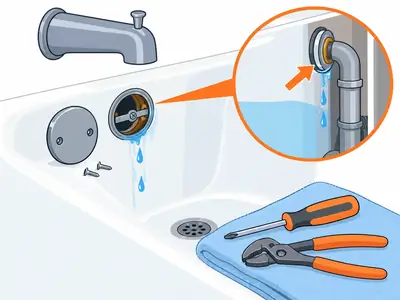 BathroomTub Overflow Leak: How to Fix the Plate and GasketTub overflow leak or water around the plate? Find the source, replace the overflow gasket and seal it so water stays out of the wall.