
How to Remove Hard Water Stains from Glass Shower Doors
Part of: Basic plumbing
- Difficulty
- Easy
- Time
- 30 minutes to 1 hour per panel
- Tools
- White vinegar, baking soda, citric acid powder, spray bottle, rubber gloves, non-scratch scrub sponge, plastic scraper, squeegee, microfiber cloths, dish soap
- Call a pro if
- The glass is etched or cloudy in patches that do not change after cleaning, the stains sit inside a sealed double pane, or the glass is antique, leaded or coated and you are not sure what it will tolerate.
In this guide
- Tell film from etching
- Test a small corner
- Start with vinegar
- Move up to baking soda paste
- Use citric acid for heavy film
- Scrape the stubborn spots
- Clean the tracks and seals while you are there
- Dry the glass after every shower
- Reduce the minerals in the water
- Keep windows and mirrors clear too
- Common mistakes
- Related guides
- FAQ
- When to call a pro
- Gas safety
- Wear protection
- Chemical safety
Hard water leaves behind calcium and magnesium, and on glass those minerals dry into a white film that gets harder to shift the longer it sits. Fresh spots wipe off with vinegar. Old spots need a soak and a mild abrasive. A film that has been there for years may have actually eaten into the glass, and no cleaner will fix that. Knowing the difference saves a lot of scrubbing. How to remove hard water stains from glass starts by telling film from etching, since a cloudy patch that disappears when wet is film sitting on the surface.
This guide is part of our wider guide to bathroom fixtures, tile and grout.
1. Tell film from etching
Wet the glass and look at it from an angle. If the cloudy patch disappears when wet, it is mineral film sitting on the surface and it can be removed. If the cloudiness stays visible when wet, the minerals have etched the glass and the damage is permanent.
Etched glass can be polished by a specialist but not by a household cleaner. In that case, the practical answer is to keep the film off from now on so the etching stops spreading, and to consider replacing the panel if it bothers you.
2. Test a small corner
Whatever you plan to use, try it on a corner first, especially on coated or tinted glass. Wait for it to dry before judging, because a cleaner that looks fine wet can leave a haze.
3. Start with vinegar
Mix equal parts white vinegar and water in a spray bottle. Spray the glass, leave it for 10 to 15 minutes so the acid can soften the minerals, then wipe with a damp non-scratch sponge and rinse.
For a vertical shower door, soak a cloth in the vinegar mix and press it against the glass so it stays wet. Fifteen minutes of contact does more than fifteen minutes of scrubbing.
4. Move up to baking soda paste
For spots that vinegar alone will not lift, mix baking soda with a little water into a paste. Apply it to the spots, leave it for five minutes, and rub gently with a non-scratch sponge. Baking soda is mildly abrasive, so keep the pressure light and rinse thoroughly, since residue dries into a new white film.
Do not use the paste on tinted film or coated glass without testing; the abrasive can dull the surface.
5. Use citric acid for heavy film
Citric acid powder dissolves in warm water and is stronger than vinegar on mineral deposits without being aggressive to glass. Mix a couple of tablespoons in a spray bottle of warm water, spray, and leave it for 15 minutes. It works well on shower doors with years of buildup, and it does not leave the vinegar smell.
6. Scrape the stubborn spots
For a hard crust around the edges of a shower door, use a plastic scraper or the edge of an old plastic card, holding it almost flat. Never use a metal blade on glass unless you know the technique, and never on coated glass.
7. Clean the tracks and seals while you are there
The glass is only half the problem. The frame, the track and the seal hold the water that keeps the film coming back. Wipe the track with vinegar, clear the weep holes so water drains out, and check the door seal for mildew. Our guide on cleaning a glass shower door covers the frame and hardware side in more detail.
8. Dry the glass after every shower
This is the whole secret. Minerals only leave a stain when water sits and evaporates on the glass. Keep a squeegee in the shower and use it for twenty seconds after every shower: top to bottom, overlapping passes, then a wipe along the bottom edge and the seal.
If a squeegee is too much to ask, a microfiber cloth kept in the shower works, and so does a shower door that stays open so air can dry it.
9. Reduce the minerals in the water
- A shower head filter reduces some sediment but will not soften water.
- A whole house softener removes the calcium and magnesium that cause the problem, which is the only real long-term fix if your water is very hard.
- A squeegee plus a weekly vinegar wipe keeps even hard water glass clear without a softener.
10. Keep windows and mirrors clear too
The same approach works on interior glass: vinegar and water, a non-scratch sponge, and a squeegee. On a mirror, work in overlapping strokes and finish with a dry microfiber cloth. Avoid spraying cleaner directly onto a mirror frame, where it can seep behind the glass and damage the backing.
Common mistakes
- Mixing vinegar with bleach, which produces a dangerous gas.
- Using steel wool or a scouring pad, which scratches the glass permanently.
- Letting an acid cleaner sit on stone or marble nearby.
- Scrubbing hard on etched glass, which does nothing.
- Cleaning the glass but leaving the track full of water and minerals.
Related guides
- How to Remove Grout Haze From Tile
- How to Seal a Shower Floor and Keep Water Out of the Wall
- How to Remove Mold from a Bathroom Ceiling and Stop It Coming Back
- How to Fix a Loose Shower Head Arm That Drips or Wobbles
- How to Remove Rust Stains From Bathtub Surfaces
- Mildew on Shower Grout: How to Remove It and Keep It Away
FAQ
Does vinegar really remove hard water stains?
Yes, on mineral film. It dissolves calcium and magnesium. It will not fix etched glass, where the minerals have damaged the surface itself.
What if the stains are between two panes of glass?
That means the seal of a double-pane unit has failed and moisture is inside. It cannot be cleaned; the unit has to be replaced.
How do I stop stains coming back on a shower door?
Squeegee after every shower, wipe the bottom seal, and leave the door open so air circulates. A weekly vinegar spray takes two minutes.
Can I use a bathroom cleaner with bleach on shower glass?
Bleach kills mildew but does not remove minerals, and it must never be mixed with an acid cleaner. Use them on separate days, with rinsing in between.
More from this topic
- How to Clean a Glass Shower Door and Stop Hard Water Spots: Learn how to clean a glass shower door: dissolve hard water spots, scrub soap scum, squeegee after use and...
- How to Remove Hard Water Buildup from a Faucet: Learn how to remove hard water buildup from a faucet: soften deposits with vinegar or citric acid, clean the...
- How to Clean Hard Water Stains From a Patio: Learn how to clean hard water stains from a patio: dissolve the mineral film with a mild acid and stop the...
- How to Clean a Shower Head (Remove Mineral Buildup): Clean a shower head clogged with mineral buildup by soaking it in vinegar, scrubbing the nozzles, and...
- How to Remove Carpet Stains: Learn how to remove carpet stains fast: blot, use cool water and mild cleaners, test first and know which...
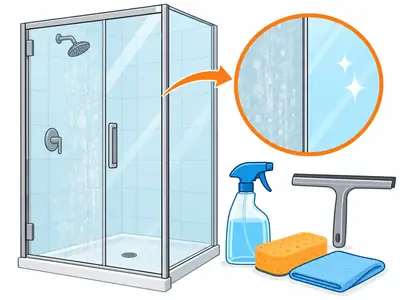 BathroomHow to Clean a Glass Shower Door and Stop Hard Water SpotsLearn how to clean a glass shower door: dissolve hard water spots, scrub soap scum, squeegee after use and keep the glass clear with a quick weekly routine.
 BathroomHow to Remove Hard Water Buildup from a FaucetLearn how to remove hard water buildup from a faucet: soften deposits with vinegar or citric acid, clean the aerator, polish the finish and stop it returning.
 Garage and OutdoorsHow to Clean Hard Water Stains From a PatioLearn how to clean hard water stains from a patio: dissolve the mineral film with a mild acid and stop the water that leaves it.
 BathroomHow to Clean a Shower Head (Remove Mineral Buildup)Clean a shower head clogged with mineral buildup by soaking it in vinegar, scrubbing the nozzles, and flushing it for full, even spray again.
 FloorsHow to Remove Carpet StainsLearn how to remove carpet stains fast: blot, use cool water and mild cleaners, test first and know which stains need special care.