
How to Clean Mirrors Without Streaks
Part of: Tools and everyday fixes
- Difficulty
- Easy
- Time
- 5 to 10 minutes per mirror
- Tools
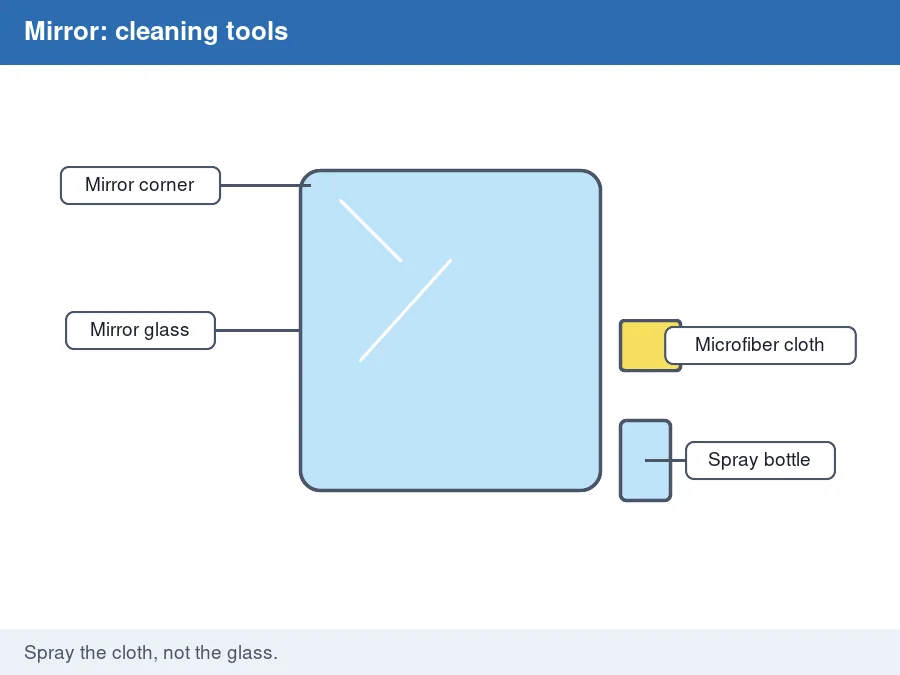
- Two microfiber cloths, glass cleaner or diluted vinegar, and a squeegee for large mirrors
- Call a pro if
- The mirror has damage to its backing, black edge spots, or desilvering, which cleaning cannot fix and may need resilvering or replacement.
In this guide
- Chemical safety
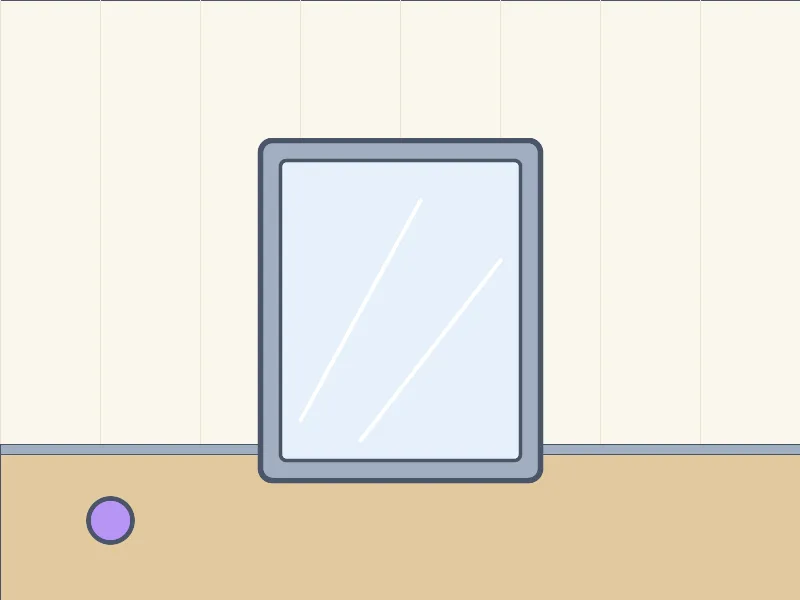
Streaks come from too much cleaner, the wrong cloth or wiping in circles. A few small changes give you a genuinely spotless mirror every time. Here is how to clean mirrors the right way.
1. Start with a dry dust
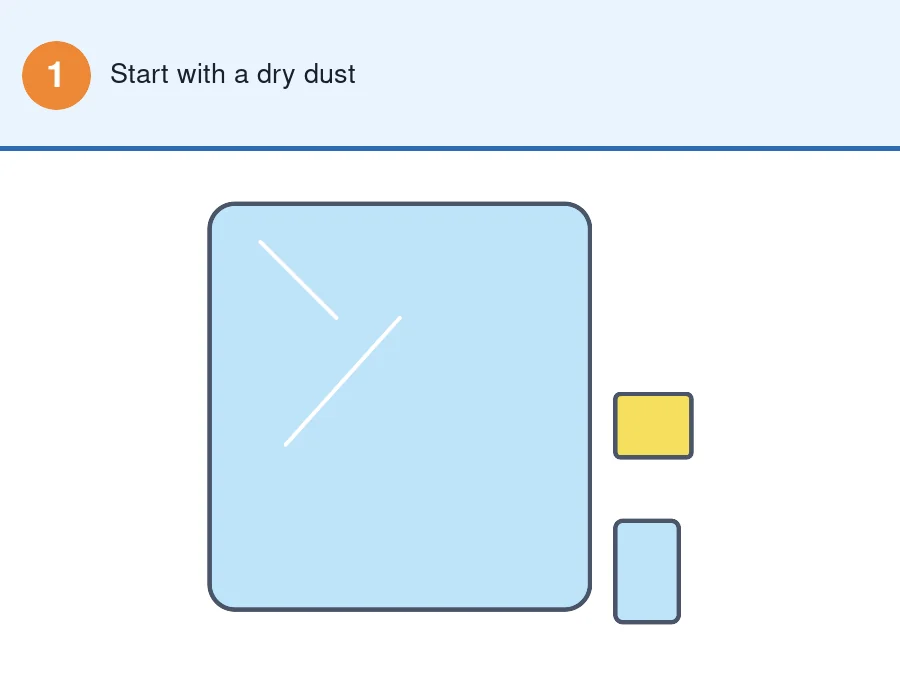
1. Wipe the mirror with a dry microfiber cloth first.
2. Remove loose dust and hair before any liquid.
3. Wet dust turns to streaky mud under a cloth.
4. Ten seconds of dry wiping saves a second wash.
2. Choose the right cloth
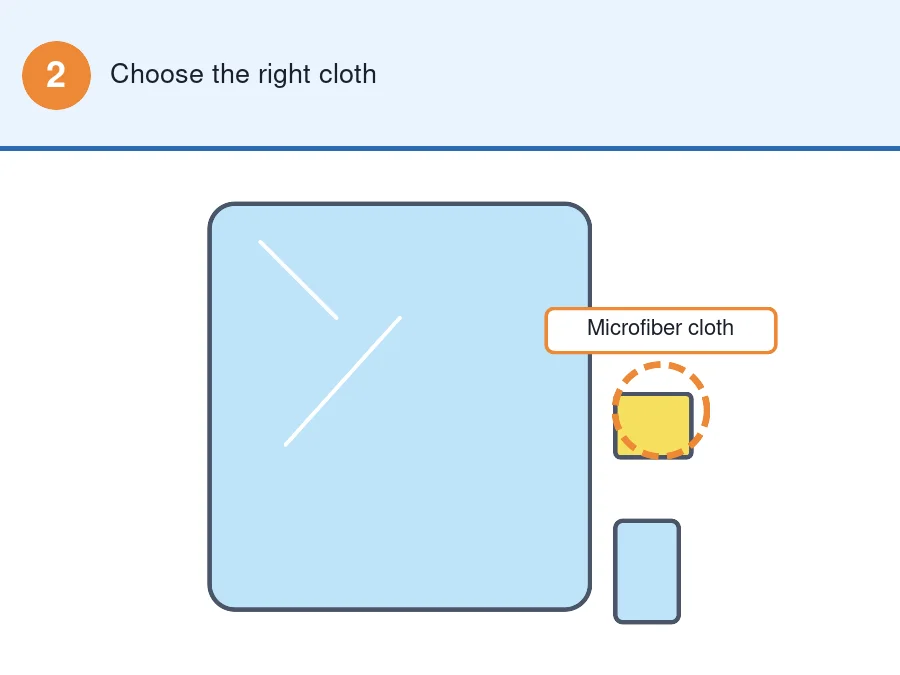
1. Use flat-weave microfiber, not paper towels.
2. Paper towels shed lint and drag debris across the glass.
3. Keep one cloth for washing and a second dry one for buffing.
4. A dedicated glass cloth pays for itself in zero streaks.
3. Pick your cleaner
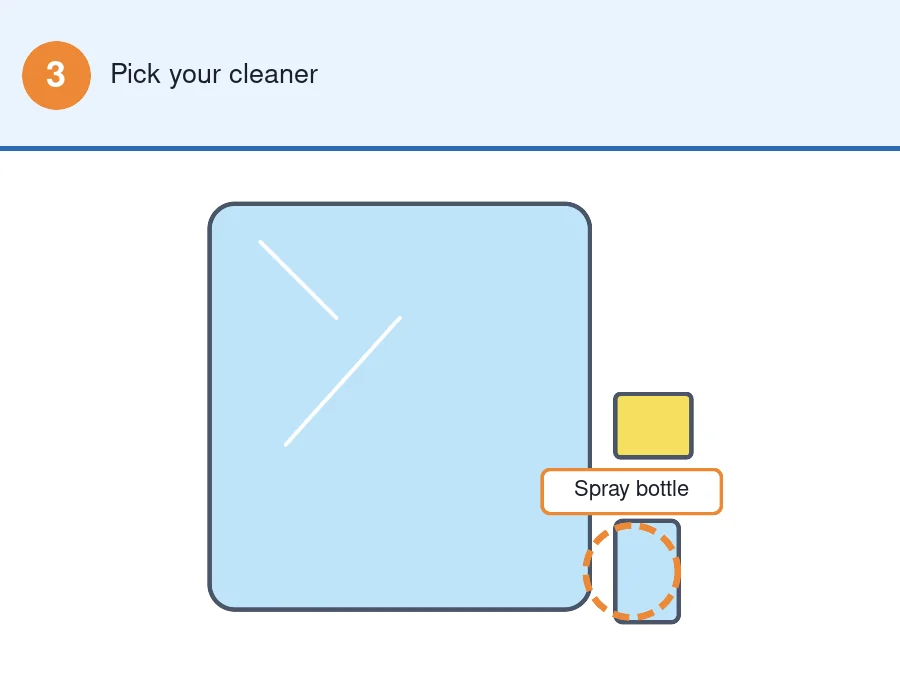
1. A commercial glass cleaner works well.
2. A 50-50 mix of white vinegar and water is a cheap alternative.
3. Avoid sudsy or oily multi-surface sprays, which leave film.
4. Simple beats fancy for mirror cleaning.
4. Spray the cloth, not the mirror
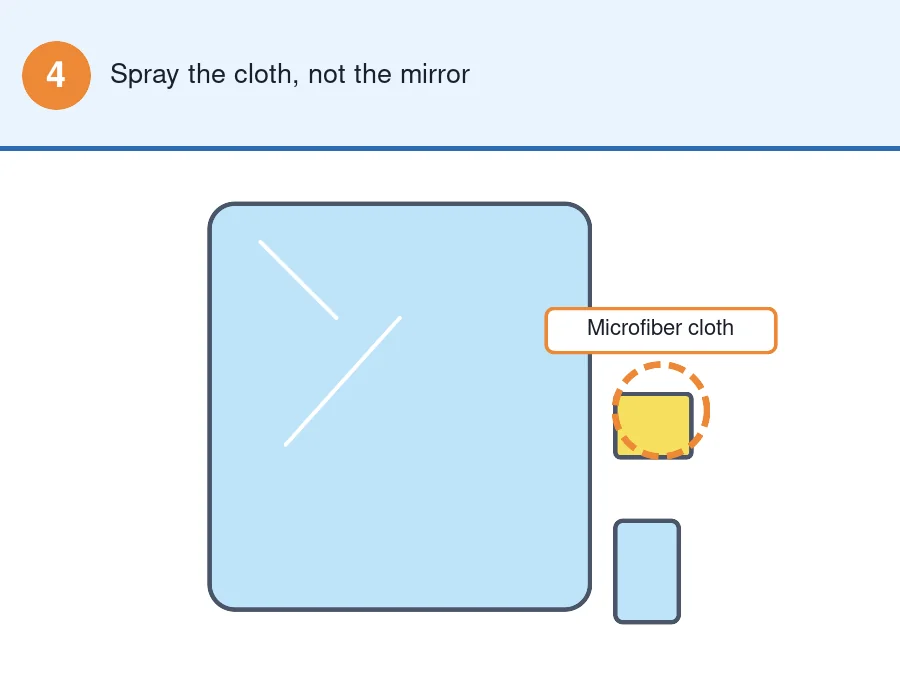
1. Mist cleaner onto your cloth instead of the glass.
2. Direct spray runs down and seeps into the edges.
3. Moisture at the edges blackens the silver backing over time.
4. You need far less cleaner than you think.
5. Wipe in a pattern
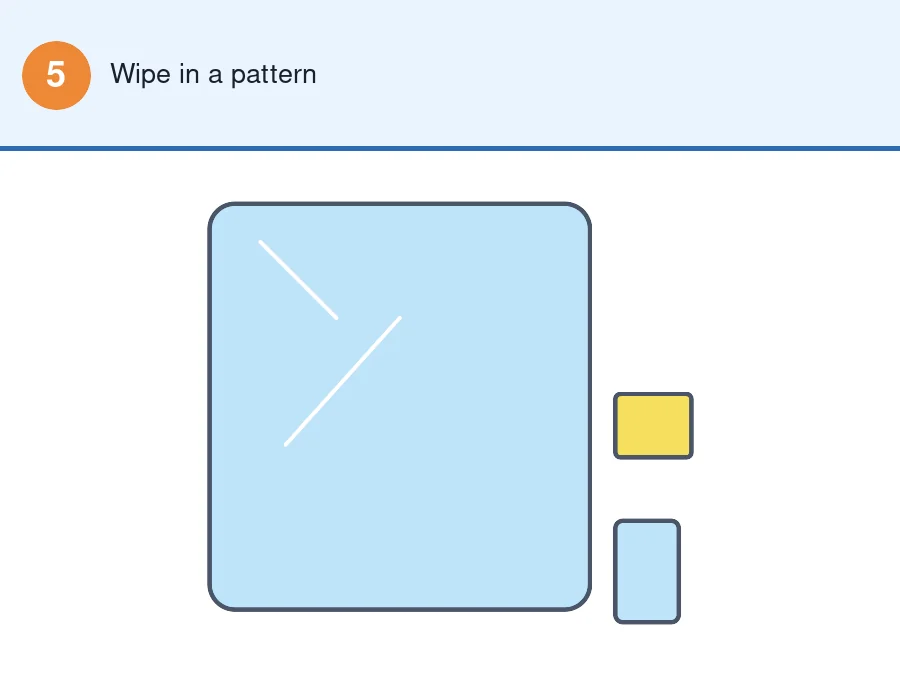
1. Work top to bottom in an S pattern or straight overlapping passes.
2. Avoid circles, which just move grime around.
3. Cover the whole mirror once, not the same spot repeatedly.
4. One methodical pass beats three frantic ones.
6. Detail the corners and edges
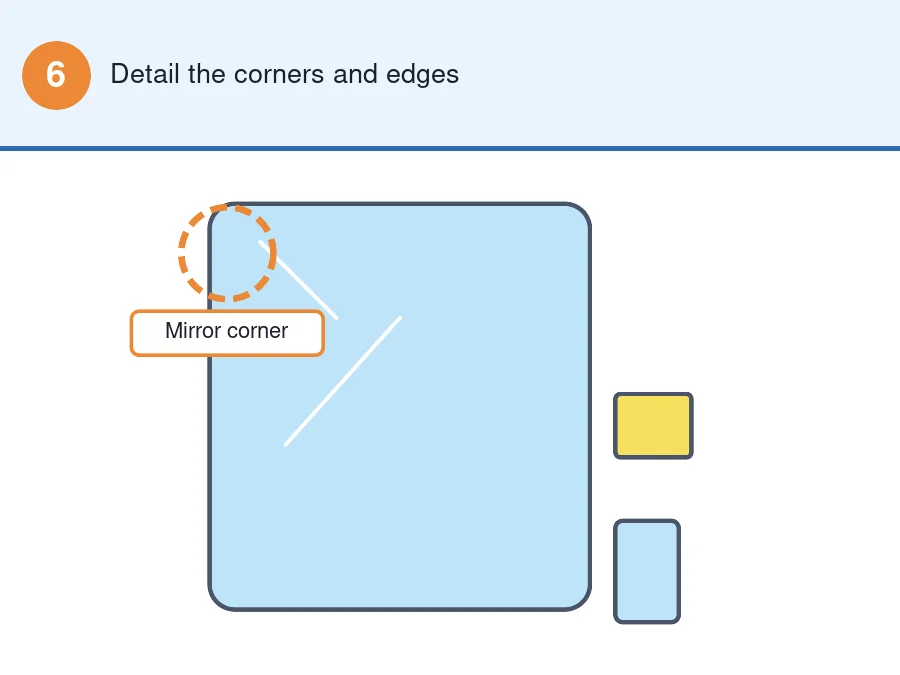
1. Fold the cloth to a clean section for corners.
2. Use a cotton swab for gunk where the glass meets the frame.
3. Keep moisture off the frame itself.
4. Corners hold the grime that ruins an otherwise clean mirror.
7. Buff dry immediately
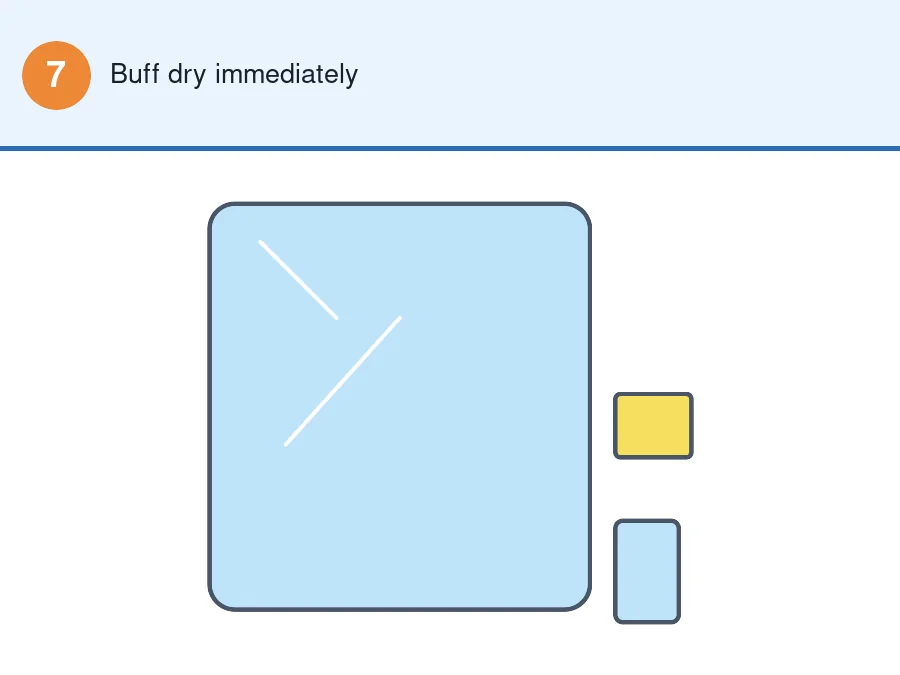
1. Follow at once with the dry microfiber cloth.
2. Buff lightly until every trace of moisture is gone.
3. Air drying is what leaves water spots and streaks.
4. The buff is where the streak-free finish actually happens.
8. Check at an angle
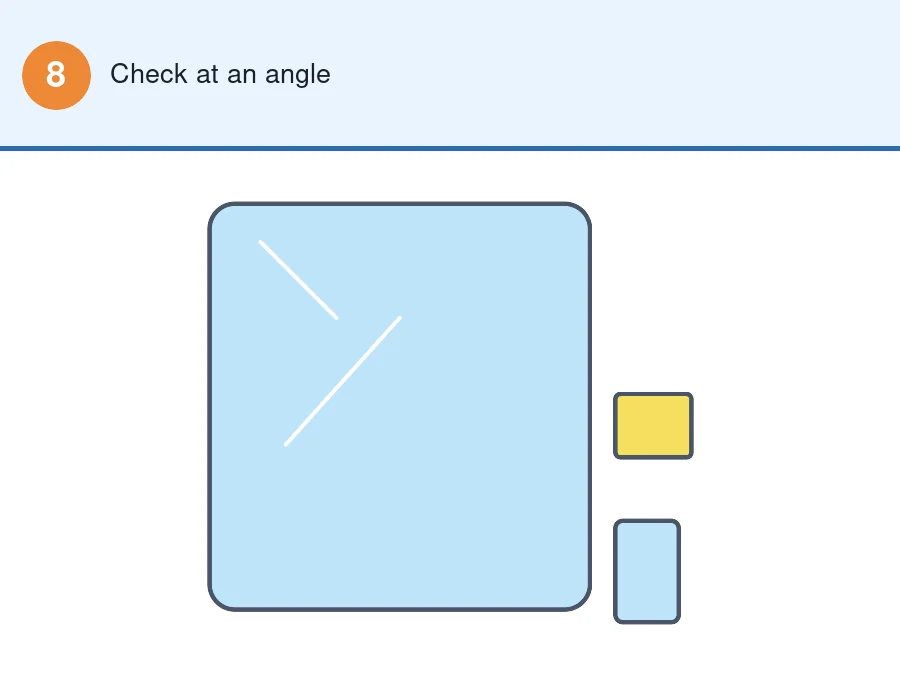
1. Step to the side and look across the glass at an angle.
2. Streaks invisible head-on show clearly from the side.
3. Touch up misses with the dry cloth.
4. Bathroom mirrors need this weekly; splatter builds fast.
Common mistakes
- Spraying cleaner directly on the mirror so it floods the edges.
- Using paper towels or old rags that shed lint across the glass.
- Wiping in circles, which redistributes grime instead of removing it.
- Letting the mirror air dry, which guarantees water spots.
Related guides
- How to Clean a Lampshade Without Ruining It
- How to Clean a TV Screen Without Damaging It
- How to Clean a Laptop Keyboard and Screen Safely
FAQ
What is the best thing to clean mirrors with?
Flat-weave microfiber cloths and a simple glass cleaner or diluted vinegar. The cloth matters more than the cleaner: lint-free microfiber is what prevents streaks.
Why does my mirror streak no matter what I use?
Usually too much cleaner, a dirty cloth, or letting it air dry. Use less product, a clean microfiber cloth, and buff dry immediately with a second cloth.
Can I use vinegar on mirrors?
Yes, a 50-50 vinegar and water mix cleans mirrors well and costs almost nothing. Skip it on antique mirrors with delicate backing, and keep it off natural stone frames.
How do I clean a cloudy or hazy mirror?
Haze is often product buildup or dried cleaner. Wash with diluted vinegar, buff dry, and repeat. If the cloudiness is in the glass or backing itself, the mirror is aging and cleaning will not fix it.
More from this topic
- How to Clean Tile Floors Without Streaks: Learn how to clean tile floors with the right cleaner, mop method, and drying steps so ceramic and porcelain...
- How to Clean Stainless Steel Appliances Without Streaks: Learn how to clean stainless steel appliances: wipe with the grain, use mild soap or vinegar, remove...
- How to Clean Windows Without Streaks Using Simple Supplies: Learn how to clean windows without streaks: pick the right day, wash with soapy water, squeegee or wipe dry,...
- How to Clean Painted Walls Without Damaging the Paint: Learn how to clean painted walls: dust first, wash with mild soap, treat scuffs gently, and protect flat...
- How to Remove a Nail Without Damaging Wood: How to remove a nail without damaging wood: protect the surface, pull with the right tool, and work the nail...
 FloorsHow to Clean Tile Floors Without StreaksLearn how to clean tile floors with the right cleaner, mop method, and drying steps so ceramic and porcelain look bright and grout stays safe.
 KitchenHow to Clean Stainless Steel Appliances Without StreaksLearn how to clean stainless steel appliances: wipe with the grain, use mild soap or vinegar, remove fingerprints and stains, and finish with a light buff.
 CleaningHow to Clean Windows Without Streaks Using Simple SuppliesLearn how to clean windows without streaks: pick the right day, wash with soapy water, squeegee or wipe dry, and handle hard water spots and tracks.
 Tools and BasicsHow to Clean Painted Walls Without Damaging the PaintLearn how to clean painted walls: dust first, wash with mild soap, treat scuffs gently, and protect flat paint from scrubbing damage.
 Tools and BasicsHow to Remove a Nail Without Damaging WoodHow to remove a nail without damaging wood: protect the surface, pull with the right tool, and work the nail out along its own line.