
How to Clean Laminate Floors Without Warping or Streaks
Part of: Floors, walls and doors · Also in: The Complete Guide to Home Wall and Floor Repair
- Difficulty
- Easy
- Time
- 20 to 40 minutes
- Tools
- Soft broom or dust mop, vacuum with a floor setting, microfiber mop, spray bottle, mild cleaner or white vinegar and water, microfiber cloths, felt pads
- Call a pro if
- The floor has swollen seams, bubbling, or lifted planks from water damage, or you see mold under or between boards.
In this guide
- Chemical safety
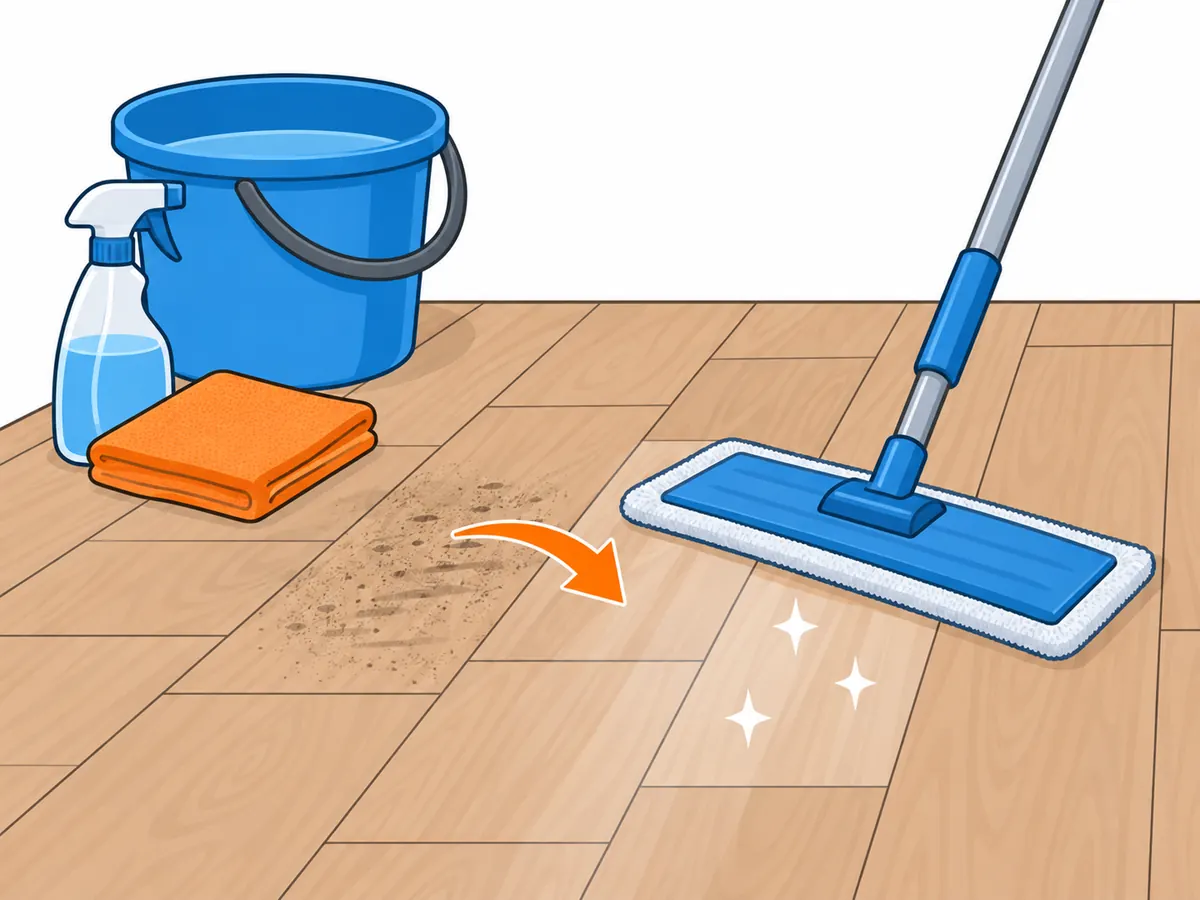
Laminate flooring looks like wood but has a thin photo layer over a fiberboard core. That core swells when it gets wet. The right way to clean laminate floors is to use as little water as possible and dry the floor fast. Here is a simple routine.
Why laminate needs gentle care
Water at the seams soaks into the core. Planks can lift, curl, or swell at the edges. Wax, oil, and steam cleaners can leave film or damage the surface. Abrasive scrubbing scratches the top layer. A light, regular clean keeps the floor looking good without risk.
Daily and weekly care
1. Sweep or dust mop to remove grit. Grit acts like sandpaper under shoes.
2. Vacuum with a hard floor setting or a soft brush head. Turn off a beater bar if it can scratch.
3. Wipe up spills with a dry or slightly damp cloth as soon as they happen.
Deep clean
1. Clear the floor and dust or vacuum first.
2. Mix a simple cleaner. Use a few drops of mild dish soap in a spray bottle of warm water, or a cleaner made for laminate. Some people use a small amount of white vinegar in water. Check the flooring maker's advice first.
3. Spray the mop, not the floor. The microfiber pad should be barely damp.
4. Mop along the plank length in small sections.
5. Dry right away with a dry microfiber cloth or a second dry mop pad. Do not let water sit.
6. Let the floor dry before you walk on it with shoes.
Remove stains
- Sticky spills: soften with a damp cloth and wipe up.
- Grease: use a little dish soap on a cloth.
- Marker or scuffs: rub gently with a soft cloth and a bit of rubbing alcohol, then wipe the spot dry.
- Dried gum: harden with an ice cube and lift with a plastic scraper.
Test any product in a hidden corner first.
Avoid these
- Steam mops
- Soaking or flooding the floor
- Wax, polish, and oil soaps
- Abrasive pads and scrubbers
- Heavy rubber mats that trap moisture
Prevent damage
- Put mats at entrances and wipe feet.
- Add felt pads to furniture legs. See how to protect floors from furniture scratches.
- Keep pet nails trimmed.
- Keep the room humidity in a steady range. A hygrometer helps. See digital hygrometer comparison.
- Fix leaks promptly.
FAQ
Can I use vinegar on laminate?
A small amount diluted in water is common, but follow the flooring maker's instructions.
Why is my laminate streaky?
Too much cleaner or too much water. Use less and dry it.
Can laminate get water damage?
Yes, especially at seams. Wipe up spills quickly.
How often should I mop?
Every week or two for most homes, with sweeping in between.
Related guides
- How to Clean Tile Floors Without Streaks: Learn how to clean tile floors with the right cleaner, mop method, and drying steps so ceramic and porcelain...
- How to Clean Hardwood Floors Without Damaging the Finish: Learn how to clean hardwood floors safely: use a microfiber mop, a damp cloth and the right cleaner, and...
- How to Clean Vinyl Plank Floors and Keep Them Looking New: Learn how to clean vinyl plank floors with simple steps: sweep, mop with a mild cleaner, remove scuffs and...
- How to Clean Stainless Steel Appliances Without Streaks: Learn how to clean stainless steel appliances: wipe with the grain, use mild soap or vinegar, remove...
- How to Care for Natural Stone Floors: Learn how to care for natural stone floors like marble, travertine, and slate: use pH neutral cleaners, avoid...
 FloorsHow to Clean Tile Floors Without StreaksLearn how to clean tile floors with the right cleaner, mop method, and drying steps so ceramic and porcelain look bright and grout stays safe.
 FloorsHow to Clean Hardwood Floors Without Damaging the FinishLearn how to clean hardwood floors safely: use a microfiber mop, a damp cloth and the right cleaner, and avoid too much water, steam and harsh products.
 FloorsHow to Clean Vinyl Plank Floors and Keep Them Looking NewLearn how to clean vinyl plank floors with simple steps: sweep, mop with a mild cleaner, remove scuffs and stains, and avoid products that dull the finish.
 KitchenHow to Clean Stainless Steel Appliances Without StreaksLearn how to clean stainless steel appliances: wipe with the grain, use mild soap or vinegar, remove fingerprints and stains, and finish with a light buff.
 FloorsHow to Care for Natural Stone FloorsLearn how to care for natural stone floors like marble, travertine, and slate: use pH neutral cleaners, avoid acids, wipe spills fast, and reseal as needed.