
How to Remove Carpet and Tack Strips
Part of: Floors, walls and doors
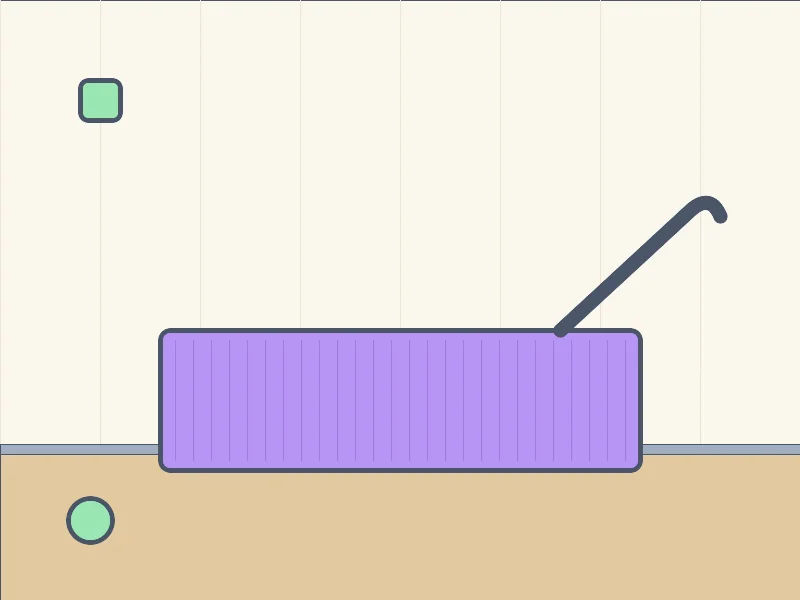
- Difficulty
- Moderate
- Time
- 2 to 4 hours for one average room, longer with furniture and glue
- Tools
- Utility knife with fresh blades, pliers or staple puller, pry bar, hammer, thick work gloves, knee pads, dust mask, shop vac, heavy trash bags
- Call a pro if
- The carpet is glued down with hard adhesive over the whole floor, there is mold or water damage under it, or the subfloor is particle board that crumbles when the staples come out.
In this guide
- Wear protection
Removing carpet is heavy work, but it is not complicated, and it is one of the few jobs where an amateur gets a professional result. There is a sensible order to how to remove carpet and tack strips, and it starts with cutting the carpet into strips you can carry. The trick is to work in small strips instead of trying to drag a whole room of carpet out the door, and to deal with staples and tack strips as their own step rather than as cleanup.
1. Clear the room and protect what stays
Take out furniture and anything breakable. If a heavy item has to stay, put a plastic sheet or a moving blanket over it and tape the edges.
Remove the doors if they swing into the work area, and take off the closet doors too. Cover the doorway with a sheet of plastic so dust does not travel through the house.
2. Cut the carpet into strips
Start in a corner and cut the carpet into strips about 3 to 4 feet wide, running the length of the room. A fresh blade makes this quick. Change blades often, because a dull blade snags and tears instead of cutting.
Cut along a wall first to free an edge, then pull that edge up with gloved hands until you can see the backing.
3. Roll and remove the strips
Roll each strip as you free it, with the dirty side facing in, and tape the roll so it stays closed. A 12 foot roll of carpet is heavy, so roll smaller rather than trying to be efficient.
Carry or drag the rolls out one at a time, and keep the path clear so nobody trips.
4. Take up the pad
Under the carpet there is usually a pad, stapled down. Pull it up in the same way, in pieces. Some pads are glued, and those need a scraper.
Old foam pad can crumble into orange dust. Wear the mask, and bag the pad rather than letting it blow around.
5. Pull every staple
This is the slow part, and skipping it causes problems later. Run a gloved hand or a scraper across the floor to find the staples, then pull them with pliers or a staple puller.
Work in a grid so you do not miss a patch, and sweep with the shop vac afterward. A single missed staple will scratch a new floor or tear a new pad.
6. Pry up the tack strips
Slide a pry bar or a stiff putty knife under one end of each tack strip and lift. Work along the strip in short moves, using a scrap of wood under the bar to protect the floor.
Do not yank. Tack strips are nailed with many small nails, and yanking splinters the wood and can gouge the subfloor. When a strip resists, find the nail with the pry bar and lift there.
7. Deal with adhesive or glue
If the carpet was glued directly to the floor, scrape the adhesive with a floor scraper once it is soft. A heat gun or warm water can help on some adhesives, but never use a heat gun near old mastic that might contain asbestos, and never near anything flammable.
For a thin film of glue, a floor patch compound over the whole area is often faster than scraping every bit.
8. Check and repair the subfloor
Now look at what was under the carpet.
- Squeaks: re-screw the panel from above, into the joists.
- Loose seams: fill and sand them flat.
- Water stains or soft spots: find the source before covering it up. A soft panel has to be replaced.
- Gaps between panels: fill with floor patch if a floating floor is going on top.
Sweep and vacuum the whole room twice. Fine grit left behind grinds under a new floor. If the floor creaks while you are down there, our guide on fixing squeaky floorboards covers it before the new floor goes down.
9. Dispose of the carpet and strips
Carpet is bulky and most curbside programs will not take it in a loose pile. Roll it, tie it, and cut rolls down to a size one person can lift. Tack strips go in a rigid container or a doubled bag, since loose spikes can injure a collector.
Check your local rules for bulky waste pickup before you pile anything at the curb.
Common mistakes
- Cutting the carpet too wide, then finding the roll is too heavy to move.
- Leaving staples behind and scratching the new floor.
- Yanking tack strips and splintering the subfloor.
- Skipping the dust mask and breathing decades of dust.
- Sanding old mastic without testing for asbestos.
FAQ
Can I reuse the tack strips?
Usually no. They bend and lose their grip when removed. New tack strips are a small cost compared with the risk of a loose carpet edge.
Do I have to remove the baseboards?
No. Carpet usually stops just short of the baseboard, and you can work the edge free with a pry bar. Remove baseboards only if you plan to replace them anyway.
How do I get the carpet out of a room with a narrow doorway?
Cut the strips shorter, about 2 feet wide, and roll them tight. A narrow roll passes through most doorways.
What if the carpet is glued down?
Cut it into strips, pull what comes free, then scrape the adhesive. Glued carpet over a concrete slab often needs a machine scraper, which is worth renting for a large room.
Related guides
- How to Remove Carpet Stains: Learn how to remove carpet stains fast: blot, use cool water and mild cleaners, test first and know which...
- How to Level a Floor With Self Leveling Compound: How to level a floor with self leveling compound: seal the edges, mix to the right consistency, pour in one...
- How to Protect Floors from Furniture Scratches Easily: Learn how to protect floors from furniture scratches with felt pads, rugs, chair glides, and lifting tips...
- Furniture Dents in Carpet: How to Lift Them Out: Dents in carpet from heavy furniture can be lifted with ice cubes, steam or a spoon. Here is what works on...
- How to Remove Scuff Marks From Floors Without Dulling: Learn how to remove scuff marks from floors on vinyl, laminate, tile, and sealed wood with a tennis ball,...
 FloorsHow to Remove Carpet StainsLearn how to remove carpet stains fast: blot, use cool water and mild cleaners, test first and know which stains need special care.
 FloorsHow to Level a Floor With Self Leveling CompoundHow to level a floor with self leveling compound: seal the edges, mix to the right consistency, pour in one pass, and let it cure.
 FloorsHow to Protect Floors from Furniture Scratches EasilyLearn how to protect floors from furniture scratches with felt pads, rugs, chair glides, and lifting tips that work on hardwood, laminate, vinyl, and tile.
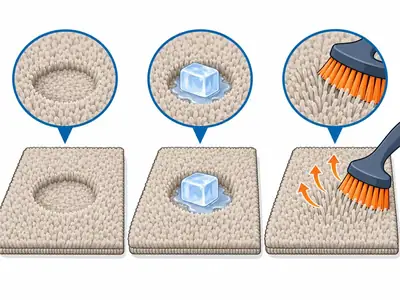 FloorsFurniture Dents in Carpet: How to Lift Them OutDents in carpet from heavy furniture can be lifted with ice cubes, steam or a spoon. Here is what works on which carpet type and how to prevent new marks.
 FloorsHow to Remove Scuff Marks From Floors Without DullingLearn how to remove scuff marks from floors on vinyl, laminate, tile, and sealed wood with a tennis ball, baking soda paste, and mild cleaners.