
How to Set Up a Laundry Area in a New Home
Part of: Tools and everyday fixes
- Difficulty
- Easy to moderate
- Time
- 2 to 4 hours
- Tools
- Adjustable wrench, pliers, spirit level, screwdriver, new hoses, dryer vent kit and foil tape, bucket and towels, a vacuum, a stud finder if adding shelves, anti-vibration pads
- Call a pro if
- There is no proper drain or vent, the outlet is not suitable for the machines, or the electrics are old, since washers and dryers draw a lot of power and need proper circuits and ventilation.
In this guide
- Chemical safety
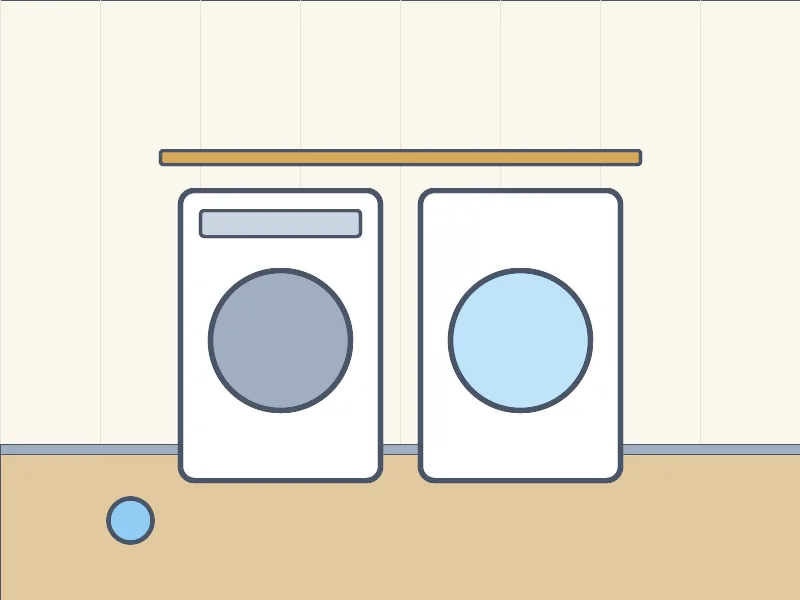
Moving into a new home usually means setting up the laundry from scratch, often in a space that was designed for it and never used properly. The machines are simple, but the water, drain and vent are where things go wrong. How to set up a laundry area starts by checking what the space provides, from the water taps and their shutoffs to the dryer vent.
This guide is part of our wider guide to tools, costs and first-home setup.
1. Check the space before you buy anything
Look at what the space provides:
- Hot and cold water taps for the washer, with shutoff valves that turn freely.
- A drain or standpipe for the washer hose.
- A suitable power outlet for each machine, ideally on its own circuit.
- A dryer vent to the outside, if you have a vented dryer.
- Space for the machines plus clearance at the back for hoses.
If any of these are missing or damaged, sort that out before delivery day.
2. Test the shutoff valves
Turn each water valve off and on before connecting anything. A valve that is seized or dripping is a flood waiting to happen. If a valve will not close, replace it or have a plumber do it; you cannot fix a burst hose if you cannot shut the water off.
3. Fit new hoses
Reuse old hoses only if they are recent and in perfect condition, and even then it is a risk. Hoses have a date on them, and most failures come from hoses that were five to ten years old.
1. Fit a mesh-reinforced hose to hot and cold, matching the colors.
2. Hand tighten the couplings, then a quarter turn with a wrench. Do not overtighten.
3. Check the rubber washers are in place in each coupling.
4. Turn the water on slowly and check for drips at both ends.
4. Connect the drain hose
1. Route the drain hose to the standpipe or the drain, keeping it as short and straight as possible.
2. Secure the hose so it cannot fall out; most machines include a clip or a hose guide.
3. Make sure the hose does not loop below the machine's required height, or the machine will not drain properly.
4. Check the standpipe is not blocked before you run the machine.
5. Level the machine
A washing machine that is not level will walk across the floor and shake the house during a spin.
1. Place the machine in position with a small gap at the back for hoses.
2. Check with a spirit level on top, front to back and side to side.
3. Adjust the feet until it is level and does not rock.
4. Tighten the lock nuts on the feet.
Anti-vibration pads under the feet help on a suspended floor.
6. Sort the dryer vent
1. Use a smooth metal duct rather than flexible foil where you can, and keep the run as short and straight as possible.
2. Connect the duct to the dryer and to the outside vent, and seal the joints with foil tape.
3. Check the outside flap opens freely and is not blocked by lint or a bird's nest.
4. Never vent a dryer into an attic, a garage or a room.
Clean the lint filter after every load, and clean the duct once a year.
7. Set up the space around the machines
- Shelving: fix shelves for detergent and supplies into studs, not just drywall. Keep heavy bottles low.
- A drying area: a rail or a folding rack, with airflow.
- A bin for lint and packaging.
- Lighting: good light makes the space usable and helps you spot leaks.
- A drip tray or a leak alarm under the washer if it is on an upper floor.
8. Run a test cycle and watch for leaks
1. Run a short cycle with no clothes.
2. Watch the hoses, the drain connection and the floor.
3. Check the machine drains fully and does not error.
4. Run the dryer for ten minutes and check the vent flap opens and warm air goes outside.
9. Make it a habit
- Turn the water valves off when you go away for more than a few days.
- Check the hoses every six months for bulges or cracks.
- Clean the dryer lint filter every load and the duct once a year.
- Wipe up spills and check under the machines occasionally for damp.
Common mistakes
- Reusing old hoses.
- Overtightening couplings and cracking the plastic threads.
- Leaving a dryer vent crushed behind the machine.
- Not leveling the washer, so it walks during a spin.
- Blocking the vent or the machine's airflow with shelves.
Related guides
- How to Set Up a Home Office in a Small Apartment
- How to Deep Clean a New Home Before Moving In
- How to Check a New Home for Water Damage Before You Unpack
- How to Pack a Kitchen for a Move (Dishes, Glasses and Appliances)
FAQ
Do washing machine hoses need replacing?
Yes. Many makers suggest replacing them every few years, so check the hose maker's guidance, and replace them whenever you move into a new home. Burst hoses are a leading cause of home flooding.
How often should a dryer vent be cleaned?
Once a year, and the lint filter after every load. A blocked vent is a fire risk and makes the dryer slow.
Can I stack a washer and dryer?
Only with a stacking kit made for those models. Check the floor can take the weight and that the machines are level.
Do I need a plumber to install a washing machine?
Usually not, if the faucets and drain are in place and working. Use a plumber if a valve is seized, the drain is blocked or there is no suitable outlet.
More from this topic
- How to Set Up Internet in a New Apartment: Learn how to set up internet in a new apartment: check what the building supports, compare plans, book the...
- How to Install a Washing Machine: Hook It Up Right: How to install a washing machine: connect the hoses, level the machine, set the drain and run the test cycle...
- How to Set Up Utilities When You Move Into a New Home: Set up utilities when you move by contacting providers two weeks ahead, documenting meter readings on move-in...
- How to Set Up a Home Office in a Small Apartment: Learn how to set up a home office in a small apartment: pick the quietest corner, fit a desk that measures...
- How to Set Up a Laundry Space in a Small Apartment: Learn how to set up a laundry space in a small apartment: check the hookups and lease, stack or combine units...
 First HomeHow to Set Up Internet in a New ApartmentLearn how to set up internet in a new apartment: check what the building supports, compare plans, book the install and place the router well.
 PlumbingHow to Install a Washing Machine: Hook It Up RightHow to install a washing machine: connect the hoses, level the machine, set the drain and run the test cycle that prevents floods.
 First HomeHow to Set Up Utilities When You Move Into a New HomeSet up utilities when you move by contacting providers two weeks ahead, documenting meter readings on move-in day, and verifying every service works.
 First HomeHow to Set Up a Home Office in a Small ApartmentLearn how to set up a home office in a small apartment: pick the quietest corner, fit a desk that measures right, fix the lighting and hide the cables.
 First HomeHow to Set Up a Laundry Space in a Small ApartmentLearn how to set up a laundry space in a small apartment: check the hookups and lease, stack or combine units and plan drying and storage.