
Essential Tools Every Homeowner Needs (Starter Tool Kit)
Part of: Tools and everyday fixes
- Difficulty
- Beginner list
- Time
- 10 minutes to read
- Tools
- See the guide
- Call a pro if
- Not applicable. Buy tools as the jobs come up.
In this guide
- Ladder safety
- Wear protection
You do not need a garage full of equipment to handle most small repairs. A short list of good basic tools covers hanging shelves, tightening hinges, fixing a running toilet and patching a wall. This guide lists the essential tools every homeowner needs, in order of how often you will use them.
This guide is part of our wider guide to tools, costs and first-home setup.
The core kit
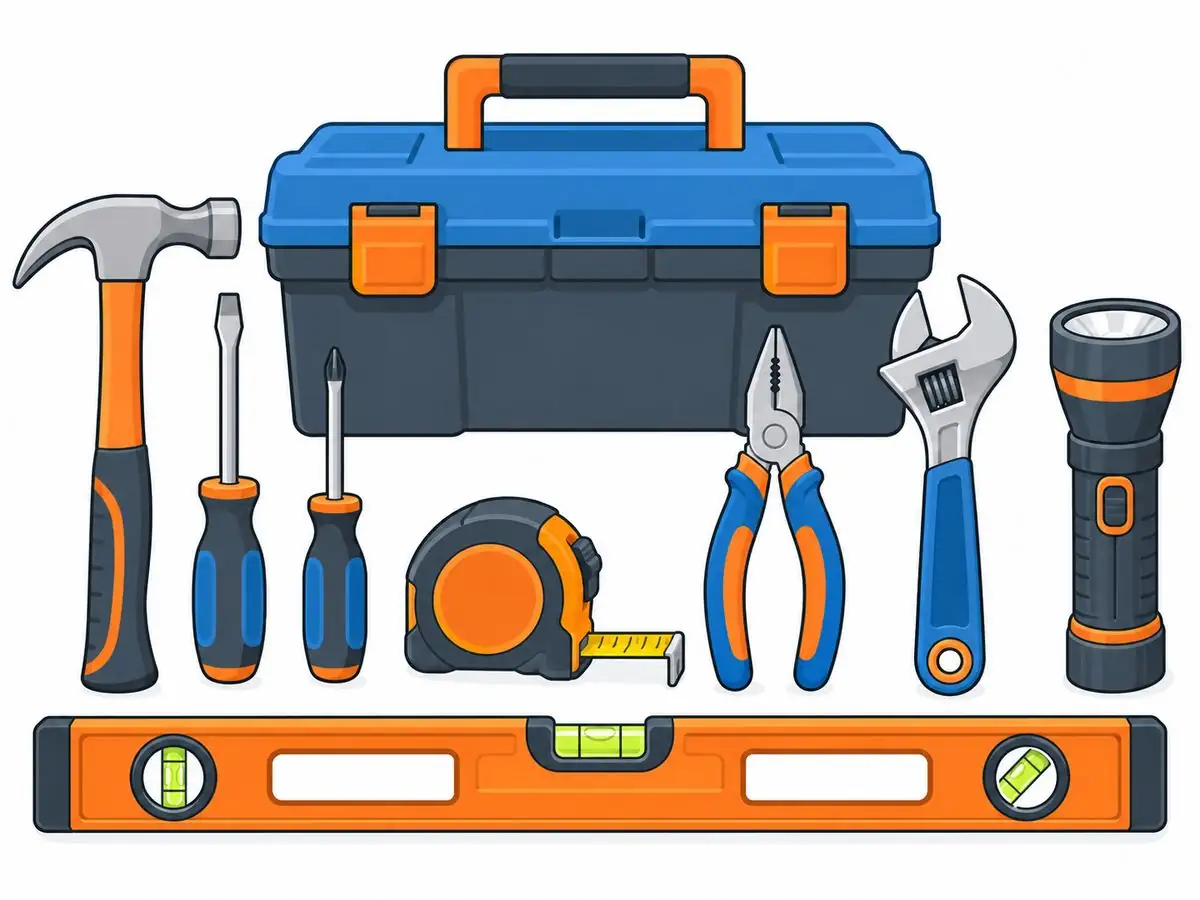
Tape measure. A 25 foot locking tape is useful for almost everything: furniture, shelves, flooring and curtains.
Screwdrivers. Get a set with several sizes of Phillips and flat heads, or a good multi-bit driver. Stripped screws often come from using the wrong size.
Claw hammer. A 16 ounce hammer drives and pulls nails and is good for light demolition.
Adjustable wrench. An 8 or 10 inch wrench handles plumbing nuts, bolts and fittings.
Pliers. Keep slip-joint pliers for gripping, needle-nose pliers for tight spaces and locking pliers for stubborn parts.
Level. A 24 inch level makes shelves, pictures and cabinets straight. A small torpedo level fits in a pocket.
Utility knife. Use it to cut drywall, tape, caulk tubes and packaging. Replace blades often, because dull blades slip and cause cuts.
Stud finder. It helps you find solid wood behind a wall so shelves and heavy items stay up. Verify the spot by tapping and measuring.
Power tools worth owning
Cordless drill and driver. This is the first power tool to buy. Choose a model with a decent battery, a clutch and a set of drill bits and driver bits. It speeds up almost every assembly or repair.
Cordless work light. A bright, portable light helps in basements, attics and under sinks.
Plumbing and wall basics
Plunger. Own two plungers: a flange type for toilets and a flat cup type for sinks and tubs.
Drain snake. A plastic hair snake is inexpensive and clears many bathroom clogs.
Putty knives and sandpaper. These are the base of patching drywall and smoothing surfaces.
Caulk gun. It makes caulking a tub or window clean and easy.
Safety gear
Buy safety glasses, work gloves, a dust mask and hearing protection. These cost little compared with an eye injury. Add a non-contact voltage tester so you can check whether a wire or outlet is live before you work near it. A tester does not replace turning off the breaker, but it gives a second check.
Storage and extras
A small toolbox or bag keeps everything in one place. Add a flashlight, a roll of painter's tape, a roll of duct tape, zip ties, a set of hex keys and some assorted screws and wall anchors.
What you can skip for now
Skip big stationary tools, a large circular saw, or a full socket set until a project needs them. Many specialty tools can be rented from a hardware store for a day, and renting is cheaper than buying something you will use once.
Buying tips
- Spend more on the tools you reach for weekly, such as screwdrivers and a tape measure.
- Avoid very cheap multi-piece sets with many parts you will never use.
- Check reviews for batteries and chargers on cordless tools.
- Keep tools clean and dry to prevent rust.
Safety reminder
Read the manual for any power tool, wear eye protection and unplug or remove the battery when changing bits. If a job involves wiring inside walls, gas lines or structural changes, hire a licensed professional.
Related guides
- How to Inspect a Crawl Space Safely: What to Look For and What to Skip
- How to Remove a Stripped Screw (5 Methods That Work)
- How to Fix a Stripped Screw Hole in Wood: 4 Simple Methods
- Cordless Drill for Homeowners: DeWalt, Milwaukee and Ryobi Kits Compared
- How Much Do Common Home Repairs Cost? What Affects the Price
- How to Find Out if a Renovation Needs a Permit
FAQ
Should I buy a complete tool kit?
A small kit with the basics is enough to start. Add tools only when a job needs them.
Is it better to rent or buy a tool?
Buy tools you will use often. Rent expensive tools you will use once.
Which tool do I need first?
A cordless drill, a tape measure and a good screwdriver set cover many first-year jobs.
More from this topic
- Basic Tool Kit for Renters: The 12 Tools You Need: A basic tool kit for renters covers hanging, assembling, tightening and small fixes without risking your...
- Home Repair Tool Rental vs Buy for First-Time Owners: Home repair tool rental vs buy for first-time owners: a simple way to decide by how often you will use it,...
- First Time Homeowner Checklist: 15 Things to Do Right Away: Use this first time homeowner checklist for your first week and month: locks, shutoffs, alarms, filters,...
- The Complete Guide to First Home Essentials and Basic Tools: A complete guide to first home essentials: 20 step-by-step guides grouped by job, with difficulty and time...
- DIY vs Hiring a Pro: How to Decide for Home Repairs: DIY vs hiring a pro: a simple way to decide which home repairs you can do yourself and which are safer,...
 First HomeBasic Tool Kit for Renters: The 12 Tools You NeedA basic tool kit for renters covers hanging, assembling, tightening and small fixes without risking your deposit. Here are the 12 tools that matter.
 Tools and BasicsHome Repair Tool Rental vs Buy for First-Time OwnersHome repair tool rental vs buy for first-time owners: a simple way to decide by how often you will use it, storage and safety. Includes a quick checklist.
 First HomeFirst Time Homeowner Checklist: 15 Things to Do Right AwayUse this first time homeowner checklist for your first week and month: locks, shutoffs, alarms, filters, records and a simple repair fund.
 First HomeThe Complete Guide to First Home Essentials and Basic ToolsA complete guide to first home essentials: 20 step-by-step guides grouped by job, with difficulty and time for each, so you can pick the right fix first.
 First HomeDIY vs Hiring a Pro: How to Decide for Home RepairsDIY vs hiring a pro: a simple way to decide which home repairs you can do yourself and which are safer, faster or required to be done by a licensed pro.