
How to Remove a Stripped Screw (5 Methods That Work)
Part of: Tools and everyday fixes
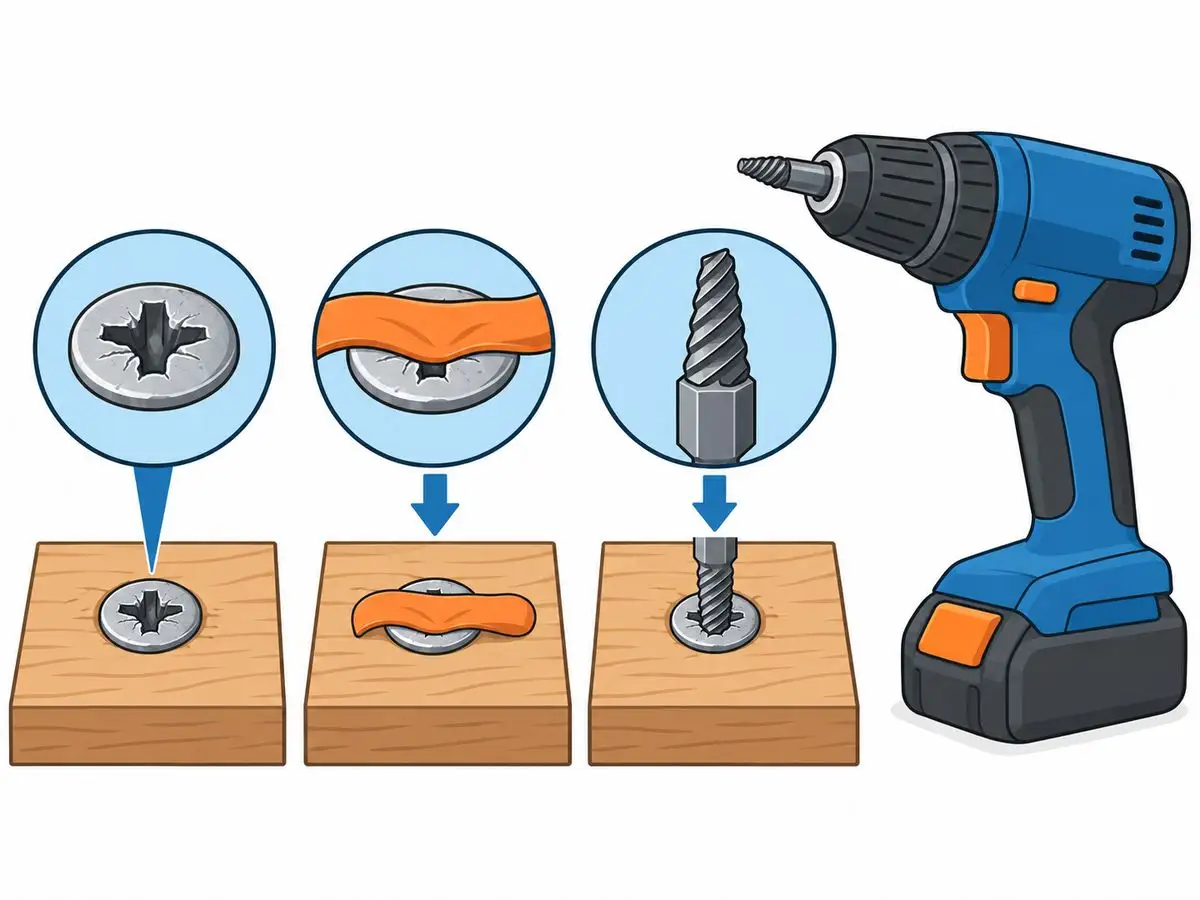
- Difficulty
- Easy to moderate
- Time
- 10 to 30 minutes
- Tools
- Rubber band, wide rubber glove, screw extractor kit, pliers, drill
- Call a pro if
- The screw is in a critical structural or electrical item.
In this guide
- Power off first
- Wear protection
How to remove a stripped screw without damaging the surrounding wood comes down to the bit: the right size and type, pressed hard, turned slowly. A stripped screw is a screw whose head has been worn smooth so the screwdriver spins instead of gripping. It happens to everyone. You can usually remove a stripped screw without ruining the part it holds, if you stay calm and start with the gentlest method.
This guide is part of our wider guide to tools, costs and first-home setup.
Before you start
Use the right size and type of bit. Press hard into the screw while you turn slowly. A lot of stripping comes from light pressure and the wrong bit. If you have a drill, set it to low speed with the clutch on a low setting.
Method 1: Rubber band
Place a wide rubber band flat across the screw head, then push your screwdriver into it. The rubber fills the worn grooves and gives the bit something to grip. Turn slowly with firm pressure. This works well on lightly stripped screws.
Method 2: Try a different bit
A slightly bigger bit can bite into the damaged head. If a Phillips bit slips, try a flat blade that fits across the center, or a Torx bit tapped into the head. Tap the bit in with a hammer first, then turn.
Method 3: Add grip
Put a pinch of coarse abrasive cleaner or a dab of valve grinding compound on the bit. A small amount of grit can improve grip. Wipe it off when you are done.
Method 4: Pliers or locking pliers
If the head sticks out above the surface, grab it with needle-nose or locking pliers and turn it counterclockwise. Squeeze hard. This works well for screws in cabinets and furniture.
Method 5: Cut a slot
If the head is still intact but the cross is smooth, use a rotary tool with a thin cutting disk to cut a straight slot across the head. Then use a flat screwdriver. Wear eye protection and keep the cutting disk away from nearby surfaces.
Method 6: Screw extractor
A screw extractor kit has a drill bit and a reverse-threaded bit. Drill a small pilot hole in the center of the screw head, then insert the extractor and turn counterclockwise. It bites in and backs the screw out. Use steady pressure and do not push too hard, since extractors are hard but brittle and can snap.
If the screw is rusty or tight
Spray a penetrating oil on the screw, wait 15 to 30 minutes, and tap the head lightly with a hammer to help the oil work in. Then try again. Heat can also help but is not safe near wood finishes, plastics or anything flammable, so skip it unless you know what you are doing.
Prevent stripped screws
- Pick the right bit for the screw.
- Drill a pilot hole in hardwood.
- Push in firmly while turning.
- Avoid overtightening.
- Replace worn bits.
When to stop
If the screw is in a delicate or expensive item and nothing works, stop. A repair shop or handyperson can often drill out the screw cleanly. Forcing it tends to make things worse.
Protect the material around it
When a screw is stuck in wood or plastic, work slowly. Put a piece of masking tape around the screw to protect the surface, and keep your drill straight so the bit does not wander and scar the surrounding material. Metal shavings from drilling can scratch finishes, so brush them away as you go. Take breaks if the screw is not moving, since hurrying is how bits slip and damage things.
Related guides
- Home Repair Tool Rental vs Buy for First-Time Owners
- How to Clean a Coffee Maker With Vinegar and Remove Buildup
- Essential Tools Every Homeowner Needs (Starter Tool Kit)
- How to Pack a Kitchen for a Move (Dishes, Glasses and Appliances)
- How to Remove a Broken Screw From a Hinge
- How to Countersink a Screw
FAQ
What is the easiest trick?
Place a wide rubber band between the driver and the screw head for extra grip.
What if that fails?
Use a screw extractor bit, or cut a new slot with a rotary tool.
How do I stop screws from stripping?
Match the bit to the screw and press firmly while you turn at low speed.
More from this topic
- How to Fix a Stripped Screw Hole in Wood: 4 Simple Methods: How to fix a stripped screw hole in wood: use toothpicks and glue, a dowel, a larger screw or a wood filler...
- How to Use a Nail Set: Learn how to use a nail set: match the tip to the nail head, hold it square and drive the head just below the...
- How to Prioritize Home Repairs When Everything Needs Work: How to prioritize home repairs: safety first, then active water damage, then systems, then cosmetics, with a...
- How to Remove a Staple From Wood: How to remove a staple from wood without tearing it: lift one leg, work the staple out, and repair the small...
- How to Use a Chisel Safely: Learn how to use a chisel safely: keep both hands behind the edge, cut with the grain, sharpen often and...
 Tools and BasicsHow to Fix a Stripped Screw Hole in Wood: 4 Simple MethodsHow to fix a stripped screw hole in wood: use toothpicks and glue, a dowel, a larger screw or a wood filler method so hinges and fixtures hold tight.
 Tools and BasicsHow to Use a Nail SetLearn how to use a nail set: match the tip to the nail head, hold it square and drive the head just below the surface without bruising the wood.
 Tools and BasicsHow to Prioritize Home Repairs When Everything Needs WorkHow to prioritize home repairs: safety first, then active water damage, then systems, then cosmetics, with a simple triage list you can make tonight.
 Tools and BasicsHow to Remove a Staple From WoodHow to remove a staple from wood without tearing it: lift one leg, work the staple out, and repair the small holes it leaves behind.
 Tools and BasicsHow to Use a Chisel SafelyLearn how to use a chisel safely: keep both hands behind the edge, cut with the grain, sharpen often and store it with a guard on.