
How to Drain Your Plumbing System Completely
Part of: Basic plumbing
- Difficulty
- Moderate
- Time
- 1 to 2 hours
- Tools
- A bucket, a hose for the water heater, compressor access for the thorough version
- Call a pro if
- The house has a well system, a boiler loop or plumbing you cannot fully map, since missed water in those systems does real damage.
In this guide
A long vacancy, a whole-house repair or a deep winterization: sometimes every pipe in the house needs to empty. How to drain your plumbing system is a top-to-bottom ritual that takes a couple of hours and follows one rule: air in at the top, water out at the bottom. This guide walks the complete drain-down.
1. Shut off the supply
The start.
1. Close the main shutoff valve.
2. Well systems also need the pump's power off and the pressure tank drained.
3. Municipal houses: the main handles it alone.
4. Note the water meter reading for leak-checking later.
2. Kill the water heater's heat
The safety step.
1. Electric: breaker off.
2. Gas: control to pilot or off.
3. The heater drains later in the sequence; it just must never fire empty.
4. Let the stored water cool before its drain step.
3. Open every fixture, top down
Air in at the top.
1. Open all faucets, hot and cold, starting at the highest floor.
2. Flush every toilet and hold the handle to empty the tanks.
3. Open exterior hose bibs.
4. Leave everything open through the whole drain-down.
4. Drain from the lowest point
Water out at the bottom.
1. Open the lowest fixture: a basement sink, a laundry tap or the main's drain valve.
2. Water flows out as air replaces it from the open fixtures above.
3. The water heater drains through its hose now, at the low point of the hot system; how to flush a water heater covers its valve.
4. Appliances with water lines, fridge and washer, run their drain or pull their lines per their manuals.
5. Handle the traps and tanks
The pockets gravity misses.
1. Toilets: sponge the bowls after the flush empties the tanks.
2. Sink and floor traps hold water by design; a winter vacancy gets non-toxic plumbing antifreeze in each trap.
3. The dishwasher and washer sumps hold water; sponge or run their drain cycles.
4. The expansion tank and filter housings drain at their own valves.
6. The thorough version: blow-out
For the freeze-critical vacancy.
1. A compressor on a hose-bib adapter pushes residual water out fixture by fixture.
2. Keep pressure under fifty pounds; the plumbing is not a tire.
3. Open one fixture at a time until each spits air.
4. This is the step that protects the dips and dead-legs gravity cannot reach.
7. Refill in the right order
The restart matters as much.
1. Close every fixture and drain point.
2. Open the main slowly and let the system fill against the highest open tap.
3. Fill the water heater completely before restoring its power; water heater problems often trace to a dry-fired element.
4. Bleed air at each fixture, then leak-check every joint you opened. How to winterize an outdoor faucet covers the exterior lines every fall, drained house or not.
Common mistakes
- Leaving the water heater powered through the drain.
- Forgetting the toilet tanks and the fridge line.
- Skipping the traps in a winter drain-down; they freeze and split.
- Refilling with the heater still empty and burning out elements.
- Assuming gravity got everything; dips in the run hold water.
FAQ
How do you drain all the water out of house plumbing?
Shut the main, kill the water heater's heat, open every fixture from the top floor down, then open the lowest drain point and let the lines empty. Sponge the toilet bowls and protect traps with plumbing antifreeze for a winter vacancy.
How long does it take to drain a house's plumbing?
One to two hours for the full sequence, including the water heater. The actual draining runs fast once air enters at the top; the fixtures and appliances take the time.
Do you need to drain pipes for winter in a vacant house?
Yes, if the heat will be off. A drained system cannot freeze-burst; an undrained one almost certainly will. Antifreeze in the traps and a compressor blow-out complete the protection.
Will draining pipes damage them?
No. Plumbing drains and refills without harm as long as the water heater never fires empty and the refill is done slowly against an open tap. The damage risk runs the other way: water left in a freezing house.
Related guides
- How to Drain a Washing Machine Full of Water: How to drain a washing machine that won't empty: bail, drain hose or pump filter methods that get the water...
- How to Install a Water Heater Drain Pan: Learn how to install a water heater drain pan: pick the right size, drain it to a safe place, set the tank...
- How to Insulate Hot Water Pipes: How to insulate hot water pipes: sleeve the accessible runs with foam and get hotter water faster at the...
- How to Insulate Water Pipes to Prevent Freezing: Learn how to insulate water pipes to prevent freezing. Choose foam sleeves, wrap pipes in cold spaces, seal...
- How to Thaw Frozen Pipes Safely: How to thaw frozen pipes safely with a hair dryer or warm towels. Steps to find the freeze, what never to do...
 PlumbingHow to Drain a Washing Machine Full of WaterHow to drain a washing machine that won't empty: bail, drain hose or pump filter methods that get the water out safely.
 PlumbingHow to Install a Water Heater Drain PanLearn how to install a water heater drain pan: pick the right size, drain it to a safe place, set the tank back and check the pan after the first heating cycle.
 PlumbingHow to Insulate Hot Water PipesHow to insulate hot water pipes: sleeve the accessible runs with foam and get hotter water faster at the faucet for less.
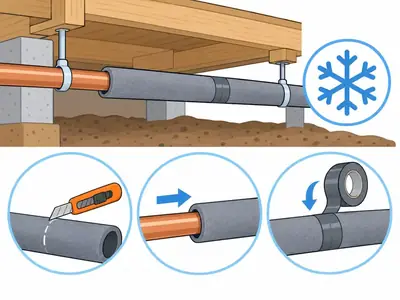 PlumbingHow to Insulate Water Pipes to Prevent FreezingLearn how to insulate water pipes to prevent freezing. Choose foam sleeves, wrap pipes in cold spaces, seal drafts and use simple tricks in a hard freeze.
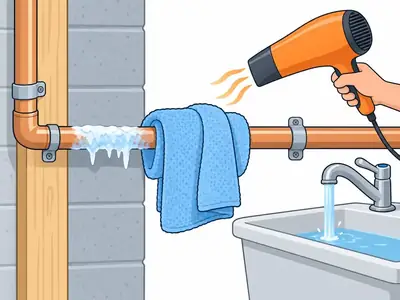 PlumbingHow to Thaw Frozen Pipes SafelyHow to thaw frozen pipes safely with a hair dryer or warm towels. Steps to find the freeze, what never to do and when to shut off the water and call a plumber.