
How to Flush a Water Heater to Remove Sediment
Part of: Basic plumbing
- Difficulty
- Moderate
- Time
- 1 to 2 hours
- Tools
- Garden hose, bucket, screwdriver, work gloves, safety glasses
- Call a pro if
- The drain valve is clogged, leaks or breaks, or you smell gas.
In this guide
- Safety first
- What you need
- Step 1: Turn off the power or gas
- Step 2: Turn off the cold water supply
- Step 3: Connect the hose
- Step 4: Open a hot faucet
- Step 5: Drain the tank
- Step 6: Flush with fresh water
- Step 7: Close the valve and refill
- Step 8: Restore power or gas
- How often to flush
- When the job is beyond a flush
- Common mistakes
- Related guides
- FAQ
- When to call a pro
- Power off first
- Gas safety
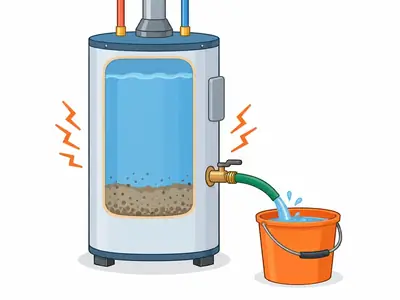
Minerals and sediment collect at the bottom of a tank water heater over time. This can cause rumbling noises, reduce hot water, and shorten the life of the heater. Flushing the tank once a year is a simple way to keep it healthy. This guide explains how to flush a water heater.
This guide is part of our wider guide to water heater problems.
Safety first
Water from the tank is very hot and can scald you. Let the water cool for a couple of hours first, or run hot water in a sink until it cools. If you are not sure about gas lines or the pilot light, call a professional. Smell gas? Do not touch anything electrical. Walk outside and call the gas company.
What you need
- A garden hose that reaches a floor drain, a tub or the yard
- A bucket
- A flathead screwdriver or pliers
Step 1: Turn off the power or gas
For an electric heater, turn off its breaker. For a gas heater, turn the gas control to the Pilot or Off position as the label says. Do this first, because heating an empty tank can damage an electric element.
Step 2: Turn off the cold water supply
Find the cold water valve at the top of the tank and turn it clockwise to close it.
Step 3: Connect the hose
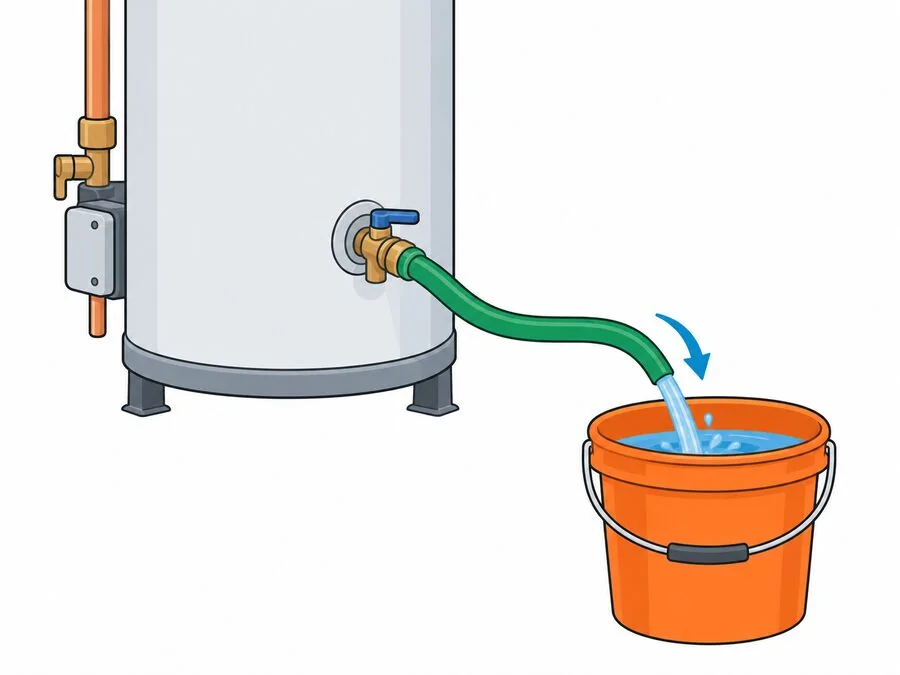
Attach the hose to the drain valve near the bottom of the tank. Put the other end in a bucket or a drain that is lower than the tank. Make sure it is secure.
Step 4: Open a hot faucet
Open a hot water faucet in the house. This lets air in so the tank can drain.
Step 5: Drain the tank
Open the drain valve slowly. Water will flow out, probably with some sediment and grit. Drain the full tank. If the flow slows or stops, the valve may be clogged with sediment. Close it and try opening it again, or open the cold supply briefly to stir the sediment, then close it.
Step 6: Flush with fresh water
Close the drain valve, open the cold water supply for a minute, and drain again until the water runs clear. This clears the last of the sediment.
Step 7: Close the valve and refill
Close the drain valve, remove the hose, and open the cold water supply. Keep the hot faucet open until water runs steadily with no air bubbles. Then close it.
Step 8: Restore power or gas
Only after the tank is full, turn the breaker back on, or relight the pilot following the label on your heater. Check the drain valve for drips. Wait an hour for the water to heat.
How often to flush
Once a year is typical. If you have hard water, you can flush more often. Check the pressure relief valve once a year as well, and follow the manufacturer's instructions.
When the job is beyond a flush
Call a plumber if the drain valve is plastic and cracked, if it leaks, if the tank is rusted or leaking, if the heater is more than 10 to 12 years old and noisy, or if you cannot relight a gas pilot. Never disable the pressure relief valve.
Common mistakes
- Leaving the power or gas on while draining.
- Forgetting to open a hot faucet, which stops the tank from draining.
- Touching hot water from the first few seconds.
- Not refilling the tank before turning the power back on.
- Forcing a stuck drain valve.
A yearly flush takes about an hour and can add years to the life of your water heater.
Related guides
- Water Heater Not Producing Hot Water: What to Check Before You Call
- Electric Water Heater Element: How to Test and Replace It
- Replace Water Heater Thermostat Safely (Electric)
- How to Light a Water Heater Pilot Light Safely
- How to Check a Water Heater Expansion Tank
FAQ
How often should I flush a water heater?
Many makers suggest once a year. Check your manual.
Why is sediment bad?
Minerals settle in the tank. They reduce heating and can make the tank noisy.
What if the drain valve will not close?
Call a plumber. Do not leave a gas or electric unit on while the tank is empty.
More from this topic
- Water Heater Drain Valve Leak: How to Fix It: Water heater drain valve leak? Learn how to tighten, cap or replace the valve safely, and when to call a...
- How to Flush a Tankless Water Heater: The Annual Descale: How to flush a tankless water heater: circulate vinegar or descaler through the heat exchanger to clear scale...
- Water Heater Maintenance Checklist: Once a Year: A water heater maintenance checklist that takes an hour a year: flush sediment, test the relief valve, check...
- Water Heater Not Producing Hot Water: Water heater not producing hot water? Check the breaker, pilot light, thermostat and sediment, plus real...
- Water Heater Popping Noises: What Causes Them: Water heater popping noises usually mean sediment on the tank bottom. Learn the safe checks, how to flush the...
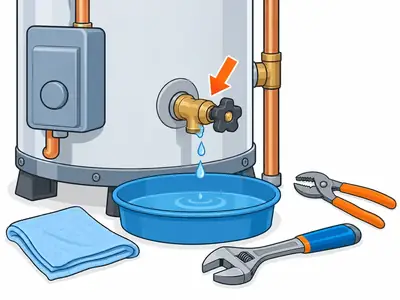 PlumbingWater Heater Drain Valve Leak: How to Fix ItWater heater drain valve leak? Learn how to tighten, cap or replace the valve safely, and when to call a plumber. Steps, tools and safety notes included.
 PlumbingHow to Flush a Tankless Water Heater: The Annual DescaleHow to flush a tankless water heater: circulate vinegar or descaler through the heat exchanger to clear scale and restore performance.PlumbingWater Heater Maintenance Checklist: Once a YearA water heater maintenance checklist that takes an hour a year: flush sediment, test the relief valve, check the anode and inspect for early leaks.
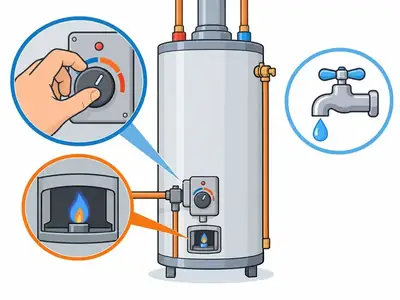 PlumbingWater Heater Not Producing Hot WaterWater heater not producing hot water? Check the breaker, pilot light, thermostat and sediment, plus real repair cost ranges and when to call a pro.
 PlumbingWater Heater Popping Noises: What Causes ThemWater heater popping noises usually mean sediment on the tank bottom. Learn the safe checks, how to flush the tank and when to call a pro.