
Water Heater Popping Noises: What Causes Them
Part of: Basic plumbing
- Difficulty
- Medium
- Time
- About 1 to 2 hours, including the heating time after
- Tools
- Garden hose, bucket, screwdriver, work gloves, towel
- Call a pro if
- the tank leaks, water is rusty, the pressure relief valve drips or discharges, you smell gas, or the noise is a loud bang rather than popping
In this guide
- Power off first
- Gas safety
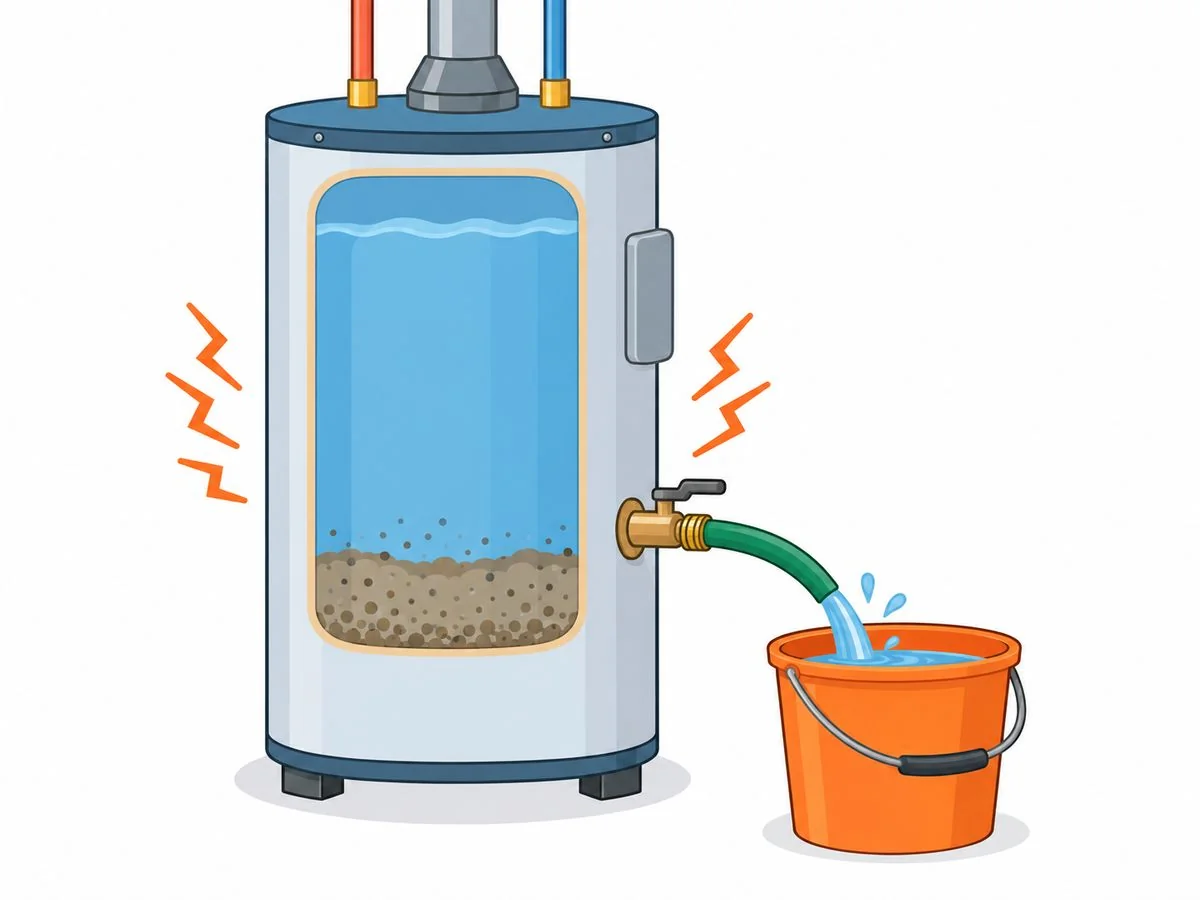
Water heater popping noises, or rumbling and crackling, often show up in a tank that has not been flushed in a while. Minerals settle at the bottom of the tank, and water trapped underneath bubbles through the layer as it heats. It is common, but it is worth fixing.
This guide is part of our wider guide to water heater problems.
Why it makes noise
Hard water leaves mineral sediment. On a gas heater, the burner heats the bottom of the tank under that layer. On an electric heater, the lower element sits in sediment. Pockets of steam form and burst, causing the popping or rumbling sound. Sediment also wastes energy and can shorten the life of the tank.
First checks
1. Listen for when it happens. Popping during or just after heating points to sediment.
2. Look for leaks. Check the base and the pipes. Water around the tank needs a pro.
3. Check the pressure relief valve. It is a valve with a pipe running down the side. If it is dripping or has discharged, call a plumber. Do not plug it.
4. Gas smell. If there is a gas smell, get out of the house and call the gas company or emergency services from outside.
Step by step: flush the tank
See also the full guide How to flush a water heater. In short:
1. Turn off the heat. For electric models, switch off the breaker. For gas models, set the gas control to "pilot" or off, as the manual says.
2. Turn off the cold water supply to the tank.
3. Let the water cool. Wait a few hours, or run a hot faucet to draw down heat, so the water is not scalding.
4. Connect a hose to the drain valve at the bottom of the tank. Run it to a floor drain or outdoors, downhill.
5. Open a hot water tap in the house to let air in.
6. Open the drain valve. Water will flow out, with sediment. Let the tank drain.
7. Flush with fresh water. Briefly open the cold supply to stir the sediment, then drain again until the water runs clear.
8. Close the drain valve and remove the hose.
9. Refill. Open the cold supply and leave the hot faucet open until water flows steadily, then close it.
10. Restore power or gas. Do not turn the electric heat on until the tank is full, or you can damage the elements. Relight a gas pilot using the manual.
If the noise continues
A stubborn crust may need a professional descaling, or the unit may be near the end of its life. Tanks 10 to 15 years old often have heavy buildup. A plumber can test the anode rod and the tank condition.
Prevent it
Flush the tank once a year, more often with hard water. A water softener also helps.
Anode rod and tank age
The anode rod is a metal rod in the tank that corrodes first so the tank does not. When it wears out, the tank rusts faster. Tanks with hard water wear it out sooner. A plumber can check it during a service visit. If your tank is about ten years old or more and makes noise, plan for a replacement in the next few years, and keep an eye on the base for leaks.
Related guides
- Brown Water From the Faucet: What It Means
- Sprinkler Head Not Popping Up: How to Fix It
- Water Heater Not Producing Hot Water: What to Check Before You Call
- Electric Water Heater Element: How to Test and Replace It
- Water Heater Leaking From the Bottom
- How to Check a Water Heater Expansion Tank
FAQ
Is popping dangerous?
Usually it is a nuisance, but a tank under stress can fail. Do not ignore leaks.
Why do I hear it at night?
Water heaters reheat after hot water use, even overnight.
Is it the same as banging pipes?
No. Banging in the walls is water hammer, a different issue.
Can I fix it without flushing?
Flushing is the standard first step.
More from this topic
- Brown Water From the Faucet: What It Means: Brown water from the faucet usually means stirred-up sediment, old galvanized pipes or water heater rust....
- How to Flush a Water Heater to Remove Sediment: Learn how to flush a water heater to clear sediment: turn off the power or gas, connect a hose, drain the...
- How to Lower a Water Heater Temperature: Learn how to lower a water heater temperature: find the thermostat, shut the power or gas, set a safe...
- How to Quiet a Banging Radiator: Learn how to quiet a banging radiator: bleed trapped air, fix the pipe slope, free a stuck valve and stop the...
- How to Flush a Tankless Water Heater: The Annual Descale: How to flush a tankless water heater: circulate vinegar or descaler through the heat exchanger to clear scale...
 PlumbingBrown Water From the Faucet: What It MeansBrown water from the faucet usually means stirred-up sediment, old galvanized pipes or water heater rust. Learn the checks that tell them apart.
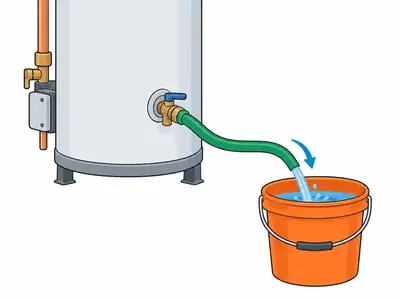 PlumbingHow to Flush a Water Heater to Remove SedimentLearn how to flush a water heater to clear sediment: turn off the power or gas, connect a hose, drain the tank and restart it safely.
 PlumbingHow to Lower a Water Heater TemperatureLearn how to lower a water heater temperature: find the thermostat, shut the power or gas, set a safe temperature and check the hot water at the faucets.
 PlumbingHow to Quiet a Banging RadiatorLearn how to quiet a banging radiator: bleed trapped air, fix the pipe slope, free a stuck valve and stop the expansion noise that wakes the house.
 PlumbingHow to Flush a Tankless Water Heater: The Annual DescaleHow to flush a tankless water heater: circulate vinegar or descaler through the heat exchanger to clear scale and restore performance.