
How to Lower a Water Heater Temperature
Part of: Basic plumbing · Also in: The Complete Guide to Home Plumbing Repair for Homeowners
- Difficulty
- Easy
- Time
- 30 to 60 minutes
- Tools
- Screwdriver, thermometer, gloves, marker
- Call a pro if
- The water stays scalding after the setting is lowered, since the thermostat or a mixing valve may have failed.
In this guide
- Power off first
- Gas safety
Most water heaters come set around 140 degrees, which is hotter than a house needs and costs money every month. Dropping it to 120 is one of the easiest savings in the house, and it lowers scald risk. How to lower a water heater temperature starts by measuring what you have, running hot water at a sink for a minute and reading a thermometer in a cup.
1. Measure what you have
1. Run hot water at a sink for a minute.
2. Fill a cup and put a thermometer in it.
3. Note the temperature.
4. Above 130 degrees is hotter than most homes need.
5. 120 degrees is the usual target.
2. Find the thermostat
1. Electric: a panel on the side, sometimes two panels.
2. Gas: a dial on the front of the gas valve.
3. Tankless: a digital control panel.
4. Note the current setting before you change it.
5. Photograph the dial with a marker line for reference.
3. Shut off the power or gas
1. Electric: turn the breaker off.
2. Gas: turn the valve to the pilot position.
3. Tankless: follow the maker's shutdown step.
4. Confirm the unit is off before opening a panel.
5. Never work on a live element.
4. Adjust an electric thermostat
1. Remove the panel cover.
2. Fold the insulation back.
3. Turn the dial down with a screwdriver.
4. Set both thermostats the same on a two-element heater.
5. Refit the insulation and cover.
5. Adjust a gas thermostat
1. Turn the dial to the desired setting.
2. Most dials mark warm, hot and very hot.
3. Warm is often around 120 degrees.
4. Do not set below the lowest mark.
5. Refit the cover.
6. Restore power or gas
1. Electric: turn the breaker back on.
2. Gas: turn the valve back to on.
3. Relight the pilot if the unit needs it.
4. Listen for the burner or the element.
5. Wait an hour for the tank to settle.
7. Check the result
1. Run hot water at the farthest sink.
2. Measure the temperature again.
3. Aim for 120 degrees at the faucet.
4. Check a shower too.
5. Note the reading for next time.
8. Watch for problems
1. Water that stays scalding means the thermostat stuck.
2. Water that is lukewarm means the setting went too low.
3. A gas smell means shut it off and call.
4. A noisy tank after the change is usually sediment.
9. Consider a mixing valve
1. Some homes keep the tank hot for dishwashing.
2. A mixing valve blends cold water at the outlet.
3. That keeps the tank hot and the faucets safe.
4. It needs a plumber to fit.
5. It is the right answer in a house with small children.
10. Keep it efficient
- Flush the tank once a year.
- Insulate the tank and the first few feet of pipe.
- Recheck the temperature each fall.
Common mistakes
- Working on a live electric element.
- Setting one thermostat on a two-element heater.
- Going below 120 and inviting bacteria growth.
- Forgetting the gas valve position.
- Not measuring the actual water temperature.
FAQ
What temperature should a water heater be set to?
120 degrees for most homes. 140 with a mixing valve if you need hotter tank water.
Does lowering the temperature save money?
Yes, less energy is used to hold the tank at a lower temperature.
Can I set it lower than 120?
Not recommended. Below 120 bacteria can grow in the tank.
Why is my water still hot after lowering the setting?
The tank takes time to cool, or the thermostat has failed.
Related guides
- Water Heater Relief Valve Dripping: Water heater relief valve dripping? Why the T&P valve drips, when it signals a real problem, how to check the...
- Replace Water Heater Thermostat Safely (Electric): Electric heater too hot, too cold or no hot water? Replace water heater thermostat parts safely with the...
- How to Check a Water Heater Expansion Tank: Learn how to check a water heater expansion tank, test the air charge, spot a waterlogged tank and know when...
- How to Fix a Scalding Shower: How to fix a scalding shower: adjust the limit stop, check the heater's thermostat and fix the valve that...
- How to Light a Water Heater Pilot Light Safely: How to light a water heater pilot: the gas smell check, the lighting sequence on the tank label, and what to...
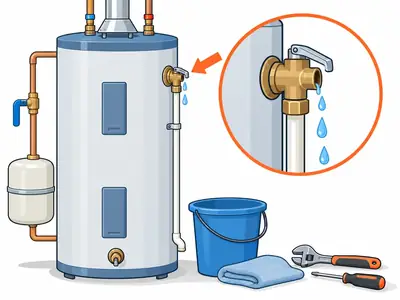 PlumbingWater Heater Relief Valve DrippingWater heater relief valve dripping? Why the T&P valve drips, when it signals a real problem, how to check the pressure, and when to call a plumber.
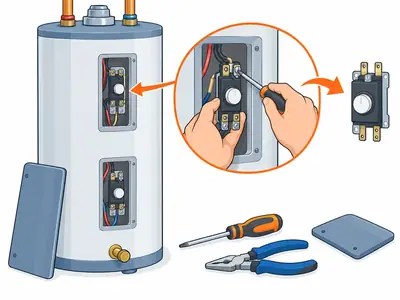 PlumbingReplace Water Heater Thermostat Safely (Electric)Electric heater too hot, too cold or no hot water? Replace water heater thermostat parts safely with the power off, and test before you buy.
 PlumbingHow to Check a Water Heater Expansion TankLearn how to check a water heater expansion tank, test the air charge, spot a waterlogged tank and know when to replace it to protect your pipes.
 PlumbingHow to Fix a Scalding ShowerHow to fix a scalding shower: adjust the limit stop, check the heater's thermostat and fix the valve that lets heat spike.
 PlumbingHow to Light a Water Heater Pilot Light SafelyHow to light a water heater pilot: the gas smell check, the lighting sequence on the tank label, and what to do when it will not stay lit.