
Water Heater Relief Valve Dripping
Part of: Basic plumbing
- Difficulty
- Easy to check, medium to repair
- Time
- 30 minutes to 2 hours
- Tools
- Pressure gauge for a hose bib, bucket, towels, gloves, garden hose, adjustable wrench
- Call a pro if
- the valve drips steadily, the tank is very hot, the pressure reads very high or you do not know how to replace the valve safely
In this guide
- Power off first
- Gas safety
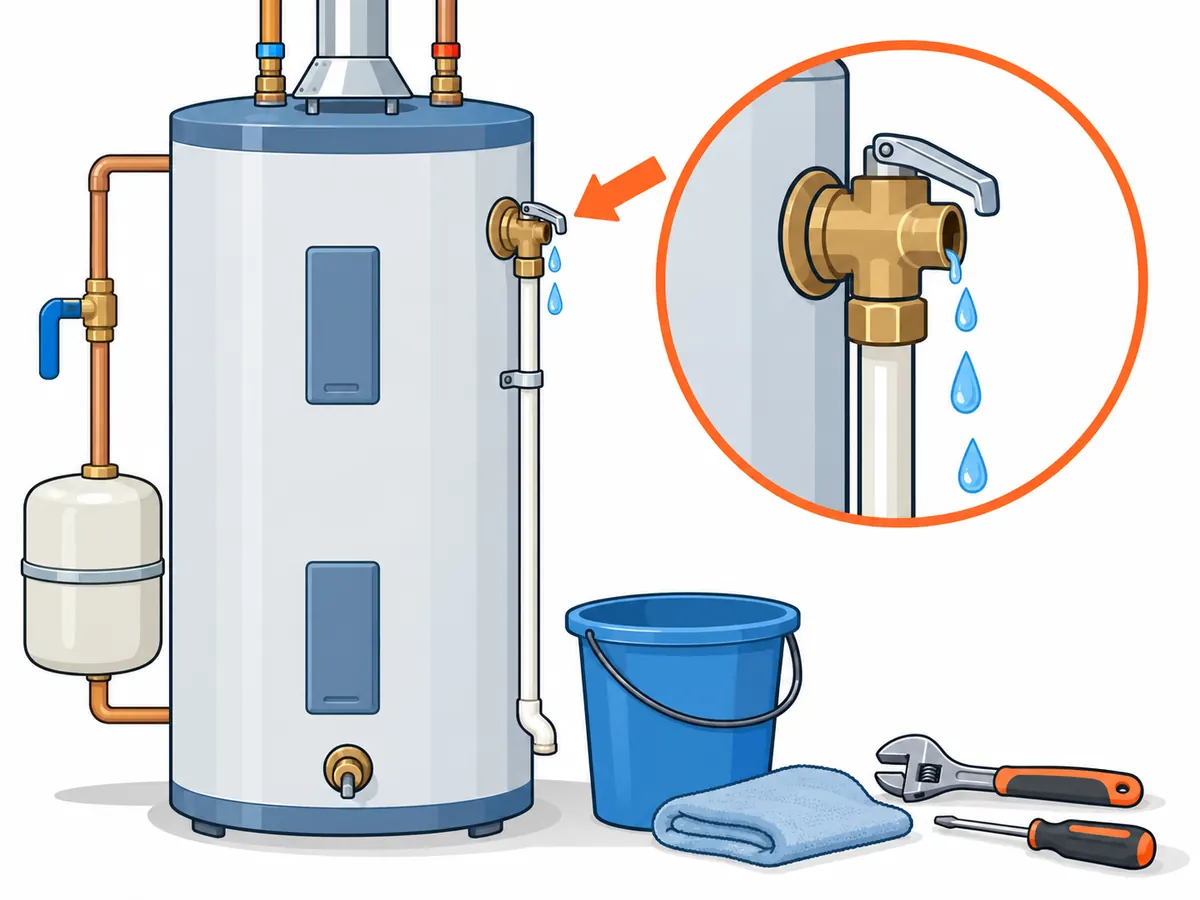
A water heater relief valve dripping can mean pressure, temperature or a worn valve. On the side or top of your water heater is a valve with a pipe running down toward the floor. This is the temperature and pressure relief valve, a safety device. If it drips or runs, the heater is telling you something. A water heater relief valve that is dripping can come from high pressure, high temperature or a worn valve. This guide explains how to check each cause safely.
This guide is part of our wider guide to water heater problems.
What the valve does
The relief valve opens if the pressure or the temperature inside the tank gets too high, so that the tank cannot burst. It is a critical safety part. Never cap it, plug it or remove it. The discharge pipe must run to a safe spot near the floor, with no valve and no cap.
Why it drips
- High water pressure. City pressure above about 80 pounds per square inch can push the valve open.
- Thermal expansion. When water heats, it expands. In a closed system with a check valve or backflow preventer, the pressure rises with every heating cycle. An expansion tank absorbs this.
- Water too hot. A thermostat set too high or a failing thermostat can overheat the tank.
- Worn or dirty valve. Mineral buildup or a worn seat can cause a slow drip even at normal pressure.
- Failed expansion tank. If the expansion tank has lost its air charge, it no longer protects the system.
Step by step: check it safely
1. Look at the discharge pipe. Is it dripping all the time, or only when the heater runs? A drip only during heating points to thermal expansion.
2. Put a bucket under the pipe and check how much water comes out.
3. Check the temperature. Run hot water at a faucet and measure with a thermometer. It should be around 120 degrees Fahrenheit. If it is much higher, lower the thermostat. See Water heater not producing hot water for thermostat basics.
4. Check the pressure. Attach a pressure gauge to an outdoor hose bib or the washer valve, with no water running. Read the gauge. If the reading is above 80 pounds per square inch, the pressure is too high.
5. Check the expansion tank, if there is one, a small tank on the cold water line. Tap it. The top should sound hollow and the bottom solid. If the whole tank sounds solid, or water comes out of the air valve, it has failed.
6. Test the valve. Place a bucket under the discharge pipe, and lift the lever briefly. Water should flow and stop when you let go. Use gloves, since the water can be very hot. If it keeps dripping afterward, the valve may be worn.
Fix the cause
- High pressure: a plumber can install or adjust a pressure reducing valve at the main.
- Thermal expansion: install or replace an expansion tank.
- High temperature: lower the thermostat setting.
- Worn valve: replace the relief valve. Turn off power or gas to the heater and the cold water, drain the tank below the valve, unscrew the old valve and install a new one with the same ratings. Seal the threads and reconnect the discharge pipe. If you are not sure, hire a plumber. Do not touch gas lines.
Signs that point to each cause
A drip only when the heater is heating points to thermal expansion. A constant drip points to a worn valve or high pressure. A hissing or steam from the valve, with very hot water, points to overheating, and the heater should be turned off and checked by a professional. A drip with rusty water means corrosion. A leak at the bottom of the tank is a different problem. See Water heater leaking from the bottom.
Maintenance
Flush the tank once a year. See How to flush a water heater. Check the anode rod. See How to replace an anode rod. Test the relief valve once a year. Check the expansion tank. Keep the thermostat at a safe setting. Keep the area around the heater clear.
More help
If the water is coming from somewhere else, plumbing leaks sorts every common leak by location and links to the repair.
Related guides
- Shower Goes Hot and Cold: What It Means
- Water Heater Drain Valve Leak: How to Fix It
- Hot Water Runs Out Fast: Causes and Fixes for a Tank Water Heater
- Electric Water Heater Element: How to Test and Replace It
When to call a pro
Never cap, plug, or remove the temperature and pressure relief valve; it is the last stop before a tank ruptures. Call a licensed plumber if the valve keeps dripping after you confirm safe temperature and pressure, if there is no expansion tank on a closed system, or if discharge is more than a slow drip. Persistent discharge usually means the valve, the thermostat, or the expansion tank has failed. Sources: IRC P2803 and P2804, IAPMO UPC 608, manufacturer instructions.
FAQ
Is a dripping relief valve dangerous?
It can warn of a problem. Find the cause promptly.
Can I cap the pipe?
No. It must stay open and free.
What pressure is too high?
Above about 80 pounds per square inch.
How often should I test the valve?
Once a year.
More from this topic
- How to Check a Water Heater Expansion Tank: Learn how to check a water heater expansion tank, test the air charge, spot a waterlogged tank and know when...
- Water Heater Leaking From the Bottom: Water heater leaking from the bottom? Find out if it is a loose valve, condensation or a failed tank, and...
- Water Heater Maintenance Checklist: Once a Year: A water heater maintenance checklist that takes an hour a year: flush sediment, test the relief valve, check...
- How to Lower a Water Heater Temperature: Learn how to lower a water heater temperature: find the thermostat, shut the power or gas, set a safe...
- How to Test a Pressure Relief Valve on a Water Heater: How to test a pressure relief valve on your water heater: the annual lever test that keeps the tank safe,...
 PlumbingHow to Check a Water Heater Expansion TankLearn how to check a water heater expansion tank, test the air charge, spot a waterlogged tank and know when to replace it to protect your pipes.
 PlumbingWater Heater Leaking From the BottomWater heater leaking from the bottom? Find out if it is a loose valve, condensation or a failed tank, and learn the safe first steps to stop the water.PlumbingWater Heater Maintenance Checklist: Once a YearA water heater maintenance checklist that takes an hour a year: flush sediment, test the relief valve, check the anode and inspect for early leaks.
 PlumbingHow to Lower a Water Heater TemperatureLearn how to lower a water heater temperature: find the thermostat, shut the power or gas, set a safe temperature and check the hot water at the faucets.
 Water HeatersHow to Test a Pressure Relief Valve on a Water HeaterHow to test a pressure relief valve on your water heater: the annual lever test that keeps the tank safe, plus replacement signs.