
Hot Water Runs Out Fast
Part of: Basic plumbing
- Difficulty
- Easy to medium
- Time
- 20 minutes to check, longer to repair
- Tools
- Flashlight, screwdriver, garden hose, bucket, thermometer, multimeter (optional)
- Call a pro if
- you need to work on gas parts, electrical elements or the tank itself, or you smell gas
In this guide
- Power off first
- Gas safety
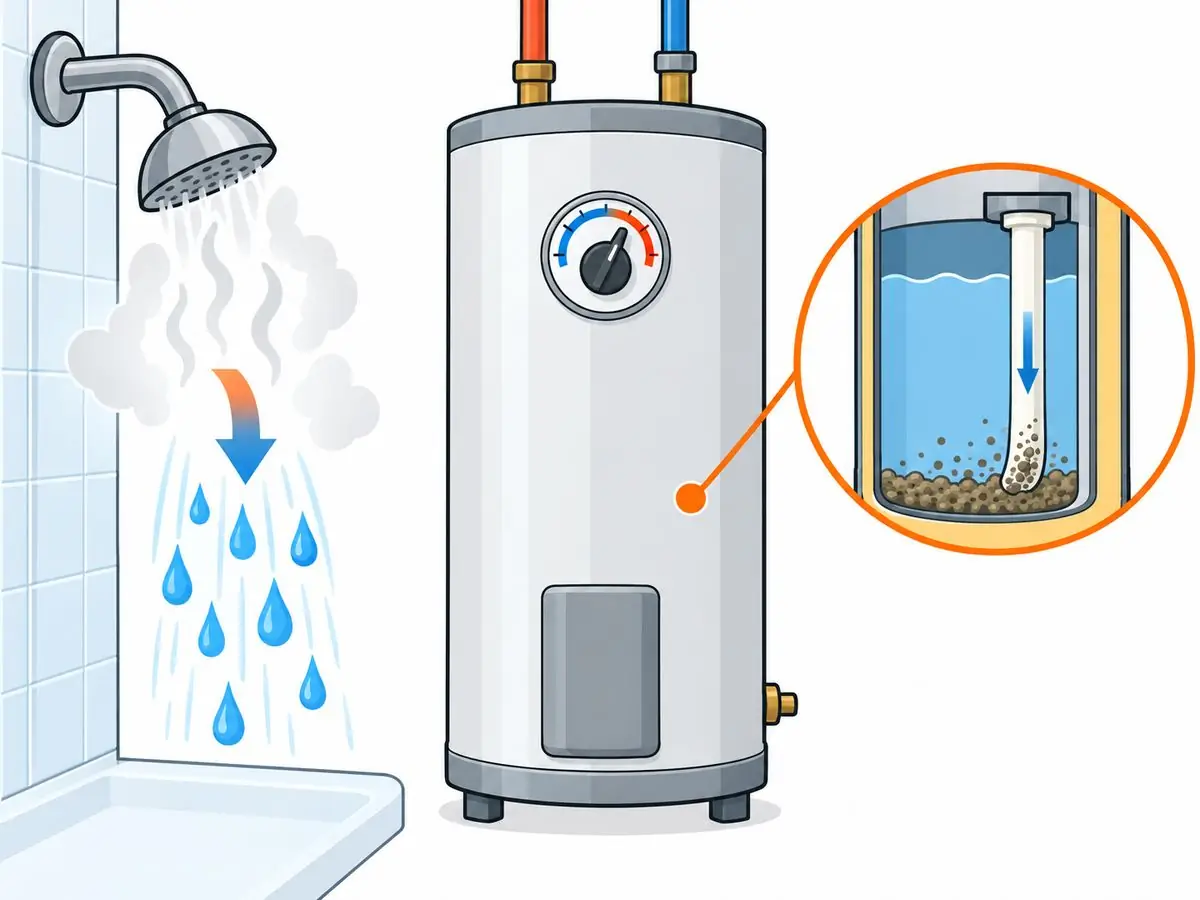
If your hot water runs out fast, you may get five minutes of a hot shower before it turns cold. The cause could be as simple as a thermostat set too low, or as serious as a failed part inside the tank. You can check the easy things in a few minutes, then decide when to bring in a pro.
This guide is part of our wider guide to water heater problems.
What changed?
Think about when it started. Did it happen suddenly, or over months? Did you add a new fixture, a bigger tub or more people to the household? A heater that has always run out fast may be too small. One that used to be fine and now runs out may have sediment, a broken part or a changed setting.
Step by step
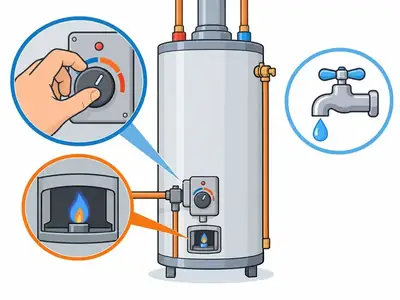
1. Check the thermostat. On most heaters, the dial or the display shows the temperature. Many guides suggest 120 degrees Fahrenheit as a safe and efficient setting. Do not set it higher than 120 without a reason, because hotter water can scald. If the setting is lower than 120, raising it a little can give you more hot water.
2. Check other uses. A running dishwasher or washing machine can use a lot of hot water at once. Try a shower when nothing else is running.
3. Measure the output. Run a hot faucet and use a thermometer to check the temperature. If the water is lukewarm even at first, something is wrong.
4. Flush the tank. Sediment settles at the bottom and takes up space where hot water would be. It also coats the heating parts. See How to flush a water heater.
5. Check for a leak. A wet floor around the heater, or a hot pipe that drips, can mean wasted heat and water. See Water heater leaking from the bottom.
6. Look at the cold side valve. The cold inlet valve should be fully open.
7. Consider the dip tube. This plastic tube carries cold water to the bottom of the tank. If it cracks or breaks, cold water mixes with hot water near the top, so the hot water seems to run out quickly. A plumber can replace it.
8. Check the heating elements (electric). Electric heaters have an upper and a lower element. If the lower one fails, you get only about half the usual hot water. A pro or a careful homeowner can test them with the power off at the breaker.
9. Check the burner and the thermocouple (gas). A dirty burner or a weak flame can slow heating. Gas work is a job for a pro. Never try to relight a pilot if you smell gas.
When the heater is too small
A rule of thumb is to match the tank size to the number of people in the home and your usage. If you have added family members or fixtures, a larger tank or a tankless heater may be the answer. Spreading out hot water use, such as running the washer at a different time, can also help.
Mixing valves and low flow showerheads
A mixing valve at the heater adds cold water to the hot, so the water at the faucet is safer. If it is set too low, you will use more hot water than needed. A low flow showerhead can stretch your hot water. See How to replace a showerhead.
A simple capacity test
Fill a bathtub or a large bucket from a hot faucet and time how long the water stays hot. Compare it with the size of your tank, which is printed on the label, often in gallons. A tank only gives you a portion of its size as usable hot water, because cold water mixes in as it empties. If the time you get is far below what you expect for the size, something inside the tank is not working. If you get about what is normal for the size, your use may simply be higher than the tank can supply.
Keep the heater working well
Check the temperature setting each year, flush the tank, and look at the area around it for leaks. Insulating the first few feet of hot pipe near the heater cuts heat loss. A tank blanket helps on older units, but check the label first, since some gas heaters should not be wrapped. Never block the air vents or the flue on a gas heater.
Related guides
- Replace Water Heater Thermostat Safely (Electric)
- Water Heater Not Producing Hot Water: What to Check Before You Call
- How to Insulate a Water Heater and Hot Water Pipes Safely
- Low Hot Water Pressure: What to Check
- How to Insulate Hot Water Pipes
- How to Fix a Shower That Won't Get Hot
FAQ
Why do I get hot water at first and then it turns cold?
The tank may be running low because of sediment, a broken dip tube or a failed lower element.
How often should I flush my water heater?
Many guides suggest once a year.
Will raising the temperature fix it?
It may help if the setting is low. Do not go above 120 degrees for safety.
Is the heater too old?
Tanks over 10 years old are more likely to have problems. Think about replacement if repairs keep coming.
More from this topic
- Replace Water Heater Thermostat Safely (Electric): Electric heater too hot, too cold or no hot water? Replace water heater thermostat parts safely with the...
- Electric Water Heater Element: How to Test and Replace It: No hot water? Learn how to test and replace an electric water heater element safely, with the power off, a...
- How to Flush a Water Heater to Remove Sediment: Learn how to flush a water heater to clear sediment: turn off the power or gas, connect a hose, drain the...
- Water Heater Not Producing Hot Water: Water heater not producing hot water? Check the breaker, pilot light, thermostat and sediment, plus real...
- Water Heater Takes Too Long to Heat Up: What to Check: When a water heater takes too long to heat up, the cause is usually sediment, a failing element or...
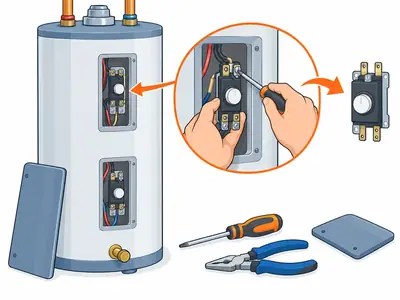 PlumbingReplace Water Heater Thermostat Safely (Electric)Electric heater too hot, too cold or no hot water? Replace water heater thermostat parts safely with the power off, and test before you buy.
 PlumbingElectric Water Heater Element: How to Test and Replace ItNo hot water? Learn how to test and replace an electric water heater element safely, with the power off, a multimeter and a drained tank.
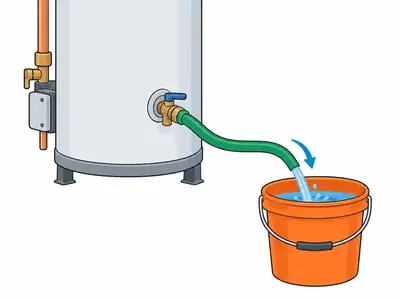 PlumbingHow to Flush a Water Heater to Remove SedimentLearn how to flush a water heater to clear sediment: turn off the power or gas, connect a hose, drain the tank and restart it safely.
 PlumbingWater Heater Not Producing Hot WaterWater heater not producing hot water? Check the breaker, pilot light, thermostat and sediment, plus real repair cost ranges and when to call a pro.PlumbingWater Heater Takes Too Long to Heat Up: What to CheckWhen a water heater takes too long to heat up, the cause is usually sediment, a failing element or thermostat, or the distance to the faucet.