
Water Heater Takes Too Long to Heat Up: What to Check
Part of: Basic plumbing
- Difficulty
- Easy to moderate
- Time
- 20 to 40 minutes of checks
- Tools
- A thermometer or a careful hand, a flashlight, the heater's manual if you have it
- Call a pro if
- You see water at the base of the tank, smell gas near a gas unit, or the tank is past ten years old with rusty water, since those are replacement conversations.
In this guide
- Power off first
- Gas safety
A water heater takes too long to heat up for a handful of reasons, and they split into two different problems: the heater is slow to reheat a tank, or hot water is slow to reach your faucet. Those have different fixes, so the first job is telling them apart.
1. Separate slow reheating from slow delivery
Two complaints hide inside this one symptom.
1. If the first water of the day arrives hot but the tank recovers slowly after a shower, that is slow reheating.
2. If you wait ages at the faucet before hot water arrives at all, that is delivery distance or a plumbing issue.
3. If both changed gradually over months, suspect sediment.
4. If nothing was slow and suddenly everything is, suspect a failed component.
2. Check the temperature setting
1. Most heaters should sit around 120 degrees, hot enough for comfort, below scalding risk.
2. Someone nudging the dial down makes every wait feel longer, since you mix in less cold at the faucet.
3. On electric units there is a thermostat behind each access panel, breaker off before you look.
4. Do not crank the temperature to mask a recovery problem; you get scald risk and the same slow tank.
3. Suspect sediment first on an aging tank
Sediment is the most common slow-down.
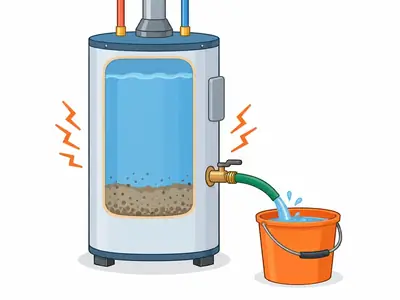
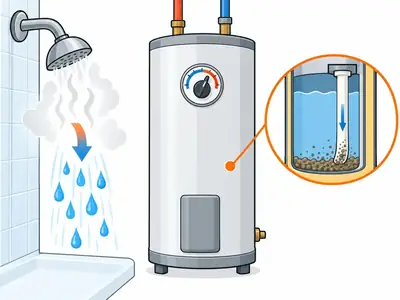
1. Minerals settle at the tank bottom and insulate the water from the heat source.
2. Rumbling or popping while heating is the classic soundtrack; see water heater popping noises.
3. A careful drain-and-flush removes loose sediment and restores a lot of speed.
4. If the tank has never been flushed and is past mid-life, flush gently or have a plumber do it; a neglected valve can start to weep.
4. Test the elements on an electric heater
Electric tanks heat with one or two elements, and they die.
1. A failed lower element leaves you a small supply of hot water and a very slow reheat.
2. Breaker off, panels open, and each element can be tested with a multimeter.
3. A thermostat that has drifted or failed produces the same symptom, and it is a cheap part.
5. Check the burner side on a gas heater
1. Look through the sight glass at the burner flame; it should burn mostly blue and steady.
2. A lazy yellow flame or a burner that roars then fades points to a dirty burner or venting problem.
3. The dip tube, which sends cold water to the tank bottom, can disintegrate on older units and mixes cold at the top.
4. Burner, flue and gas valve work belongs to a pro.
6. Measure the delivery wait separately
If the tank is fine, the pipes are the delay.
1. Time how long hot water takes to reach the farthest faucet, and note whether it was always that way.
2. Long pipe runs waste water and patience every single day.
3. Fixes range from insulating exposed hot lines to demand-type recirculation pumps installed at the far fixture.
4. Pipe insulation is a friendly DIY; recirculation pumps are a plumber job in most homes.
7. Weigh age before spending
Recovery complaints on an old tank have a ceiling.
1. Tank water heaters typically last eight to twelve years.
2. A nine year old tank with sediment noise and rusty hot water is near the end; see repair vs replace appliances.
3. Check the anode rod if the tank is younger; a spent rod lets corrosion start, and replacing an anode rod buys years.
4. Any moisture at the tank base ends the debate: plan the replacement before the leak chooses the date.
Common mistakes
- Raising the thermostat to compensate for a slow tank.
- Flushing a never-flushed old tank aggressively and creating a leak.
- Replacing elements on a heater that keeps tripping its breaker, without finding why.
- Ignoring rumbling noises for years until the tank fails.
- Timing the faucet wait and blaming the heater for a long pipe run.
FAQ
How long should a water heater take to reheat?
A typical gas tank reheats a full tank in about 30 to 40 minutes; electric models take roughly an hour or more. Much longer than that, on a heater that used to be faster, means something on this list.
Why does my hot water run out faster than it used to?
Usually sediment reducing the usable tank volume, or a failed lower element on an electric unit. Both show up as shorter showers and slow recovery together.
Does flushing a water heater really help?
Yes, when sediment is the cause. It restores heating speed and efficiency, and annual flushing prevents the buildup. Very old, never-flushed tanks should be flushed carefully or by a plumber.
Why is hot water slow only at one bathroom?
That is delivery, not the heater. The run from the tank to that room is long or uninsulated. Pipe insulation helps a little; a recirculation solution fixes it.
Related guides
- How to Fix a Scalding Shower: How to fix a scalding shower: adjust the limit stop, check the heater's thermostat and fix the valve that...
- How to Fix a Shower That Won't Get Hot: How to fix a shower that won't get hot: check the limit stop, the cartridge and the water heater in order to...
- Water Heater Popping Noises: What Causes Them: Water heater popping noises usually mean sediment on the tank bottom. Learn the safe checks, how to flush the...
- Electric Water Heater Element: How to Test and Replace It: No hot water? Learn how to test and replace an electric water heater element safely, with the power off, a...
- Hot Water Runs Out Fast: Hot water runs out fast? Check the thermostat, sediment, dip tube and heating element. Learn simple tests and...
 PlumbingHow to Fix a Scalding ShowerHow to fix a scalding shower: adjust the limit stop, check the heater's thermostat and fix the valve that lets heat spike.
 PlumbingHow to Fix a Shower That Won't Get HotHow to fix a shower that won't get hot: check the limit stop, the cartridge and the water heater in order to find the cause.
 PlumbingWater Heater Popping Noises: What Causes ThemWater heater popping noises usually mean sediment on the tank bottom. Learn the safe checks, how to flush the tank and when to call a pro.
 PlumbingElectric Water Heater Element: How to Test and Replace ItNo hot water? Learn how to test and replace an electric water heater element safely, with the power off, a multimeter and a drained tank.
 PlumbingHot Water Runs Out FastHot water runs out fast? Check the thermostat, sediment, dip tube and heating element. Learn simple tests and when to call a pro for a tank water heater.