
How to Replace an Anode Rod in Your Water Heater
Part of: Basic plumbing
- Difficulty
- Medium
- Time
- 1 to 2 hours
- Tools
- Breaker bar, 1-1/16 inch socket, garden hose, bucket, thread sealant tape, new anode rod, flashlight, towels
- Call a pro if
- the rod will not turn, there is no room above the heater to pull the rod out, or the tank is already leaking
In this guide
- Power off first
- Gas safety
Inside most tank water heaters is a metal rod that corrodes so the tank does not. It is called the anode rod. When it is used up, the tank starts to rust instead. If you replace an anode rod before it is gone, you can add years to the life of your water heater. It is one of the most useful maintenance jobs, and it takes about an hour.
This guide is part of our wider guide to water heater problems.
How to know when it is time
Many guides suggest checking the rod every two to three years, and sooner if you have soft water or smelly water. Signs of a worn rod include a rotten egg smell in hot water, popping or rumbling sounds from sediment, and rusty hot water. If the rod is less than about half an inch thick in places, or the steel core wire shows, replace it.
Before you start
Check that you have the right replacement. Rods are made of magnesium, aluminum or aluminum with zinc, and some are flexible to fit in tight spaces. Match the length and thread to your tank. Check the water heater label; replacing a rod can affect the warranty, so read the paperwork.
Step by step
1. Turn off the power or gas. Switch off the breaker for an electric heater. For a gas heater, set the gas control to off or pilot. Do not touch gas lines. If you smell gas, leave the house.
2. Shut off the cold water at the valve above the heater.
3. Open a hot water tap in the house to let air in.
4. Drain a few gallons from the drain valve at the bottom of the tank with a hose. You only need to lower the water level below the top of the tank. Hot water can burn, so let it cool first if you can.
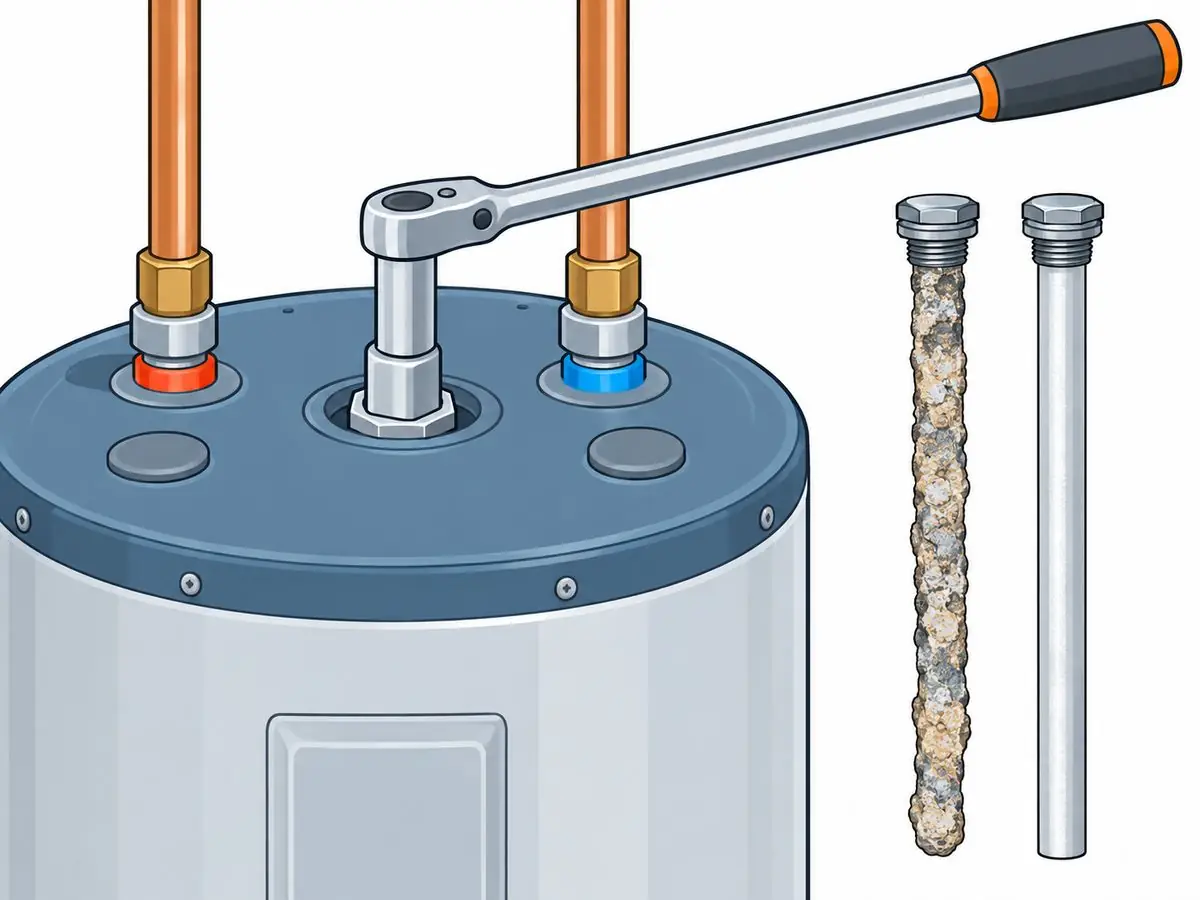
5. Find the rod. The hex head is on top of the tank, sometimes under a plastic cap or the insulation. On some heaters, it is part of the hot outlet fitting.
6. Loosen the rod. Place the socket on a breaker bar. Turn it counterclockwise with steady force. Use your body weight, and hold the tank steady. The rod may be tight.
7. Pull out the old rod. You need room above the tank, about the length of the rod, or you can use a flexible rod made to bend.
8. Check it. Look for coating that has worn away and for exposed wire.
9. Prepare the new rod. Wrap the threads with thread sealant tape, two to three turns clockwise, unless the rod already has a sealing washer.
10. Install the new rod. Thread it in by hand, then tighten with the breaker bar.
11. Refill the tank. Open the cold water valve and leave the hot faucet open until water flows steadily with no air. For an electric heater, do not turn the power on until the tank is full, or the heating elements can burn out.
12. Close the hot faucet, check for leaks at the rod, and restore the power or gas.
If the rod will not budge
Do not force it with a pipe or a tool that can slip. A breaker bar with a longer handle can help, or a pro can use an impact wrench. Never use heat or a flame.
What happens after
The water may smell or look cloudy for a short time. Run a hot faucet for a minute. If you still have a smell, you may have bacteria in the tank, and a flush can help. See How to flush a water heater.
Tight spaces and flexible rods
Many heaters sit in a closet or under a low ceiling. If there is less clear space above the tank than the length of the rod, a segmented or flexible anode rod can bend as you lift it out and push it in. Another option is a combination rod, which is part of the hot water outlet fitting. Check the manual for where your rod sits. Measure the space before you shop. If you cannot reach the rod safely, ask a plumber.
Why the smell happens
A rotten egg smell in hot water can come from bacteria that react with the magnesium or aluminum in the rod. A zinc blend rod can reduce it. A flush with the heater turned up briefly is another method some people use, but turn the temperature back down afterward and take care with hot water. If the smell stays, ask a plumber about options.
Related guides
- Electric Water Heater Element: How to Test and Replace It
- Hot Water Runs Out Fast: Causes and Fixes for a Tank Water Heater
- Water Heater Not Producing Hot Water: What to Check Before You Call
- Faucet Water Smells Like Rotten Eggs: What It Means
- Water Heater Drain Valve Leak: How to Fix It
- Water Heater Leaking From the Bottom
FAQ
How long does an anode rod last?
Often three to five years, less with soft water.
Which rod type is best?
Magnesium protects best in most cases. Aluminum or zinc blends are used for smell problems.
Can I skip the rod?
You can, but the tank will rust sooner.
Does replacing the rod fix a leak?
No. A leaking tank must be replaced.
More from this topic
- Water Heater Maintenance Checklist: Once a Year: A water heater maintenance checklist that takes an hour a year: flush sediment, test the relief valve, check...
- When to Replace Your Water Heater: The Real Signs: When to replace your water heater: the age test, rusty water, rumbling, moisture at the base and the...
- How to Check a Water Heater Expansion Tank: Learn how to check a water heater expansion tank, test the air charge, spot a waterlogged tank and know when...
- How to Flush a Tankless Water Heater: The Annual Descale: How to flush a tankless water heater: circulate vinegar or descaler through the heat exchanger to clear scale...
- How to Lower a Water Heater Temperature: Learn how to lower a water heater temperature: find the thermostat, shut the power or gas, set a safe...
 PlumbingWhen to Replace Your Water Heater: The Real SignsWhen to replace your water heater: the age test, rusty water, rumbling, moisture at the base and the repair-or-replace math, before it chooses for you.
 PlumbingHow to Check a Water Heater Expansion TankLearn how to check a water heater expansion tank, test the air charge, spot a waterlogged tank and know when to replace it to protect your pipes.
 PlumbingHow to Flush a Tankless Water Heater: The Annual DescaleHow to flush a tankless water heater: circulate vinegar or descaler through the heat exchanger to clear scale and restore performance.
 PlumbingHow to Lower a Water Heater TemperatureLearn how to lower a water heater temperature: find the thermostat, shut the power or gas, set a safe temperature and check the hot water at the faucets.