
Water Heater Leaking From the Bottom
Part of: Basic plumbing
- Difficulty
- Easy to find the cause, harder to fix
- Time
- 15 minutes to check, a few hours to replace a tank
- Tools
- Flashlight, towels, bucket, adjustable wrench, paper towels, garden hose
- Call a pro if
- the tank body itself is leaking, you smell gas, water is near electrical parts, or the leak is more than a drip
In this guide
- Power off first
- Gas safety
Finding water on the floor around the water heater is stressful. A water heater leaking from the bottom can come from something minor, such as a loose drain valve or a drip from a fitting above, or from something serious, such as a corroded tank. The first job is to stop the water safely and then work out where it comes from.
This guide is part of our wider guide to water heater problems.
Step 1: Make it safe
1. Turn off the power. For an electric heater, switch off the breaker that feeds it. For a gas heater, set the gas control knob to off or to the pilot setting, as the label on the unit shows. If you smell gas, leave the house and call your gas utility from outside. Do not turn lights or switches on or off.
2. Close the cold water inlet valve on the pipe above the heater. Turn the handle clockwise. This stops new water from entering the tank. If the valve will not close, shut off the water main. See How to shut off the water main.
3. Keep away from hot water. A leak can be scalding. Do not touch the discharge pipe or the water pooling around the base if it is hot.
Step 2: Find where the water is coming from
Dry the floor and the tank with towels. Then look at each place in turn.
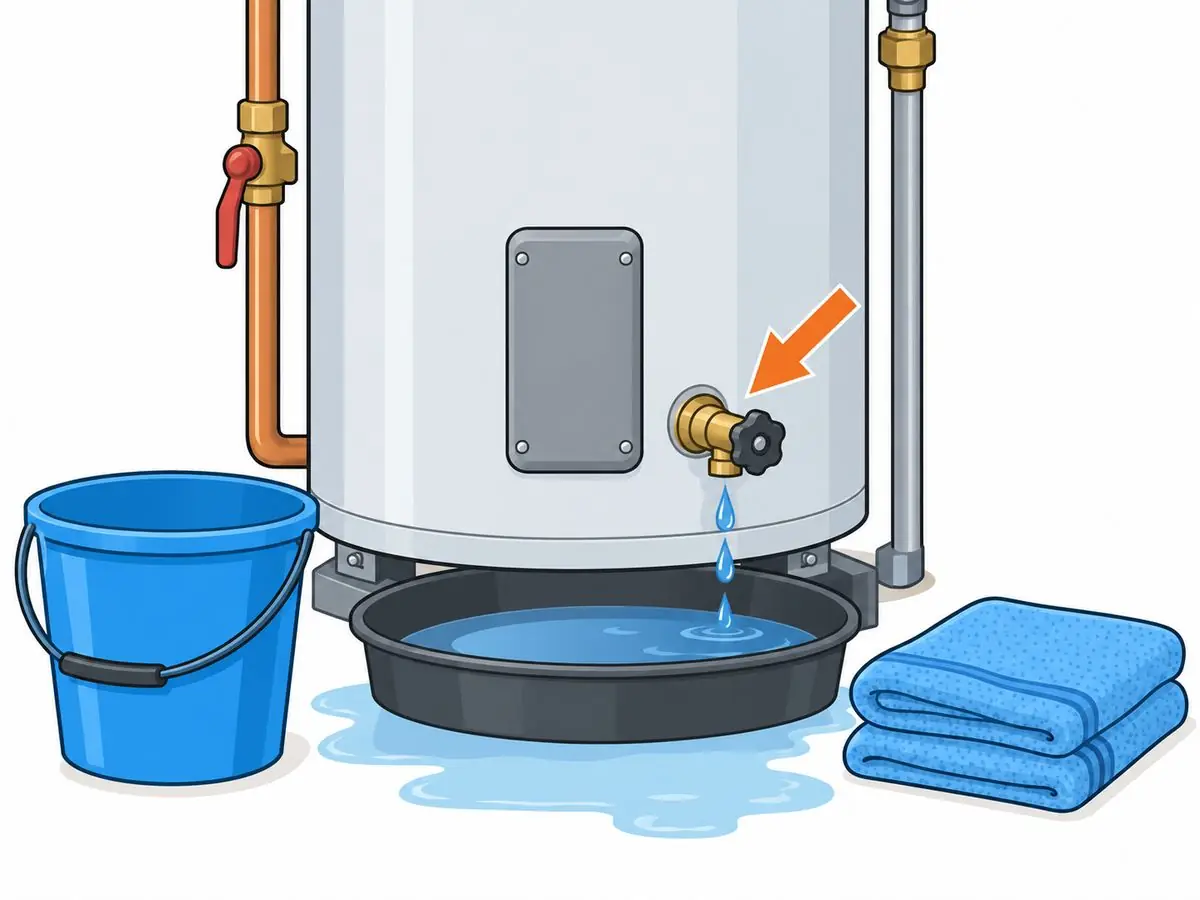
- Drain valve. This is the small valve near the bottom, where you attach a hose to drain the tank. A loose valve or a worn washer can drip. Check that a cap or hose is not attached with a leak. Snug the valve gently by hand or with a wrench a small amount.
- Temperature and pressure relief valve and its pipe. This valve has a pipe that runs down the side of the tank. A leak here can mean pressure or temperature is too high, or the valve is worn. Do not cap the pipe or plug it. It is a safety device.
- Inlet and outlet connections on top. Water from a loose fitting can run down the tank and appear to leak from the bottom. Feel along the connections and the pipes with a paper towel.
- Condensation. A tank that has just refilled with cold water, or a gas heater in a humid room, can drip from the outside surface. This should stop in a short time.
- Heating element gaskets (electric). A loose gasket behind the access panel can leak. Turn off the power before you open the panel. Do not touch parts if you are not sure.
- Tank body. If the water appears to come from the bottom of the tank itself, or from under the insulation, the tank has probably rusted through. It cannot be repaired.
Step 3: Decide what to do
If the leak comes from the drain valve, a fitting or the relief valve, a plumber or a careful homeowner can fix it. If it comes from the tank, replace the heater. Most tanks last about 8 to 12 years, and a leak at the bottom of an older tank usually means the end of its life. If the heater is under warranty, check the paperwork before you remove it.
Stop damage while you wait
Put a pan or a bucket under the leak. Use a wet vacuum to remove standing water. Move stored items away from the area. If the heater is in a finished space, shut off the water to the unit and keep the power off until a plumber checks it. Open windows or run a fan to dry the area, and watch for mold.
Prevent future leaks
Flush the tank each year to remove sediment. See How to flush a water heater. Check the anode rod every few years. See How to replace an anode rod. Install a drain pan with a pipe to a drain if the heater is in a spot where a leak would cause damage.
Related guides
- Water Heater Drain Valve Leak: How to Fix It
- Low Hot Water Pressure: What to Check
- Washing Machine Not Filling with Water: What to Check
- Water Heater Not Producing Hot Water: What to Check Before You Call
- Hot Water Runs Out Fast: Causes and Fixes for a Tank Water Heater
- Water Heater Popping Noises: What Causes Them
More help
If the water is coming from somewhere else, plumbing leaks sorts every common leak by location and links to the repair.
When to call a pro
Water coming from the bottom of the tank itself, not from a fitting or the drain valve, means the inner tank has failed and the heater needs replacement, not repair. Replacement usually needs a permit and must meet current code for the relief valve discharge, expansion control, and seismic strapping where required, so hire a licensed plumber. Running a leaking tank risks a rupture and major water damage. Sources: IRC P2801 and P2803, local plumbing code.
FAQ
Can I fix a leaking tank?
No. A leaking tank has rusted through and must be replaced.
Is a small drip from the relief valve normal?
No. It can mean high pressure or temperature, or a worn valve. Have it checked.
Why is the water at the base wet only after a shower?
It could be condensation or a slow leak from a fitting. Dry the area and check again.
Should I drain the tank right away?
Only if a plumber tells you to or if you are replacing the heater. Turn off the power first.
More from this topic
- Water Heater Drain Valve Leak: How to Fix It: Water heater drain valve leak? Learn how to tighten, cap or replace the valve safely, and when to call a...
- When to Replace Your Water Heater: The Real Signs: When to replace your water heater: the age test, rusty water, rumbling, moisture at the base and the...
- How to Install a Water Heater Drain Pan: Learn how to install a water heater drain pan: pick the right size, drain it to a safe place, set the tank...
- Water Heater Relief Valve Dripping: Water heater relief valve dripping? Why the T&P valve drips, when it signals a real problem, how to check the...
- Plumbing Leaks: How to Find and Fix the Most Common Ones: Plumbing leaks start small. Learn how to find where the water comes from, when to shut it off, and which...
 PlumbingWater Heater Drain Valve Leak: How to Fix ItWater heater drain valve leak? Learn how to tighten, cap or replace the valve safely, and when to call a plumber. Steps, tools and safety notes included.
 PlumbingWhen to Replace Your Water Heater: The Real SignsWhen to replace your water heater: the age test, rusty water, rumbling, moisture at the base and the repair-or-replace math, before it chooses for you.
 PlumbingHow to Install a Water Heater Drain PanLearn how to install a water heater drain pan: pick the right size, drain it to a safe place, set the tank back and check the pan after the first heating cycle.
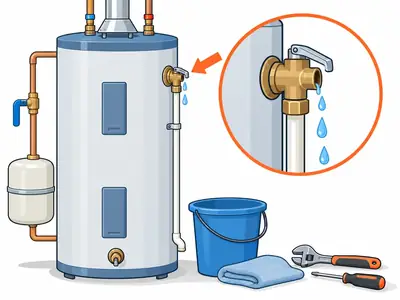 PlumbingWater Heater Relief Valve DrippingWater heater relief valve dripping? Why the T&P valve drips, when it signals a real problem, how to check the pressure, and when to call a plumber.
 PlumbingPlumbing Leaks: How to Find and Fix the Most Common OnesPlumbing leaks start small. Learn how to find where the water comes from, when to shut it off, and which guide fixes each common leak around the house.