
Low Hot Water Pressure: What to Check
Part of: Basic plumbing
- Difficulty
- Easy to medium
- Time
- 20 to 60 minutes
- Tools
- Pliers, rag, white vinegar, small bowl, flashlight, garden hose, bucket
- Call a pro if
- you see rust-colored water, the water heater is leaking, the heater is old, or the pipes are corroded
In this guide
- Gas safety
If cold water flows well but you have low hot water pressure, the problem sits between the water heater and the faucet. Start with the simple checks and work toward the heater.
This guide is part of our wider guide to water heater problems.
Narrow it down
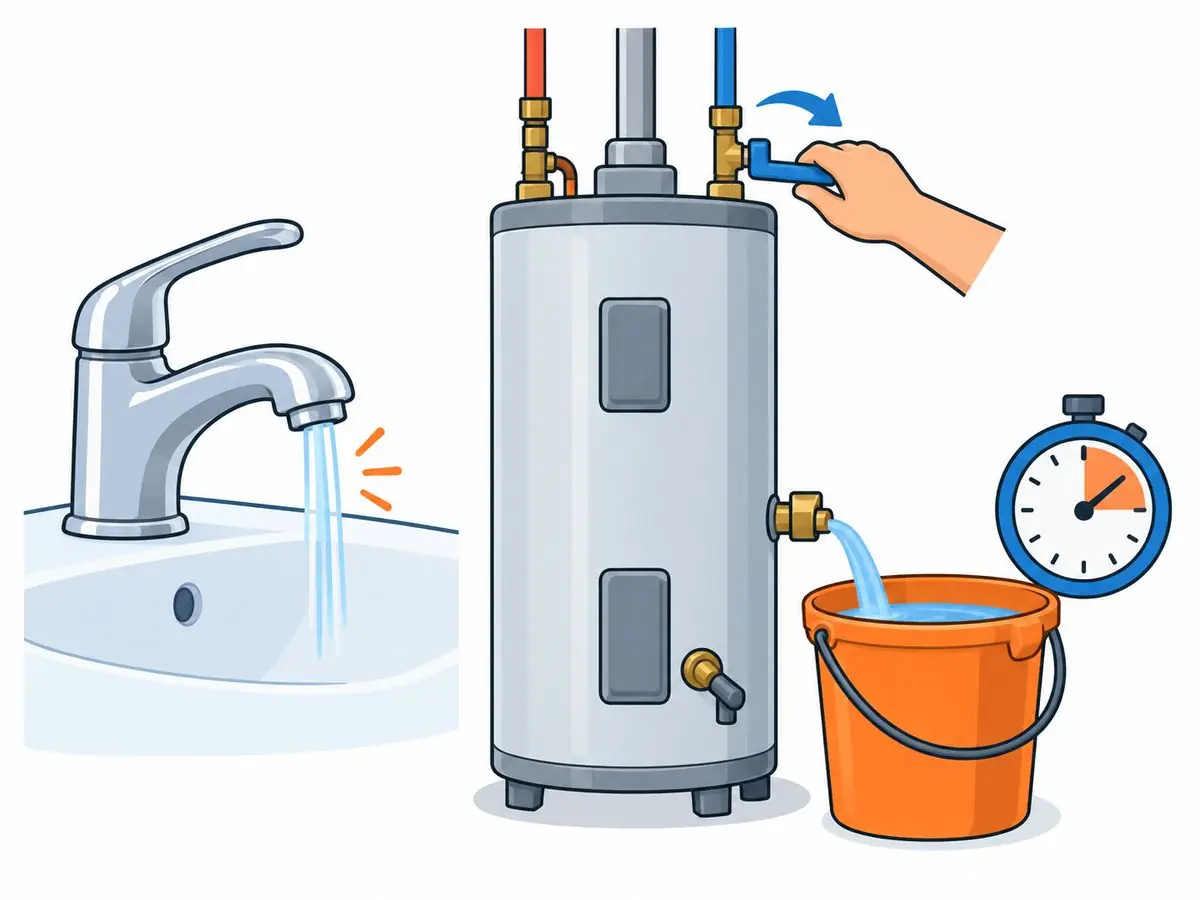
1. Test several taps. Compare hot and cold at each. If only one faucet has low hot pressure, the problem is local. If every hot faucet is weak, look at the heater or the pipes.
2. Check the aerator. Mineral bits can block one side. How to fix low water pressure in one faucet covers cleaning it.
3. Check the shutoff valves under the sink. Turn the hot valve fully counterclockwise.
If all hot faucets are weak
1. Check the water heater shutoff. Find the cold water valve on top of the heater. Make sure it is fully open. A gate valve with a handle turns counterclockwise to open. A ball valve is open when the handle lines up with the pipe.
2. Check the hot water outlet valve if there is one.
3. Look at the pipes. Old galvanized pipes rust inside and restrict flow. If you see rust stains, call a plumber.
4. Check for sediment. Hard water leaves sediment that can block flow in the heater and pipes. See How to flush a water heater.
5. Check the heater's temperature. If hot water seems weak and lukewarm, see Water heater not producing hot water.
6. Look for leaks. A leak lowers pressure. See How to find a water leak in your house.
Mixing valves and shower valves
If the low pressure is only in the shower, a worn cartridge or a clogged shower head may be the cause. Clean the shower head with vinegar. See How to replace a showerhead.
When it is the house system
Low pressure in the whole house, hot and cold, is a different problem. Check the main shutoff valve and the pressure regulator. A plumber can test pressure with a gauge.
A quick way to find the cause
Write down what you see. Note which taps are weak, whether the weakness started suddenly or slowly, and whether the water is cloudy or rusty. A sudden drop often points to a closed or partly closed valve, or a kinked flexible line after someone worked under a sink. A slow loss over months points to mineral buildup in aerators, in the heater or in old pipes.
Next, compare the flow with a bucket. Hold a bucket under the faucet and time how long it takes to fill a gallon, hot and then cold. A big difference confirms that the hot side is restricted. Share the numbers with a plumber if you call one. They help the plumber find the cause faster.
What to expect from a plumber
If you call a plumber, tell them which taps are weak, whether the problem started suddenly, and what you have already checked. They may measure pressure at an outdoor spigot with a gauge, check the pressure regulator and test the water heater valves. Ask them to look for sediment in the heater and for corroded pipes. Replacing old galvanized pipes or a failing regulator is not a DIY job for most people.
Related guides
- Test Water Pressure at Home With a Gauge
- Hot Water Runs Out Fast: Causes and Fixes for a Tank Water Heater
- How to Insulate a Water Heater and Hot Water Pipes Safely
- How to Check a Water Heater Expansion Tank
FAQ
Why is hot weaker than cold?
The heater, its valves or the hot pipes are restricting flow.
Could sediment cause it?
Yes. Flush the tank once a year.
Is galvanized pipe a problem?
Old galvanized pipe corrodes inside and narrows. Replacement is a job for a plumber.
Should I raise the temperature to fix it?
No. Temperature and pressure are different. Keep the heater at a safe setting.
More from this topic
- Water Heater Problems: No Hot Water, Leaks, Noise: Water heater problems: no hot water, a leaking tank, popping noises or water that runs cold too fast....
- Water Heater Takes Too Long to Heat Up: What to Check: When a water heater takes too long to heat up, the cause is usually sediment, a failing element or...
- How to Test a Pressure Relief Valve on a Water Heater: How to test a pressure relief valve on your water heater: the annual lever test that keeps the tank safe,...
- How to Shut Off Water Main (and Find the Shutoff Valve): Learn how to shut off water main in an emergency. Find the shutoff valve, tell ball valves from gate valves...
- Water Heater Relief Valve Dripping: Water heater relief valve dripping? Why the T&P valve drips, when it signals a real problem, how to check the...
 PlumbingWater Heater Problems: No Hot Water, Leaks, NoiseWater heater problems: no hot water, a leaking tank, popping noises or water that runs cold too fast. Includes the tools you need and when to call a pro.PlumbingWater Heater Takes Too Long to Heat Up: What to CheckWhen a water heater takes too long to heat up, the cause is usually sediment, a failing element or thermostat, or the distance to the faucet.
 Water HeatersHow to Test a Pressure Relief Valve on a Water HeaterHow to test a pressure relief valve on your water heater: the annual lever test that keeps the tank safe, plus replacement signs.
 PlumbingHow to Shut Off Water Main (and Find the Shutoff Valve)Learn how to shut off water main in an emergency. Find the shutoff valve, tell ball valves from gate valves and test it before you need it.
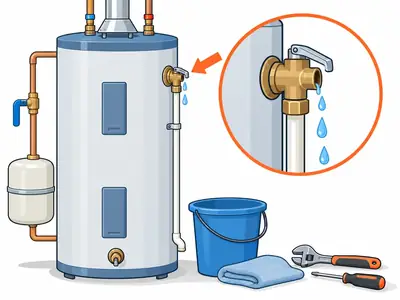 PlumbingWater Heater Relief Valve DrippingWater heater relief valve dripping? Why the T&P valve drips, when it signals a real problem, how to check the pressure, and when to call a plumber.