
Test Water Pressure at Home With a Gauge
Part of: Basic plumbing
- Difficulty
- Easy
- Time
- 10 to 15 minutes
- Tools
- Water pressure gauge with a hose thread, towel
- Call a pro if
- pressure is over about 80 psi, swings widely or is very low at every faucet
In this guide
- Water off first
- Wear protection
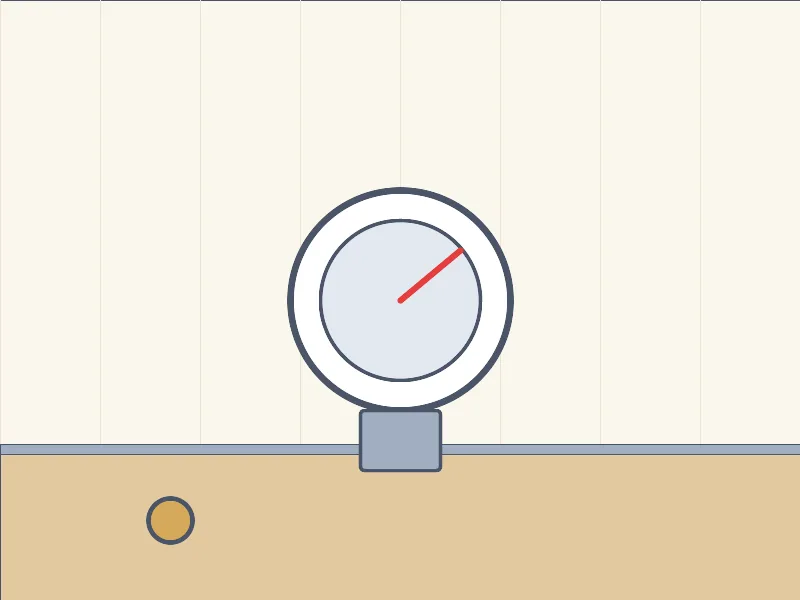
You can test water pressure with a cheap gauge that screws onto a hose spigot. Water pressure that is too low gives weak showers and slow fills. Pressure that is too high stresses pipes, hoses and appliances and can cause leaks and banging pipes. You cannot judge pressure by feel. A small gauge that screws onto an outdoor faucet gives a true reading in two minutes. This guide shows how to use it, how to read the result and what to do next.
This guide is part of our wider guide to water pressure, pipes and sump pumps.
Choose the faucet
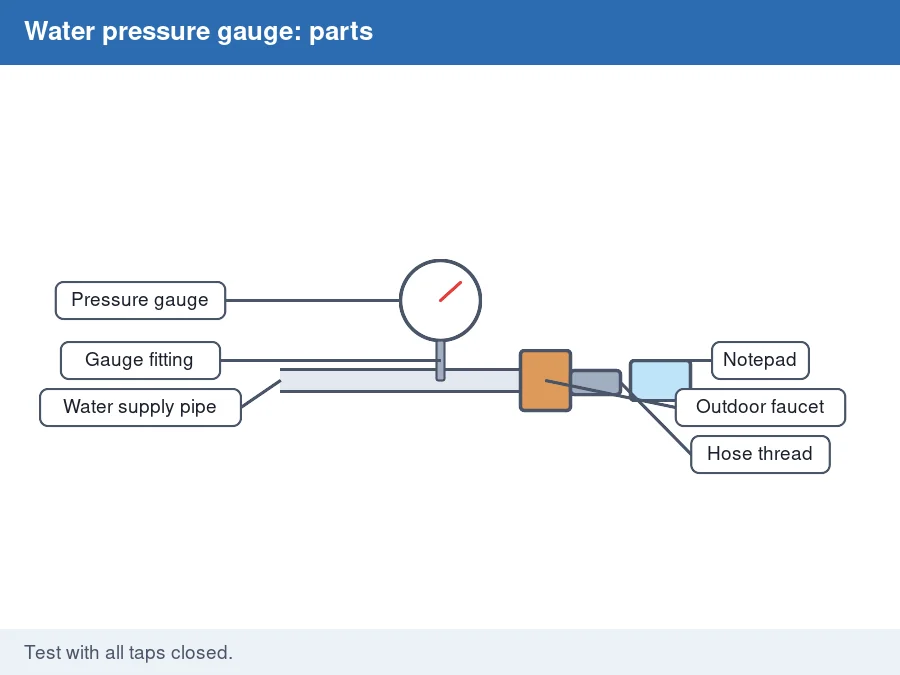
Use an outdoor faucet or a laundry tub faucet with a hose thread. Pick one close to where water enters the house. Make sure no water is in use anywhere. Turn off the ice maker, the sprinklers and any running faucets. Keep the washer and dishwasher off.
Step by step
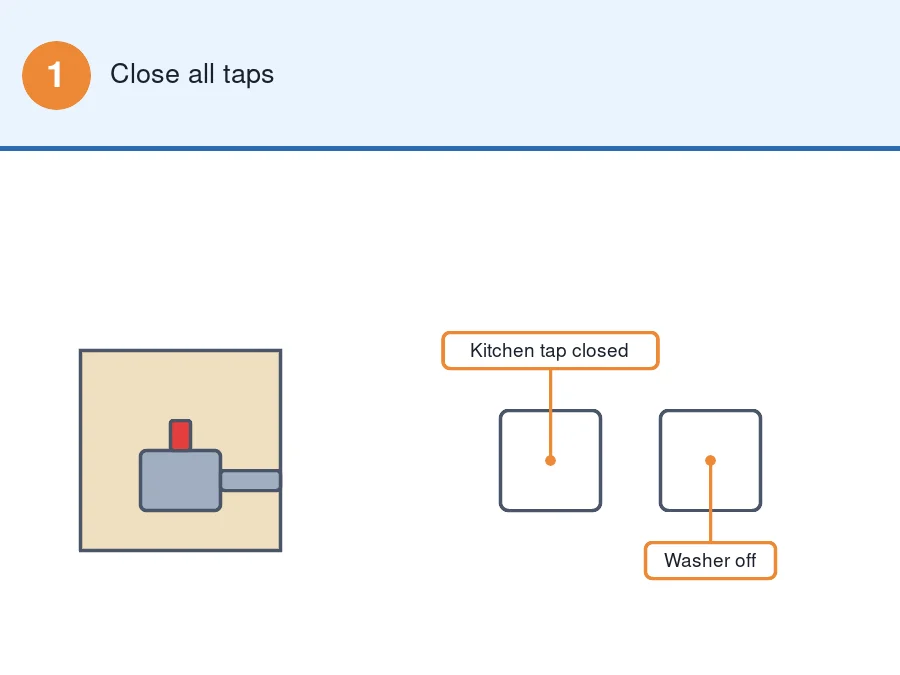
1. Close all faucets and stop water use in the house.
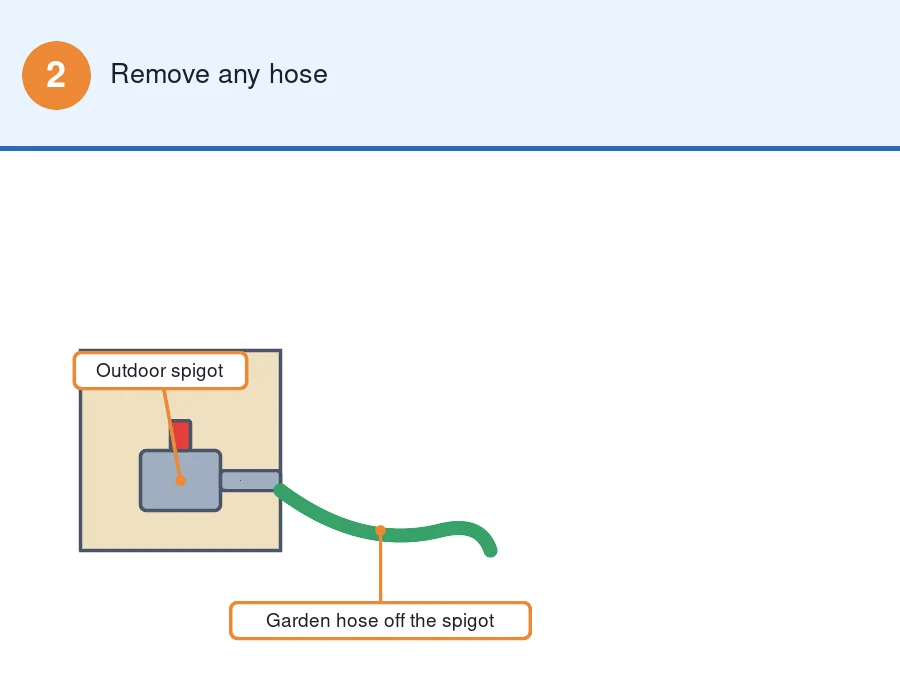
2. Remove any hose from the outdoor faucet.
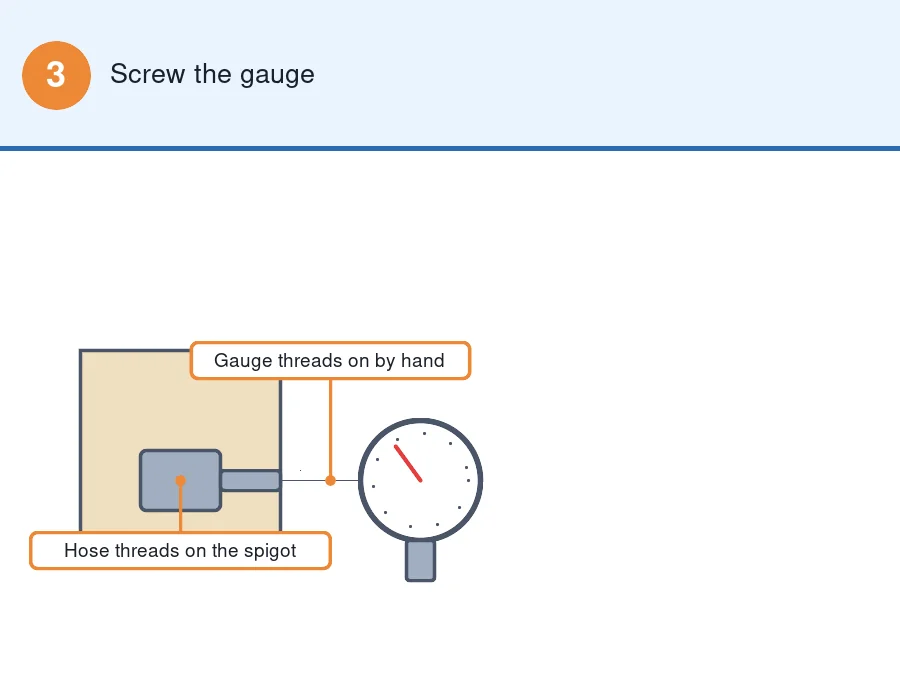
3. Screw the gauge onto the faucet. Hand tighten it.
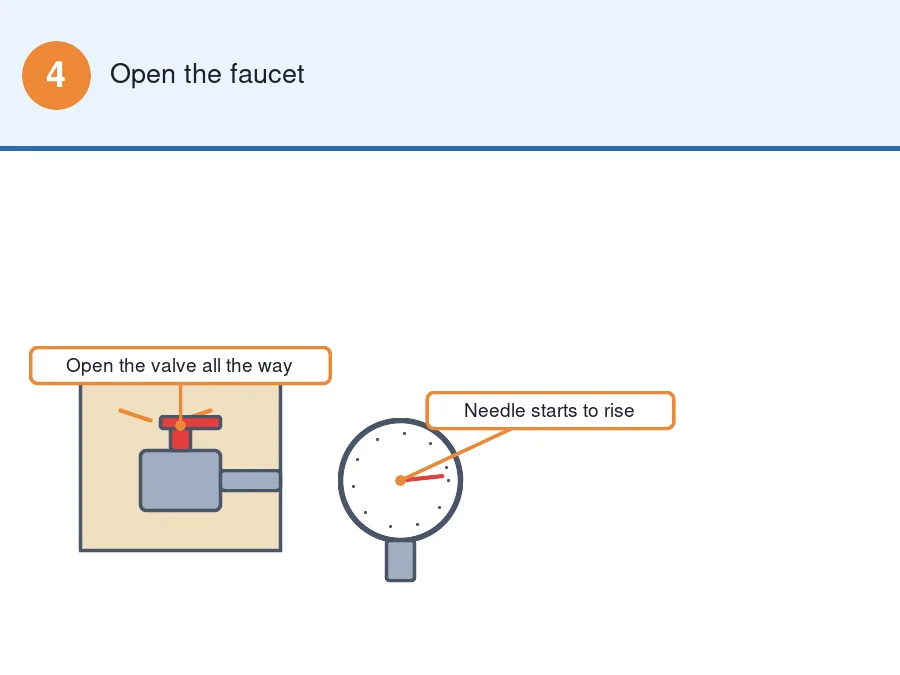
4. Open the faucet fully.
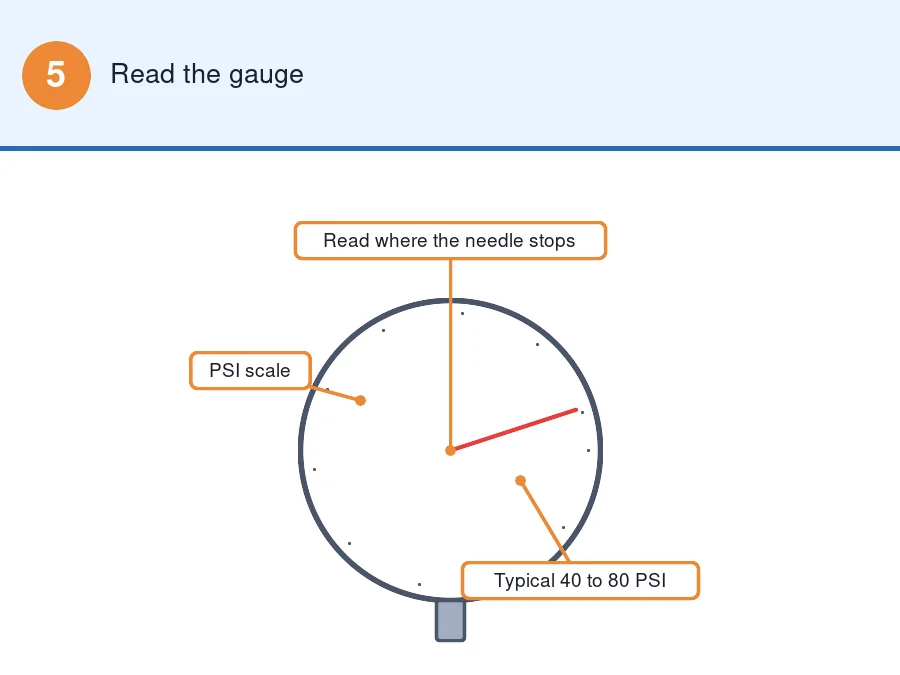
5. Read the gauge. Many gauges have a second needle that holds the highest reading.
6. Write down the number.
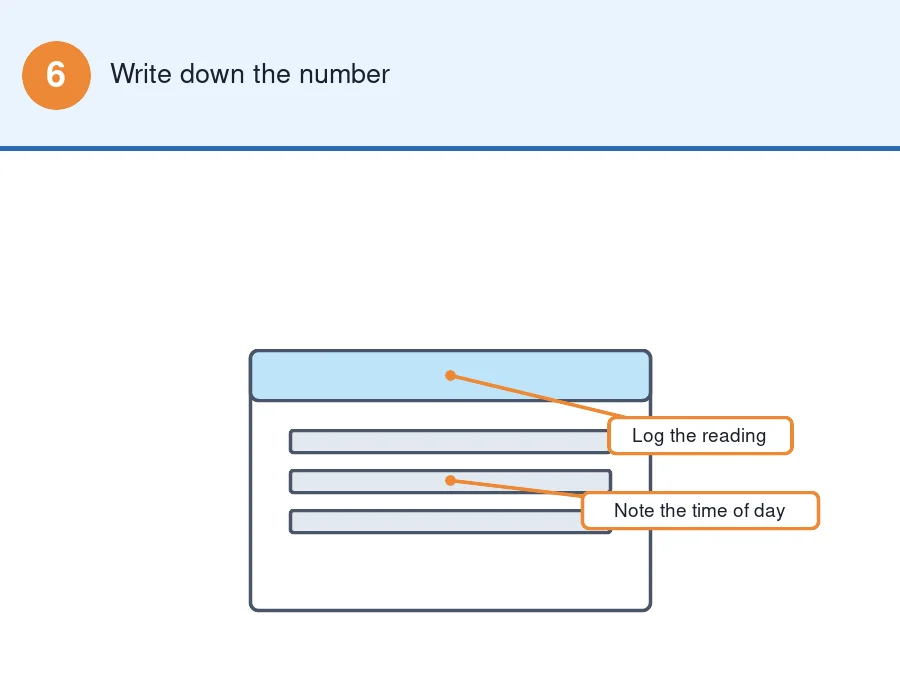
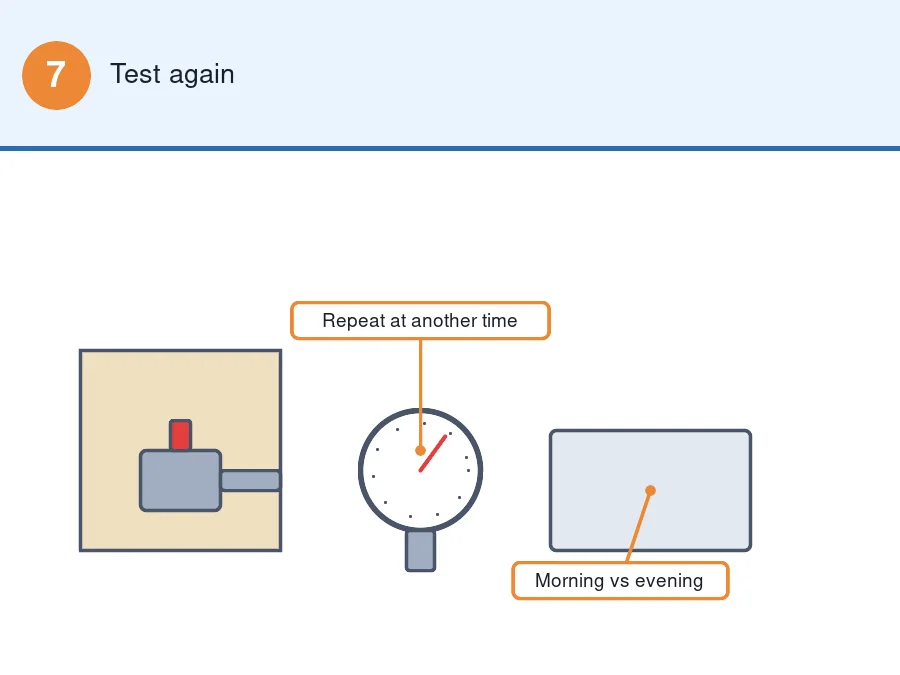
7. Test again at a different time of day. Pressure can change in the morning and at night.
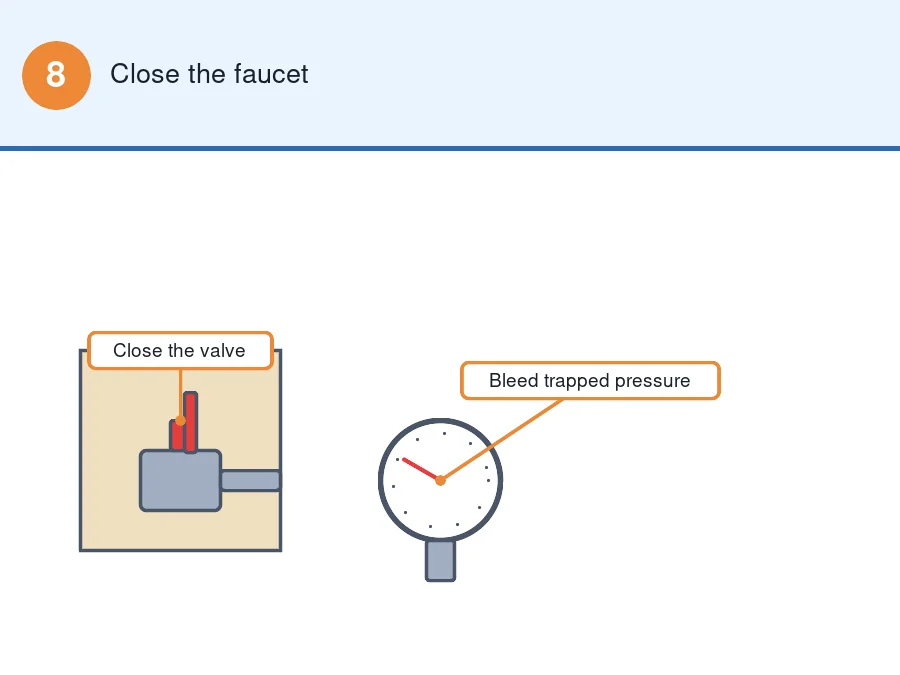
8. Close the faucet, release the pressure by opening a nearby faucet, and then unscrew the gauge.
How to read the result
Most homes work well between about 40 and 60 psi. The International Plumbing Code caps static pressure at 80 psi at the fixture, and many local codes follow it. Above about 80 psi, a pressure-reducing valve is the usual fix. Check your own code before changing anything. Under 40 psi can feel weak. Over 80 psi can damage fixtures and appliances. If the reading changes a lot between day and night, the supply may vary. A needle that creeps up when the water is off can point to thermal expansion in a closed system.
Signs that point to each cause
Weak flow at every faucet points to low supply pressure, a partly closed main valve, a failing pressure reducing valve or a clogged pipe. Weak flow at one faucet points to a clogged aerator or valve. See How to fix low water pressure in one faucet. Banging pipes, leaking fixtures and a dripping relief valve can point to high pressure. See Sweating pipes: how to stop water drips for a different cause of dripping. A running meter with no use is another matter. See How to fix a running water meter when nothing is on.
If the pressure is too low
Check that the main shutoff valve is fully open. Check the shutoff at the meter. Clean the aerators and the showerhead. If the house has a pressure reducing valve, it may need adjusting or replacing. Low pressure at every faucet may also be a supply problem. Call the water utility to ask whether there is a known issue.
If the pressure is too high
A pressure reducing valve, usually a bell-shaped brass part near the main shutoff, lowers the pressure. If you have one, a plumber can adjust or replace it. If you do not have one and the pressure is over 80 psi, ask a plumber about adding one. An expansion tank may also be needed. See How to check a water heater expansion tank.
Prevention
Test the pressure once a year. Keep the gauge in a drawer. Check the valve near the meter for leaks. Fix small drips early. Replace old hoses. See How to replace a washing machine hose.
Pick a gauge
A simple gauge reads 0 to 100 psi or higher. Look for one with a max-hold needle, so you can leave it on overnight and see the peak. A leak-free fitting with a rubber washer is useful. Test the gauge on a second faucet if the first reading looks odd.
Overnight test
To catch pressure spikes, leave the gauge on the faucet overnight with the faucet open and nothing running. The peak needle shows the highest reading. High readings at night, when demand is low, are common and tell you what your pipes face most of the time.
Related guides
- Water Pressure Low Throughout the House: What It Means
- How to Insulate Water Pipes to Prevent Freezing
- How to Install a Water Leak Sensor Where It Matters Most
- Water Softener Not Working: What to Check Before You Call
FAQ
What is a good water pressure at home? About 40 to 60 psi for most houses.
Can I test at the kitchen sink? Not with most gauges. Use a hose thread faucet.
Why did my pressure change? Demand, utility work and valves can change it.
Is 90 psi a problem? It is high. Ask a plumber about a regulator.
More from this topic
- Water Pressure Low Throughout the House: What It Means: Water pressure low throughout the house points to the meter valve, the pressure regulator, old galvanized...
- How to Test Water Hardness: Strips, Soap and Lab Kits: How to test water hardness with test strips, the soap bottle method or a lab kit, and what the results mean...
- Water Heater Reset Button Keeps Tripping: What It Means: When the water heater reset button keeps tripping, the tank is overheating: a stuck thermostat, a grounded...
- How to Clean a Faucet Aerator: Learn how to clean a faucet aerator to restore weak flow, with the vinegar soak, the screen order and the...
- How to Increase Water Pressure in a Shower: Learn how to increase water pressure in a shower: clean the screen, descale the head, test other fixtures and...
 PlumbingWater Pressure Low Throughout the House: What It MeansWater pressure low throughout the house points to the meter valve, the pressure regulator, old galvanized pipes or the city supply. Check them in order.
 PlumbingHow to Test Water Hardness: Strips, Soap and Lab KitsHow to test water hardness with test strips, the soap bottle method or a lab kit, and what the results mean for your appliances and fixtures.
 PlumbingWater Heater Reset Button Keeps Tripping: What It MeansWhen the water heater reset button keeps tripping, the tank is overheating: a stuck thermostat, a grounded element or a wiring fault. Test safely.
 PlumbingHow to Clean a Faucet AeratorLearn how to clean a faucet aerator to restore weak flow, with the vinegar soak, the screen order and the grit that blocks the flow.
 PlumbingHow to Increase Water Pressure in a ShowerLearn how to increase water pressure in a shower: clean the screen, descale the head, test other fixtures and find whether the head or the supply is at fault.