
How to Install a French Drain
Part of: Outdoors and garage
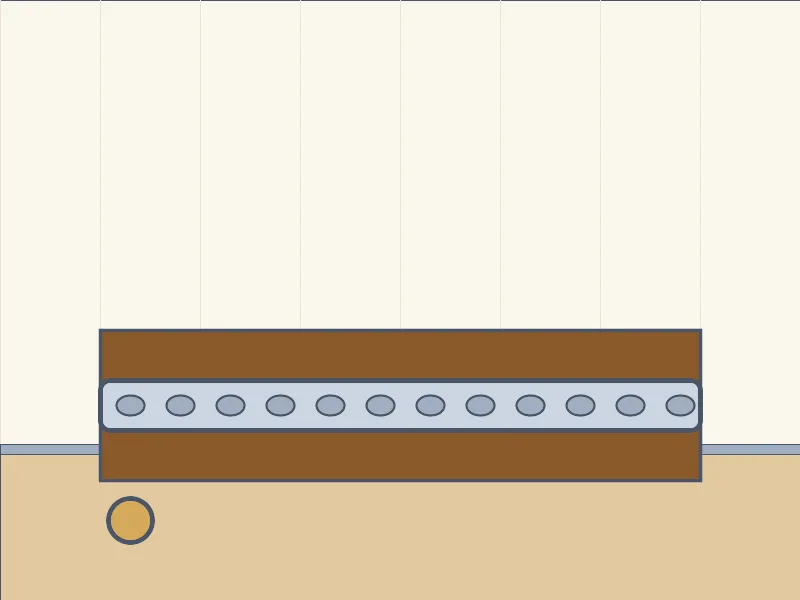
- Difficulty
- Moderate
- Time
- 1 to 2 weekends
- Tools
- Shovel, mattock, wheelbarrow, level, string line, perforated pipe, landscape fabric, gravel, hose, gloves, boots
- Call a pro if
- Water is entering a basement, the yard slopes toward the house, or you cannot find a lower place for the outlet.
In this guide
- Call 811 before digging
A soggy patch that never dries is usually water with nowhere to go. A french drain gives it a path. The work is digging, and the digging has to slope. Here is how to install a french drain.
1. Find the problem area
1. Walk the yard after heavy rain.
2. Note where water stands and how long it stays.
3. Check which way the ground already falls.
2. Pick the route
1. Run the drain along the wet area, not across it.
2. Aim for the lowest point you can reach.
3. Keep it at least a few feet off the foundation.
3. Find the outlet first
1. Decide where the water will end up.
2. A daylight outlet on a slope is best.
3. A dry well works where the ground is flat.
4. Set the slope
1. Work out the fall: about one inch per eight feet.
2. Drive stakes along the route.
3. Run a string line and check it with a level.
5. Dig the trench
1. Cut the turf and set it aside.
2. Dig a trench about a foot wide.
3. Keep the bottom on the string line slope.
4. Check the fall with a level as you go.
6. Line the trench
1. Lay landscape fabric along the bottom and up the sides.
2. Overlap the edges generously.
3. Fabric keeps soil out of the gravel.
4. Leave enough fabric to fold over the top.
7. Add gravel and pipe
1. Spread a couple of inches of gravel.
2. Lay perforated pipe with the holes facing down.
3. Keep the pipe on the slope, not sagging.
8. Cover the pipe
1. Add more gravel over and around the pipe.
2. Fill to within a few inches of the surface.
3. Fold the fabric over the gravel.
9. Test the flow
1. Run a hose into the top of the trench.
2. Watch the outlet for water.
3. Check for a low spot holding water.
4. Fix any sag before backfilling.
10. Finish the surface
1. Backfill with soil or gravel.
2. Replace the turf or mulch over the line.
3. Keep the outlet clear of leaves.
4. Check the drain each spring.
What the pipe and gravel actually do
The pipe is not the part that collects the water. Water seeps into the gravel, and the gravel carries it to the pipe, which is there to keep a clear channel once the trench is full. That is why the gravel grade matters as much as the pipe, and why a trench packed with soil and a pipe alone will not work. Use washed stone rather than crusher run, since the fines in crusher run turn into mud. Wrap the whole gravel envelope in fabric, including the top, so soil cannot wash in from above. A drain that silts up in two years was almost always built without that wrap.
Common mistakes
- Digging a trench with no fall.
- Laying pipe with the holes facing up.
- Skipping the fabric, so the gravel silts up.
- No outlet planned before digging.
- Running the drain right against the foundation.
Related guides
- How to Install an Underground Downspout Drain
- How to Install a Retaining Wall Drain
- How to Install a Gravel Shoulder Along a Driveway
- How to Install a Patio Drain
- How to Lay a Gravel Path
FAQ
How deep should a french drain be?
Deep enough to sit below the wet soil, usually 12 to 18 inches, with a steady fall to the outlet.
Does a french drain need a permit?
Sometimes, especially near a property line or a storm drain. Check locally.
How long does a french drain last?
Decades if it is fabric lined and the outlet stays clear. Silting is what kills them.
Can I connect a downspout to it?
Yes, but add a cleanout and make sure the drain can carry the volume.
More from this topic
- How to Install a Catch Basin for Yard Drainage: Learn how to install a catch basin for yard drainage: dig the pit, set the box level and pipe the water to a...
- How to Fix a Muddy Backyard: Learn how to fix a muddy backyard: find where the water comes from, move the downspouts, regrade the soil,...
- How to Install a Driveway Drainage Channel: Learn how to install a driveway drainage channel: plan the low line, cut the trench, set the channel in...
- How to Install a Dry Well: Learn how to install a dry well: size it for the roof area, dig and line the pit, connect the downspout and...
- How to Install a Gravel Landing Outside a Door: Learn how to install a gravel landing outside a door: build a firm edged pad that drains away from the...
 Garage and OutdoorsHow to Install a Catch Basin for Yard DrainageLearn how to install a catch basin for yard drainage: dig the pit, set the box level and pipe the water to a safe outlet.
 Garage and OutdoorsHow to Fix a Muddy BackyardLearn how to fix a muddy backyard: find where the water comes from, move the downspouts, regrade the soil, add drainage and keep traffic off wet ground.
 Garage and OutdoorsHow to Install a Driveway Drainage ChannelLearn how to install a driveway drainage channel: plan the low line, cut the trench, set the channel in concrete and connect it so water leaves the driveway.
 Garage and OutdoorsHow to Install a Dry WellLearn how to install a dry well: size it for the roof area, dig and line the pit, connect the downspout and keep silt out so it drains between storms.
 Garage and OutdoorsHow to Install a Gravel Landing Outside a DoorLearn how to install a gravel landing outside a door: build a firm edged pad that drains away from the threshold.