
How to Install a Retaining Wall Drain
Part of: Outdoors and garage
- Difficulty
- Moderate
- Time
- 1 to 2 days
- Tools
- Shovel, landscape fabric, perforated pipe, washed gravel, level, string line, gloves, safety glasses
- Call a pro if
- The wall is leaning or bulging, since it may need rebuilding rather than just draining.
In this guide
- Call 811 before digging
To install a retaining wall drain, think about the wall, not just the pipe. Water behind a wall adds pressure that soil alone does not. The drain must sit at the base, have an outlet and keep working for years.
1. Check the wall first
Look for leaning, bulges, wide cracks and stains at the base after rain. Any of these means the wall needs an engineer before any drain work.
2. Plan the outlet
Decide where water leaves: out through the wall, around the end or to a lower point on the lot. A pipe with no exit only stores water.
3. Dig behind the wall
Dig a narrow strip at the back of the wall, in short sections, to just below the bottom of the wall's first course. Stay above the footing.
4. Fabric and pipe
Line and bed the strip as in how to install a weeping tile drain.
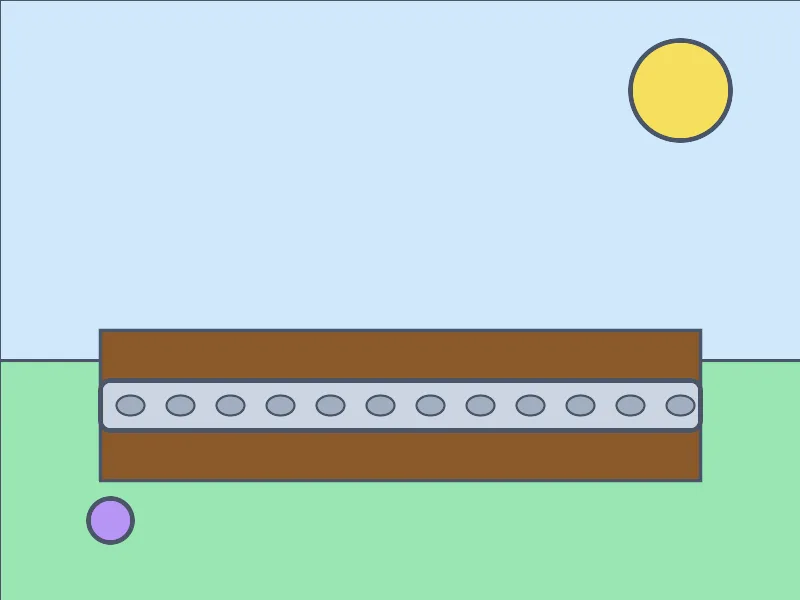
5. Where the drain sits at the wall base
Set the perforated pipe at the lowest point behind the wall, holes down, sloping toward the outlet.
6. Cover with gravel
Fill the strip with washed gravel up the back of the wall, at least a foot wide where space allows, so water drops straight to the pipe.
7. Getting water through or around the wall
If the wall has weep holes, keep them open and clear. Otherwise run the pipe out through the end of the wall or through a solid pipe section to daylight. See how to stop water pooling against a foundation if the outlet is near a building.
8. Backfill
Fold the fabric over the gravel, backfill in layers and slope the surface away from the wall.
Quick tips
- Work in short sections.
- Run a hose to check the outlet.
When to stop
Stop and call an engineer if the wall moves, or if the wall is taller than a few feet. See how to fix a leaning retaining wall.
Common mistakes
- Using clay as backfill.
- Digging the whole length at once.
- Setting the pipe under the footing.
Related guides
- How to Clean a Concrete Retaining Wall
- How to Build a Low Retaining Wall for a Planting Bed
- How to Install a French Drain
- How to Install a Gravel Shoulder Along a Driveway
- How to Install an Underground Downspout Drain
FAQ
Does every wall need a drain?
Most do. Water pressure is a common reason walls fail.
Can a drain fix a leaning wall?
No. It only reduces the pressure on it.
Why does a retaining wall need drainage?
Water trapped behind a wall builds hydrostatic pressure; which is what pushes walls over. A perforated drain pipe at the base; surrounded by gravel; gives that water a path out. Drainage matters more than wall thickness for long life.
What kind of pipe do I use behind a retaining wall?
Four-inch perforated PVC or corrugated drain pipe; laid holes-down in a bed of washed gravel; is the standard. Wrap the gravel in landscape fabric to keep soil from clogging it; and slope the pipe to daylight or a drain outlet.
How high can I build a retaining wall myself?
Keep DIY walls low; roughly 3 feet or under. Taller walls; walls holding back a slope with a driveway above; or walls near property lines usually need engineering and often a permit; so check your local building department first.
More from this topic
- How to Fix a Leaning Retaining Wall: Learn how to fix a leaning retaining wall: find why it moved, relieve the water and soil pressure, rebuild...
- How to Lay a Gravel Path: Learn how to lay a gravel path: plan the route and width, dig out the turf, edge it, build a compacted base...
- How to Install a Window Well Cover: Learn how to install a window well cover: measure the well, pick a cover type, fit and secure it and keep the...
- How to Repair a Gravel Driveway: Learn how to repair a gravel driveway: fix potholes and ruts, restore the crown, top up the stone and stop...
- How to Install a Weeping Tile Drain: Learn how to install a weeping tile drain: plan the slope, dig the trench, lay fabric and perforated pipe in...
 Garage and OutdoorsHow to Fix a Leaning Retaining WallLearn how to fix a leaning retaining wall: find why it moved, relieve the water and soil pressure, rebuild the base and tie the courses back so it stays put.
 Garage and OutdoorsHow to Lay a Gravel PathLearn how to lay a gravel path: plan the route and width, dig out the turf, edge it, build a compacted base and add the top layer at the right depth.
 Garage and OutdoorsHow to Install a Window Well CoverLearn how to install a window well cover: measure the well, pick a cover type, fit and secure it and keep the well clear so the basement window stays dry.
 Garage and OutdoorsHow to Repair a Gravel DrivewayLearn how to repair a gravel driveway: fix potholes and ruts, restore the crown, top up the stone and stop water from cutting channels through it.
 First HomeHow to Install a Weeping Tile DrainLearn how to install a weeping tile drain: plan the slope, dig the trench, lay fabric and perforated pipe in gravel and lead water away from the foundation.