
Gate Latch Will Not Catch: How to Fix It
Part of: Outdoors and garage · Also in: The Complete Guide to Outdoor and Yard Repair for Homeowners
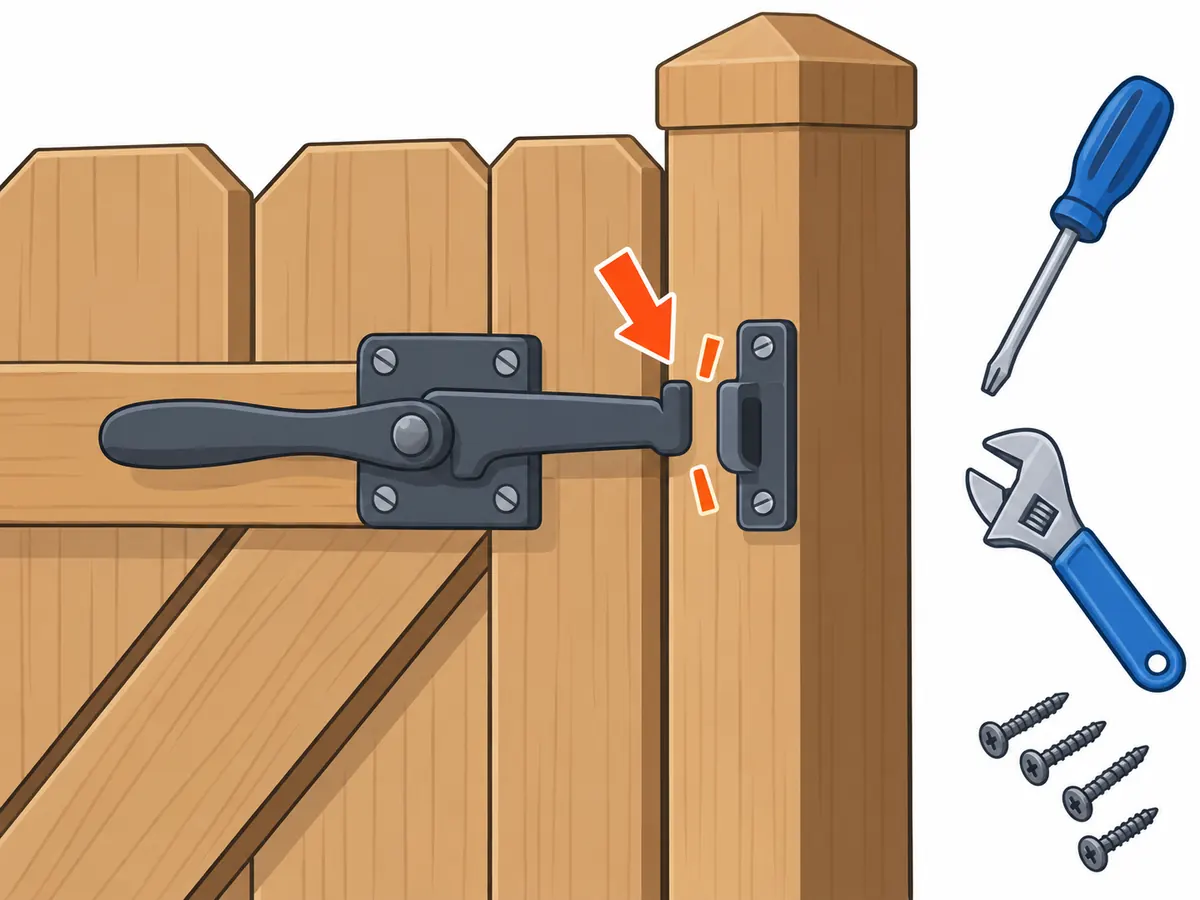
- Difficulty
- Easy to moderate
- Time
- 20 to 60 minutes
- Tools
- Drill or screwdriver, level, pencil, wood screws, lubricant, chisel for wood posts, sandpaper
- Call a pro if
- the post is rotten or leaning badly, or the gate frame is broken
In this guide
- Wear protection
- Call 811 before digging
When a gate latch will not catch, the cause is almost always a gate that has sagged or a latch that has shifted. A gate that will not latch is a nuisance. It can let pets out, let children wander and let the wind bang the gate against the fence. Most latch problems come from a gate that has dropped or shifted, from loose screws or from worn latch parts. This guide shows how to find the reason and fix it with basic tools.
This guide is part of our wider guide to garage, decks, fences and yard care.
Check the alignment
Close the gate and look at the latch. Is the latch bar above, below or off to the side of the catch? A gap shows which way the gate has moved. Check the gap between the gate and the post on both sides. It should be even. A gate that sags will be lower at the latch side.
Step by step
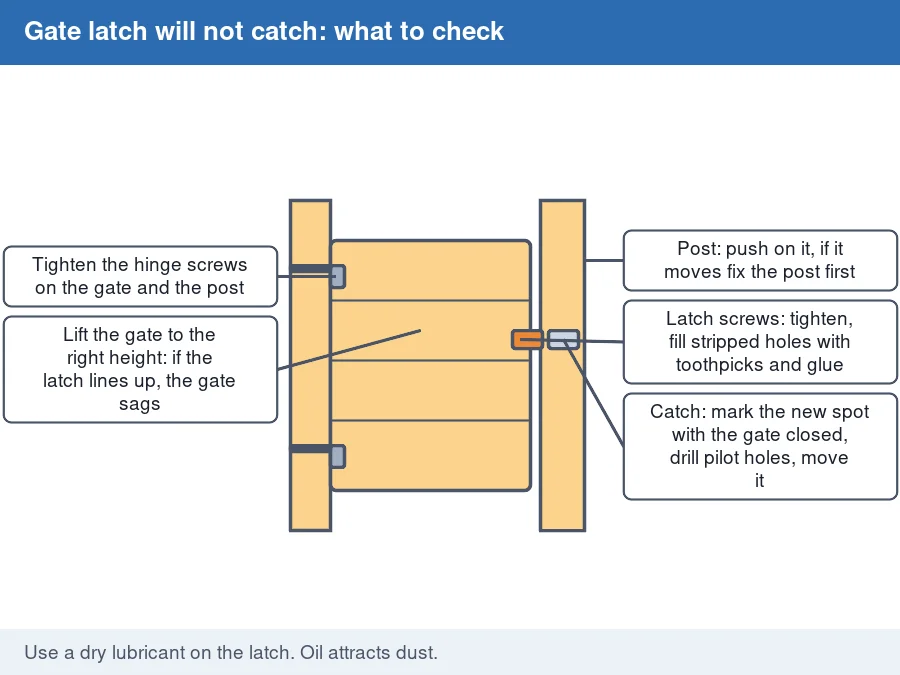
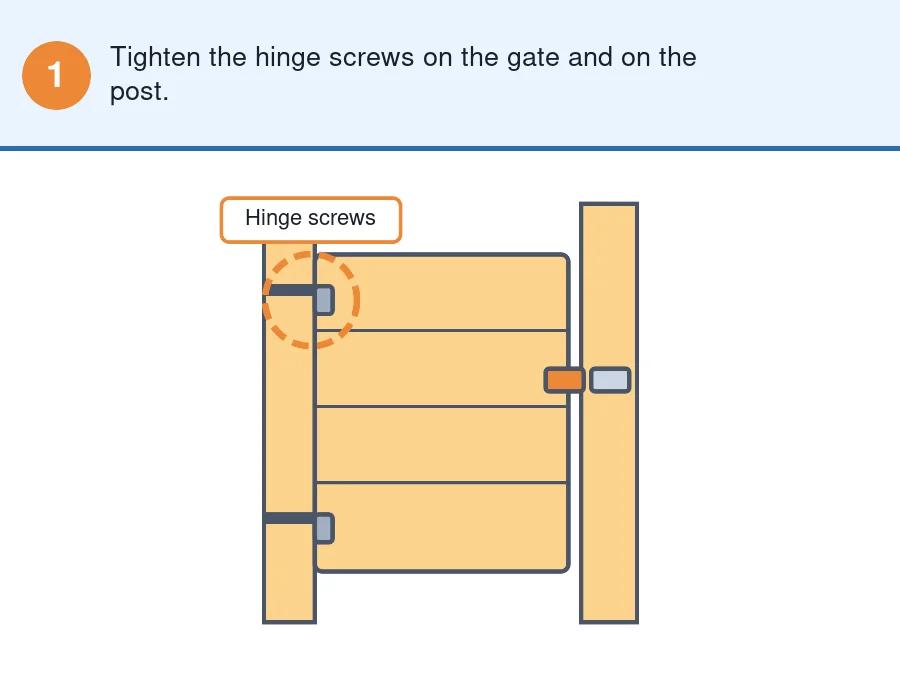
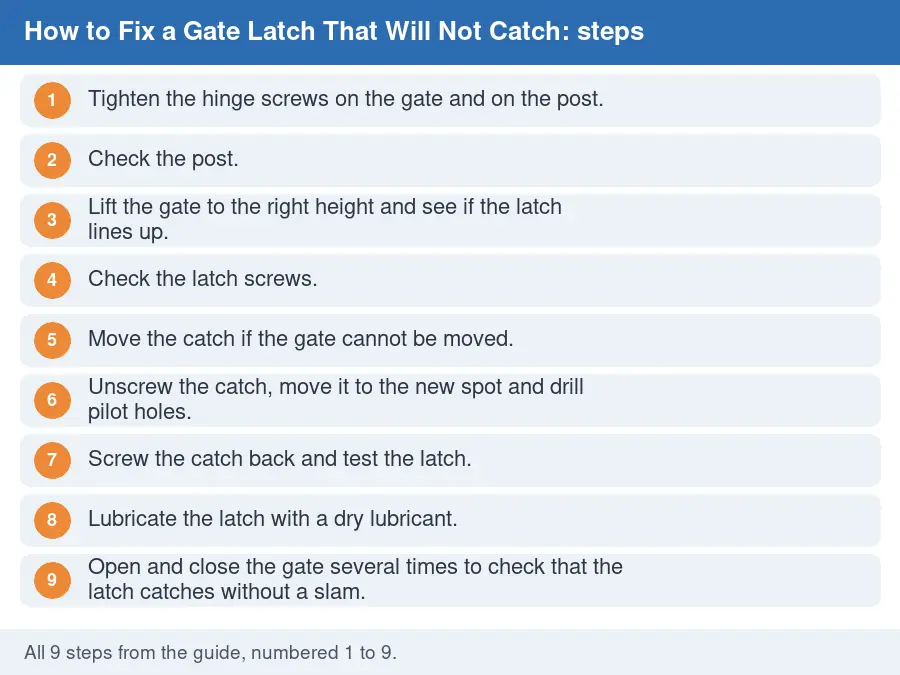
1. Tighten the hinge screws on the gate and on the post. Loose hinges cause sag.
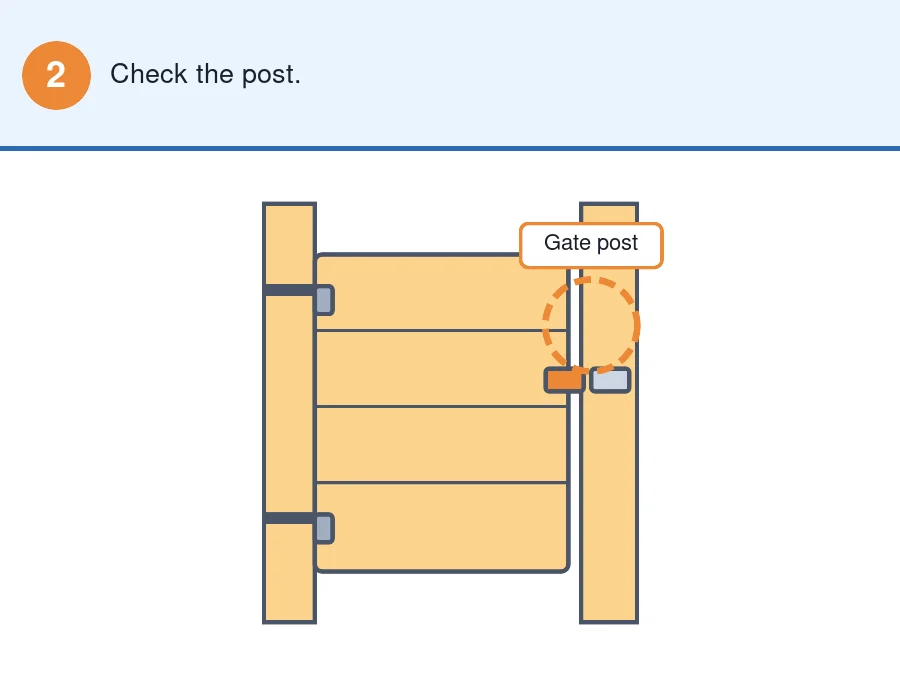
2. Check the post. Push on it. If it moves, see Leaning fence post: how to fix.
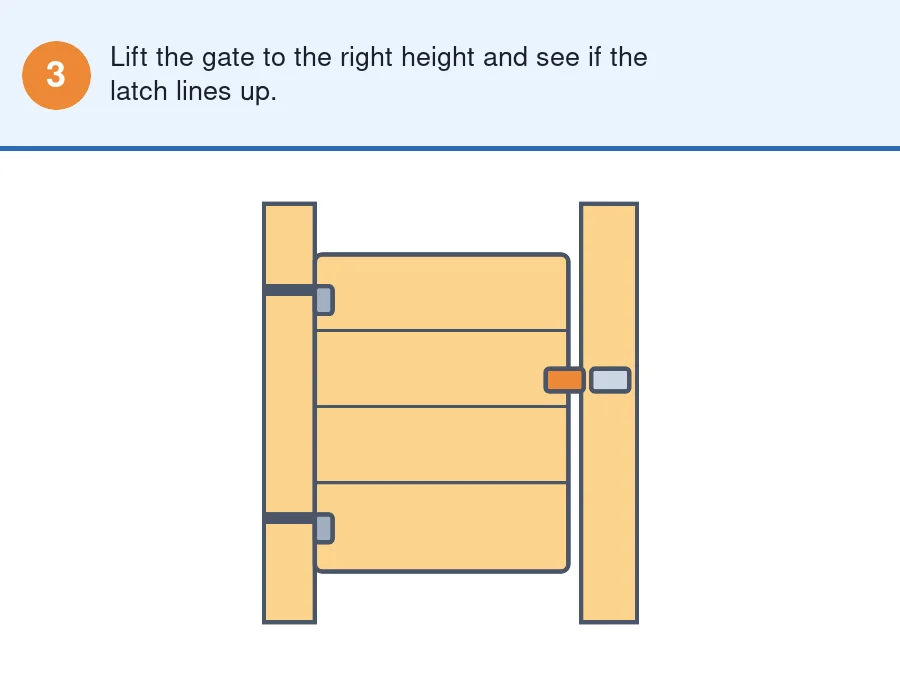
3. Lift the gate to the right height and see if the latch lines up. If it does, the gate is sagging. See How to fix a sagging gate.
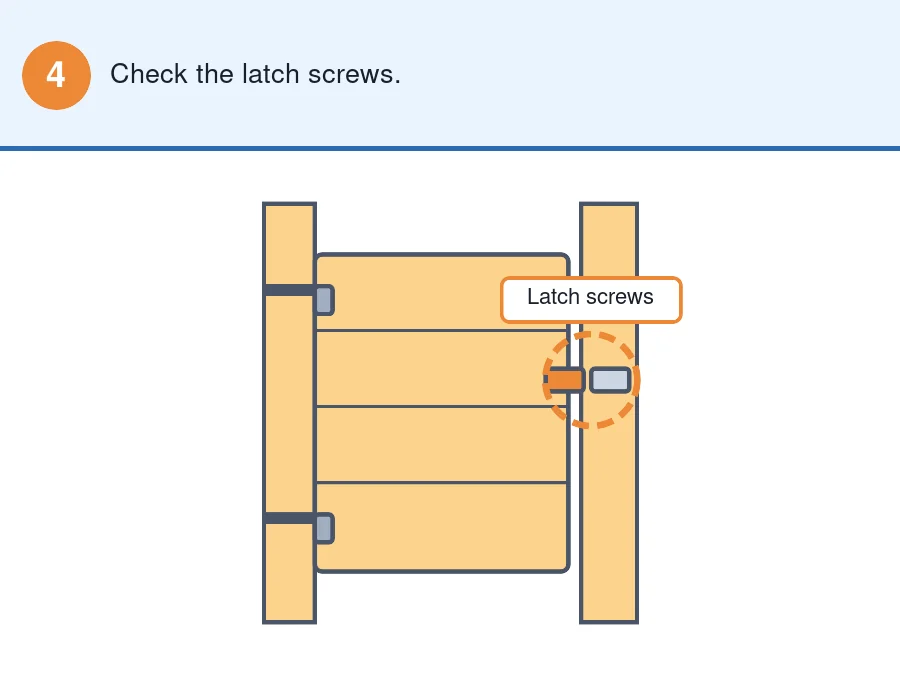
4. Check the latch screws. Tighten any that are loose. If the holes are stripped, fill them with wooden toothpicks and glue, or use longer screws.
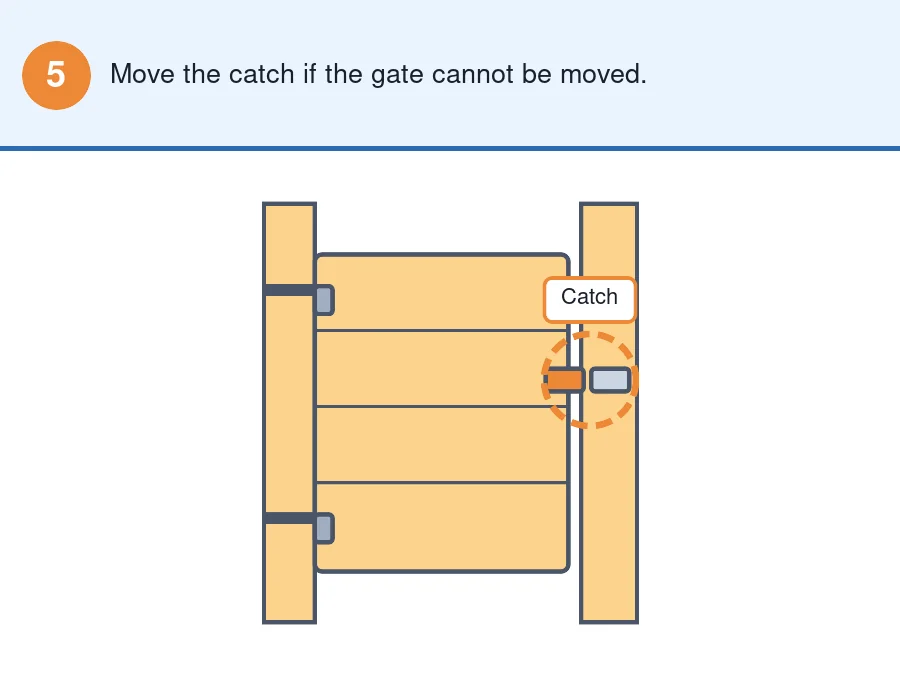
5. Move the catch if the gate cannot be moved. Mark the new position with a pencil while the gate is closed.
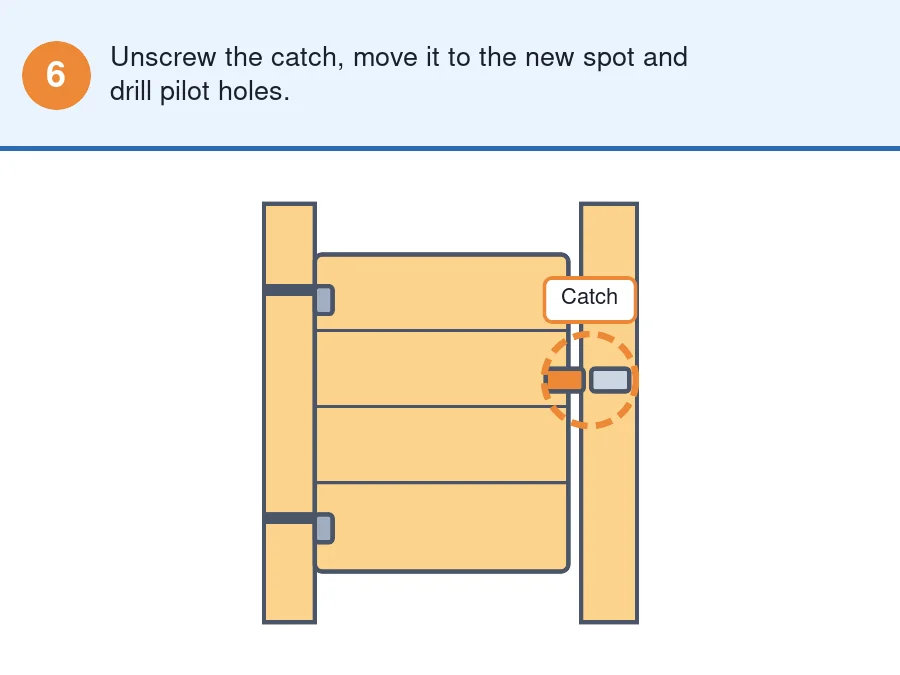
6. Unscrew the catch, move it to the new spot and drill pilot holes.
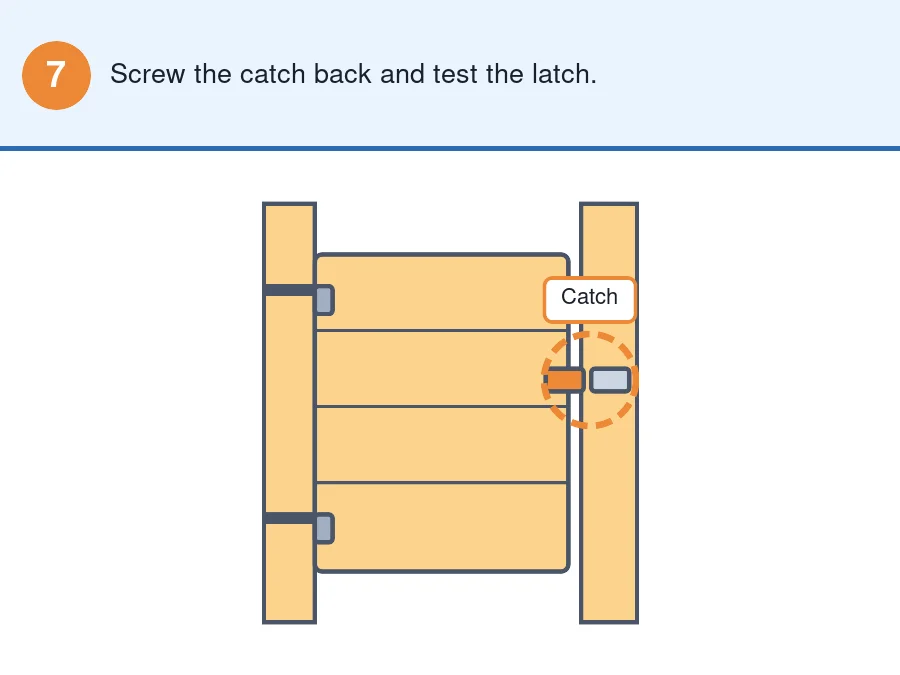
7. Screw the catch back and test the latch.
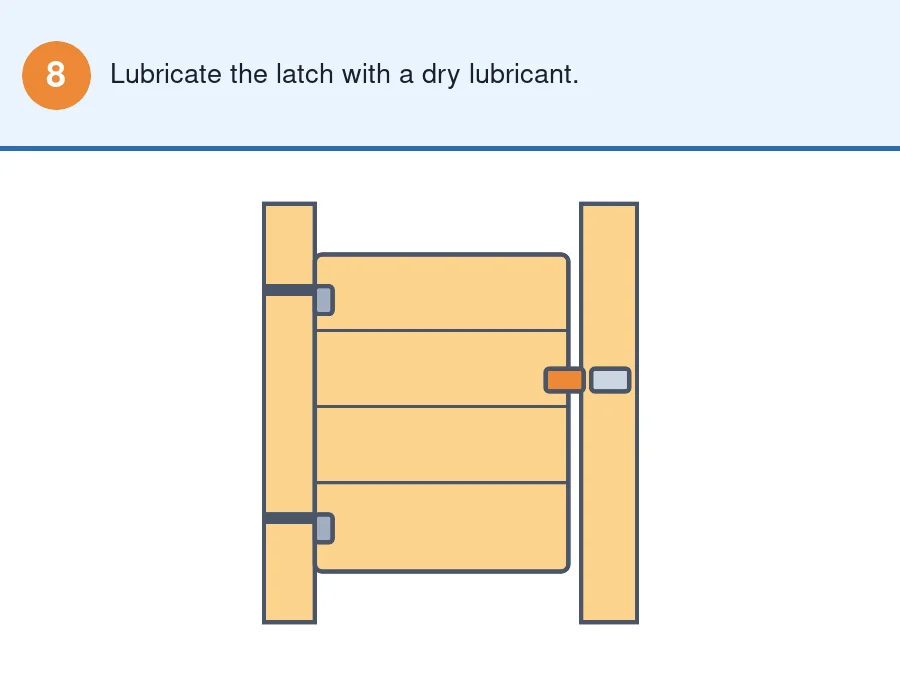
8. Lubricate the latch with a dry lubricant. Oil can attract dust.
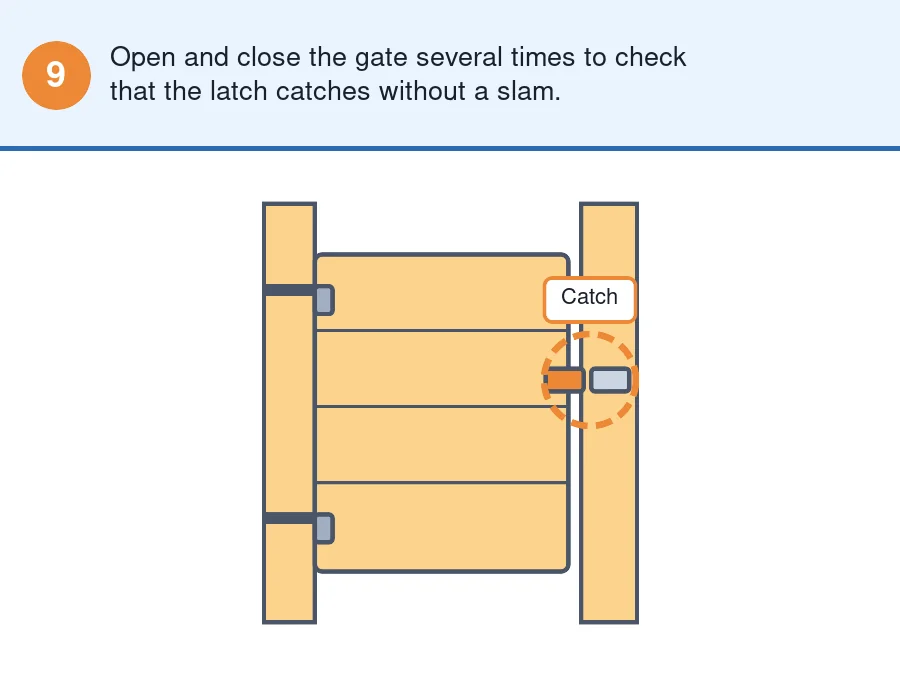
9. Open and close the gate several times to check that the latch catches without a slam.
Adjust the latch parts
Many latches have a slot or a screw that lets you adjust the height. Loosen the screw, move the latch, and tighten again. A thumb latch with a bar may need a small bend to line up. If the bar is bent, use pliers to straighten it. A spring latch with a weak spring needs a new latch.
Signs that point to each cause
A latch that hits the top of the catch means the gate has dropped. A latch that hits the side means the post leans or the gate swings off. A latch that does not click may have a broken spring. A latch that sticks after rain may have swollen wood. A gate that catches only when lifted has loose hinges. A gate that swings open by itself may be out of level. Check that the posts are level and plumb.
Wood swelling and rot
Wood expands when wet. If the gate rubs the post, sand or plane a bit from the edge, then seal it with paint or sealant. Check the post and gate frame for soft spots. Rot near the ground weakens the wood, and screws will not hold. Replace rotten parts. See How to repair a wood fence picket.
Choosing a better latch
If the old latch is worn, replace it with a new one made for outdoor use. A rust-resistant latch lasts longer. A self-latching gate closer helps with safety for pools and play areas. Check local rules for pool gates, since some need a latch at a set height and a self-closing hinge.
Prevention
Check the gate hinges and the latch each season. Keep the gate free of heavy things hung on it. Wipe the latch to remove dirt, and apply a little lubricant. Keep plants trimmed so they do not push on the gate. Sealing the wood each couple of years helps stop warping.
Seasonal movement
Soil and wood move with frost and rain, so a latch that works in summer may fail in winter. Adjust the catch by a small amount instead of drilling new holes each time. If the gate shifts every season, the post may need to be reset deeper or in concrete. See How to repair a wood fence picket for related wood repairs.
Related guides
- How to Clear a Clogged Outdoor Drain or Catch Basin
- Fix Wobbly Mailbox Post: Reset, Tighten, Check Rot
- How to Fix a Sticking Garage Side Door
- How to Fix Garage Door Sensor Alignment When the Door Won't Close
- How to Clean a Wooden Garden Gate
- How to Install a Catch Basin for Yard Drainage
FAQ
Why did my gate stop latching? The gate or post shifted, or the hinges loosened.
Can I just move the latch? Yes, if the gate is otherwise square.
What lubricant is best? A dry lubricant, or a light graphite powder.
Is a bent latch fixable? Often. Straighten it, or replace it.
More from this topic
- How to Repair a Fence Gate That Sags: Learn how to repair a fence gate that sags: find whether the hinge, the post or the frame has dropped, then...
- How to Adjust a Self Closing Gate: Learn how to adjust a self closing gate so it latches every time, covering spring hinges, closers and the...
- How to Fix a Sagging Gate So It Closes Properly: Learn how to fix a sagging gate with a diagonal brace, an anti-sag kit or tightened hinges so it latches and...
- How to Install a Gate Latch That Catches Every Time: Learn how to install a gate latch: choose the right type, mark and drill the holes, align the catch and...
- How to Repair a Chain-Link Fence: Learn how to repair a chain-link fence. Fix a cut or bent section, replace tie wires, tighten the top rail...
 Garage and OutdoorsHow to Repair a Fence Gate That SagsLearn how to repair a fence gate that sags: find whether the hinge, the post or the frame has dropped, then brace, rehang and square the gate.
 ExteriorHow to Adjust a Self Closing GateLearn how to adjust a self closing gate so it latches every time, covering spring hinges, closers and the slope and sag that spoil the swing.
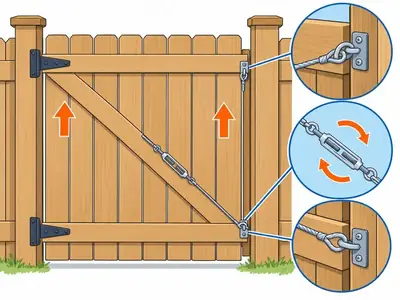 Garage and OutdoorsHow to Fix a Sagging Gate So It Closes ProperlyLearn how to fix a sagging gate with a diagonal brace, an anti-sag kit or tightened hinges so it latches and swings freely without dragging.
 Garage and OutdoorsHow to Install a Gate Latch That Catches Every TimeLearn how to install a gate latch: choose the right type, mark and drill the holes, align the catch and adjust it so the gate closes on its own.
 Garage and OutdoorsHow to Repair a Chain-Link FenceLearn how to repair a chain-link fence. Fix a cut or bent section, replace tie wires, tighten the top rail and straighten a leaning post with simple tools.