
Dryer Not Heating Up but Spinning: What to Check First
Part of: Appliances
- Difficulty
- Easy to medium
- Time
- 20 minutes to 2 hours
- Tools
- Multimeter, screwdrivers, nut driver set, vacuum, flashlight
- Call a pro if
- the problem is in the outlet or the power cord, you smell burning, or you do not feel comfortable with a multimeter
In this guide
- Power off first
- Gas safety
- Wear protection
A dryer not heating up but spinning is a common problem. The drum turns, the clothes tumble and the load comes out damp and cool. On an electric dryer there are a few likely causes. Some are free to fix. Others need a small part and a multimeter. This guide goes from the easiest check to the hardest.
This guide is part of our wider guide to appliance problems.
Start with the easy checks
1. Check the breaker. An electric dryer uses a double breaker, which has two switches joined together. One half can trip and leave the drum running with no heat. Turn the breaker fully off, then on. See Breaker will not reset: what to do.
2. Check the settings. Make sure the cycle is not on air fluff or a no heat setting.
3. Check the lint screen. Clean it. A clogged screen blocks airflow and the dryer may shut the heat off to protect itself.
4. Check the vent. Disconnect the vent hose from the back of the dryer and look inside. Clean the hose and the duct through the wall. A blocked vent causes the thermal parts to trip. See Dryer takes too long to dry clothes.
5. Check the plug. Make sure it is fully pushed in and not damaged.
Parts that cause no heat
- Thermal fuse. A one time safety fuse that blows when the dryer overheats. If it blows, the dryer often has no heat. It can be tested for continuity.
- High limit thermostat and cycling thermostat. These control the temperature. A failed one can stop the heat.
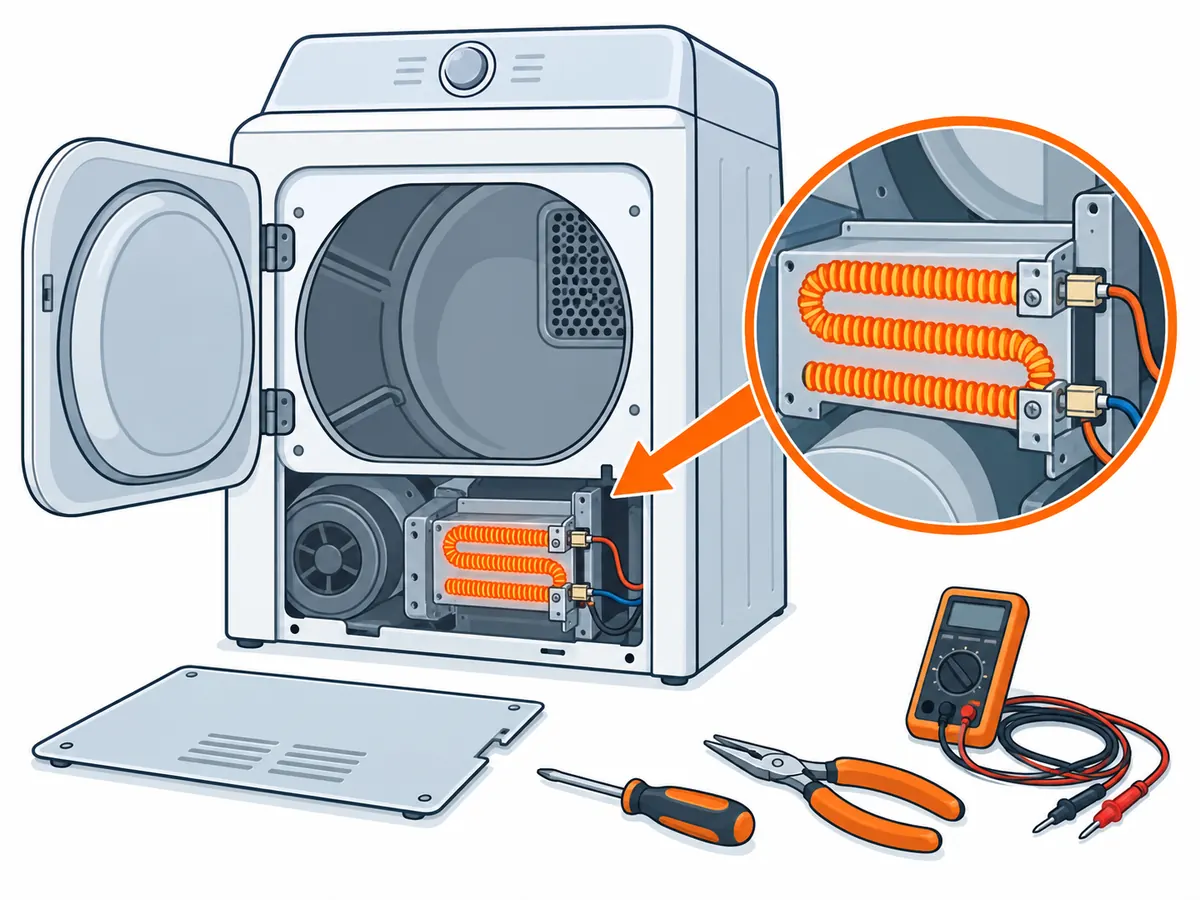
- Heating element. A coil of wire that glows to make heat. It can break after years of use.
- Timer, control board or switch. These send power to the heater.
- Power supply. If only one leg of the 240 volt supply is working, the drum may run but the element will not heat.
Step by step: test the parts
1. Unplug the dryer. Wait a few minutes.
2. Open the cabinet following your model manual. You may need to remove the back panel or the front panel.
3. Find the heater box and look for the heating element, the thermal fuse and the thermostats. They are usually together.
4. Set the multimeter to continuity or the lowest ohms range.
5. Test the thermal fuse. Remove one wire. Touch each probe to a terminal. The meter should beep or read near zero. If it does not, the fuse is blown.
6. Test the thermostats. Do the same. A reading of infinite resistance means a failed part.
7. Test the element. Touch the probes to the two terminals. You should see a reading, often between 5 and 50 ohms. No reading means a broken element.
8. Replace the failed part with the exact part for your model number.
9. Find the cause. A blown thermal fuse almost always means a blocked vent. Never bypass or jumper a thermal fuse, because it is the part that stops the dryer from overheating and starting a fire. Clean it, or the new fuse will blow again.
10. Reassemble and test with a small load.
When the power supply is the problem
If the drum runs and the dryer has no heat, but all parts test fine, check the power supply. A loose connection at the terminal block on the back of the dryer can burn and stop heat. If you see melted wire or scorch marks, stop and call an electrician. Do not use the dryer until it has been fixed.
When a part has failed
If the vent is clear and the breaker is fine, a part may have failed. Common parts are the thermal fuse, the high-limit thermostat, the heating element (electric) and the igniter or gas valve coils (gas). Testing these needs a multimeter and care around wiring. Many manufacturers sell the exact part by model number, which is printed inside the door or on the back panel. If you are not comfortable testing electrical parts, this is the point to call a pro. A failed thermal fuse also means something caused the dryer to overheat, usually a blocked vent, so clean the vent first.
Prevention
Clean the lint screen before every load. Clean the vent every year. Keep the vent short and straight, and avoid crushed or plastic foil ducts. Do not overload the dryer. A well maintained dryer lasts for many years.
Signs that point to each cause
If the dryer runs and gets slightly warm only, the vent is likely blocked or one of the thermostats is failing. If it runs cold and the timer works, a broken element or a blown thermal fuse is likely. If the dryer will not start at all, check the door switch and the power supply. If it trips the breaker when it starts, a shorted element may touch the case, and a repair person should look at it.
Buying the right part
Find the model number on the label inside the door. Buy the exact fuse, thermostat or element for that model. Do not substitute a part with a different temperature rating. After you replace a part, run the dryer and feel the exhaust at the outside vent. Warm, strong airflow tells you the repair and the vent are both working. If the airflow is weak, clean the duct again before you use the dryer for a full load.
Related guides
- Dryer Thermal Fuse: How to Test and Replace It
- Dryer Not Spinning: How to Find and Fix the Problem
- How to Clean a Dryer Vent to Prevent Fires
- How to Clean a Dryer Lint Trap and the Slot Behind It
- Electric Stove Burner Not Heating: How to Fix It
FAQ
Why does my dryer run but not get hot?
A tripped half of the breaker, a blown thermal fuse, a bad thermostat or a broken element are the usual causes.
Can I bypass the thermal fuse?
No. It protects against fire.
How often should I clean the vent?
At least once a year, and more often with a long vent run or a large family.
Is a gas dryer different?
Yes, the heat source is different. Do not work on a gas line yourself.
More from this topic
- Oven Not Heating but Stovetop Works: What to Check: Oven not heating but stovetop works? Check the bake setting, self-clean latch and bake element before you...
- Dryer Thermal Fuse: How to Test and Replace It: Dryer will not start or has no heat? Learn how to find, test and replace a dryer thermal fuse, and why a...
- Dryer Takes Too Long to Dry Clothes: What to Check: Dryer takes too long to dry clothes? Clean the lint screen and vent, check the load size and the duct run....
- Replace Oven Heating Element Safely (Electric): Oven not heating or the bake element burned? Replace oven heating element parts safely, with the power off...
- Oven Not Heating Evenly: What to Check: An oven not heating evenly burns one side and undercooks the other. Check the element, the sensor, the seal,...
 KitchenOven Not Heating but Stovetop Works: What to CheckOven not heating but stovetop works? Check the bake setting, self-clean latch and bake element before you call for service.
 KitchenDryer Thermal Fuse: How to Test and Replace ItDryer will not start or has no heat? Learn how to find, test and replace a dryer thermal fuse, and why a blown fuse means you must clean the vent first.
 KitchenDryer Takes Too Long to Dry Clothes: What to CheckDryer takes too long to dry clothes? Clean the lint screen and vent, check the load size and the duct run. Steps, tools and fire safety notes.
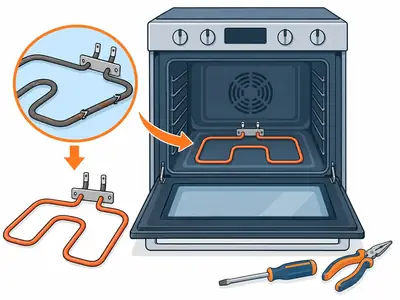 KitchenReplace Oven Heating Element Safely (Electric)Oven not heating or the bake element burned? Replace oven heating element parts safely, with the power off and the right part. Steps and safety tips included.
 KitchenOven Not Heating Evenly: What to CheckAn oven not heating evenly burns one side and undercooks the other. Check the element, the sensor, the seal, rack position and calibration, in order.