
Dryer Thermal Fuse: How to Test and Replace It
Part of: Appliances
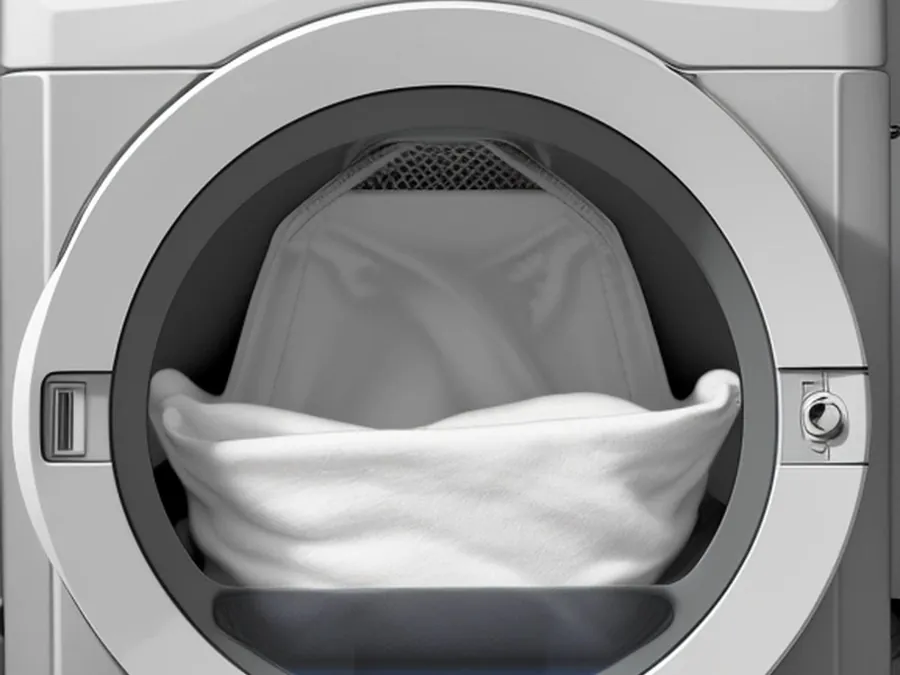
- Difficulty
- Medium
- Time
- 30 to 90 minutes
- Tools
- Multimeter, screwdrivers, nut driver set, vacuum, flashlight, new thermal fuse
- Call a pro if
- you see burned wires, the dryer is gas and you smell gas, or you are not comfortable opening the dryer
In this guide
- Power off first
- Gas safety
- Wear protection
A dryer thermal fuse is a small safety part that cuts power to the heating system or the whole dryer if it gets too hot. When it blows, the dryer may run with no heat, or not run at all. Replacing it is simple, but the fuse blows for a reason. If you do not fix the reason, the new fuse will blow too. This guide shows how to test, replace and prevent a repeat.
This guide is part of our wider guide to appliance problems.
Signs of a blown fuse
The dryer will not start, or runs and does not heat. The drum may turn with no heat, or may stay still. The dryer was taking much longer to dry clothes before it stopped. See Dryer takes too long to dry clothes. Other causes are possible, so test the fuse before you buy parts. See also Electric dryer not heating.
Step by step: find and test the fuse
1. Unplug the dryer. Do not disconnect any gas line. If it is a gas dryer, leave the gas connection alone.
2. Open the dryer following your manual. Many open from the top or the back panel.
3. Find the fuse. It is a small, usually white or black part with two terminals, mounted on the blower housing or the heater box. Check your manual or the parts diagram.
4. Take a photo of the wires.
5. Disconnect the wires from the fuse by pulling the connectors straight off.
6. Set the multimeter to continuity or the lowest ohms setting.
7. Touch the probes to each terminal on the fuse. A good fuse shows continuity, or a reading near zero. A blown fuse shows no continuity.
Step by step: replace the fuse
1. Buy the exact fuse for your model number, with the same temperature rating. Do not use a higher rating, and never bypass the fuse with a wire.
2. Remove the old fuse by unscrewing it from its mount.
3. Install the new fuse in the same place and tighten the screws.
4. Reconnect the wires to the terminals.
5. Find the cause before you close the dryer. See below.
6. Reassemble the dryer, plug it in and test with a small load.
Find out why it blew
A thermal fuse blows when the dryer overheats. The most common reason is a blocked vent. Clean the lint screen and the lint trap housing. Disconnect the vent from the dryer and check it. Clean the hose and the duct to the outside with a vent brush. Check the outside cap and make sure the flap opens. Check that the vent is as short and straight as possible. A long or crushed hose traps heat. See Dryer not spinning for other dryer checks.
Signs that point to each cause
A fuse that blows again soon after you replace it points to a blocked vent or a failed thermostat. A dryer that is hot to the touch and smells like burning needs a stop and a check. A fuse that tests fine but the dryer does not heat points to a heating element or thermostat. A dryer that does not start and has a good fuse may have a door switch or timer problem. A dryer that clicks may have a start switch problem.
Other parts to check
While the dryer is open, test the high limit thermostat and the cycling thermostat with the multimeter, as you did for the fuse. Check the heating element for breaks. Vacuum out lint from the cabinet, since lint is flammable. Check the blower wheel for lint buildup.
Prevention
Clean the lint screen after every load. Clean the vent at least once a year. Use a rigid metal duct, not plastic foil. Do not run the dryer when you are away. Do not overload it. Check the outside vent cap each season.
Clean the vent properly
Pull the dryer away from the wall slowly, and do not strain the vent hose. Disconnect the hose at both ends. Shake it out and look through it. Use a vent brush kit with flexible rods to clean the duct in the wall, working from the inside, and then from the outside cap. Vacuum the lint that falls out. Reconnect the hose with metal clamps, and use foil tape rather than screws that catch lint. Check that the outside flap swings freely.
A simple yearly routine
Once a year, clean the vent from the dryer to the outside. Twice a year, vacuum the lint trap housing and the area under the dryer. Replace a flexible plastic hose with a rigid or semi-rigid metal one. Note the date on the wall behind the dryer so you remember. If clothes take more than one cycle to dry, clean the vent right away.
Related guides
- How to Calibrate an Oven Temperature at Home
- How to Clean a Dryer Vent to Prevent Fires
- How to Clean a Dryer Lint Trap and the Slot Behind It
- How to Install a Dryer Vent: Route It Outside Right
- How to Clean a Dryer Drum and Remove Stains and Residue
FAQ
Why did my fuse blow?
Most often a blocked vent caused overheating.
Can I bypass the fuse?
No. It is a safety device.
Will a new fuse fix my dryer?
Only if the fuse was the problem, and the cause is fixed.
How do I know if the fuse is bad?
Test it for continuity with a multimeter.
More from this topic
- Dryer Not Heating Up but Spinning: What to Check First: Dryer not heating up but spinning? Check the breaker, lint, vent, thermal fuse, heating element and...
- How to Replace a Dryer Belt Step by Step: Learn how to replace a dryer belt: unplug the dryer, open the cabinet, remove the old belt, loop the new belt...
- How to Replace a Dryer Vent Hose Safely: Learn how to replace a dryer vent hose: unplug the dryer, remove the old duct, fit a metal duct with clamps...
- How to Replace an Oven Light Bulb Safely: Learn how to replace an oven light bulb: cool the oven, switch off power, remove the glass cover, swap in the...
- Oven Door Gasket: How to Check and Replace It: Oven door gasket worn or torn? Learn how to test the seal, replace the gasket and when a missing seal affects...
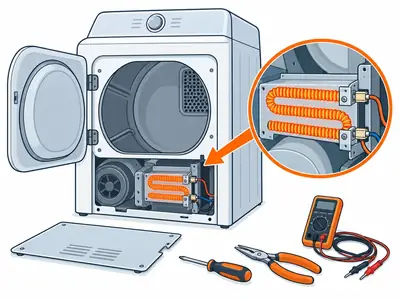 KitchenDryer Not Heating Up but Spinning: What to Check FirstDryer not heating up but spinning? Check the breaker, lint, vent, thermal fuse, heating element and thermostat on any brand of electric dryer.
 KitchenHow to Replace a Dryer Belt Step by StepLearn how to replace a dryer belt: unplug the dryer, open the cabinet, remove the old belt, loop the new belt over the drum and idler pulley and test the drum.
 KitchenHow to Replace a Dryer Vent Hose SafelyLearn how to replace a dryer vent hose: unplug the dryer, remove the old duct, fit a metal duct with clamps and check the airflow outside before you dry a load.
 KitchenHow to Replace an Oven Light Bulb SafelyLearn how to replace an oven light bulb: cool the oven, switch off power, remove the glass cover, swap in the right high heat bulb and test the new light.
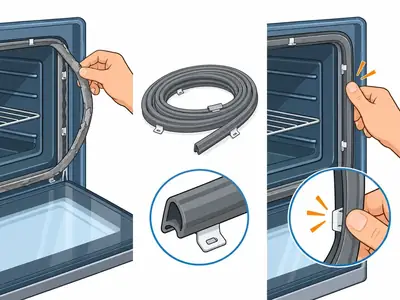 KitchenOven Door Gasket: How to Check and Replace ItOven door gasket worn or torn? Learn how to test the seal, replace the gasket and when a missing seal affects cooking and safety. Steps and tools.