
Dryer Takes Too Long to Dry Clothes: What to Check
Part of: Appliances
- Difficulty
- Easy to medium
- Time
- 30 to 90 minutes
- Tools
- Vacuum with long hose, lint brush or dryer vent kit, screwdriver, foil tape, flashlight, work gloves
- Call a pro if
- the clothes are hot but still wet after a cleaned vent, you smell burning, the vent runs through a wall or roof you cannot reach or the dryer is gas and you smell gas
In this guide
- Power off first
- Gas safety
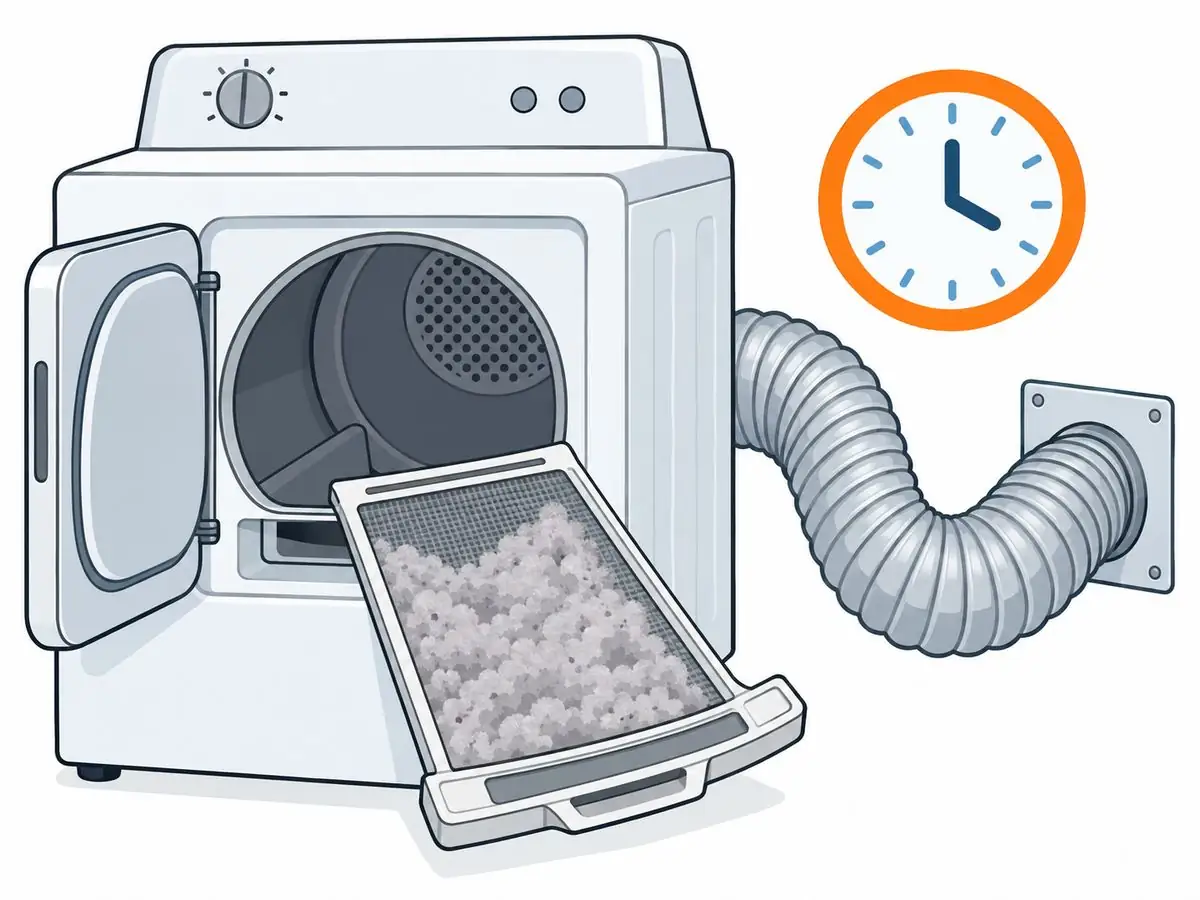
If your dryer takes too long to dry a normal load, the cause is almost always blocked airflow. Heat and moisture have nowhere to go, so cycles drag on and the dryer works harder. A blocked vent can also be a fire risk, so this is worth fixing right away.
This guide is part of our wider guide to appliance problems.
Why drying slows down
A dryer pushes warm, moist air out through a duct. Lint, a crushed hose or a clogged outside cap restricts the flow. Overloading, wet loads from a washer that does not spin well and a bad heating part can add to it.
Step by step
1. Clean the lint screen before every load. Pull it out and remove the lint. Once a month, wash the screen with soap and water and let it dry. A film from dryer sheets can block airflow.
2. Vacuum the lint housing. Use a long vacuum hose to clean the slot where the screen sits.
3. Check the load. Do not pack the drum. Clothes need room to tumble.
4. Check the washer. If clothes come out dripping, the washer may not be spinning well. See Washing machine not draining: what to check.
5. Pull the dryer away from the wall carefully and unplug it. For a gas dryer, do not pull it out. Moving it can damage the gas line, so call a technician instead.
6. Check the transition duct. The flexible hose behind the dryer should not be kinked, crushed or sagging. Use a short, rigid or semi-rigid metal duct if you can, and avoid white vinyl or foil accordion ducts that trap lint.
7. Clean the duct. Detach the duct and vacuum or brush out the lint. Use a brush kit that runs along the whole length. See How to clean a dryer vent.
8. Clean the outside cap. Go outside and check that the flap opens freely. Remove lint, nests and debris.
9. Reconnect the duct. Use foil tape or clamps, not screws, which catch lint.
10. Push the dryer back without crushing the duct, and plug it in.
11. Test with a normal load. Time the cycle.
If it is still slow
The heating element, thermostat or sensor may be failing. Signs include warm but not hot air, or a cycle that ends early with damp clothes. These repairs involve electrical parts. For gas dryers, call a technician.
Prevent lint buildup
Clean the lint screen every load. Clean the full duct once a year, or more often with heavy use or long duct runs.
Signs your dryer needs more than a cleaning
If the dryer drum is hot but clothes stay damp, airflow is probably blocked. If the drum is only warm, the heating element or a thermal part may have failed. If the outside of the dryer is very hot, shut it off, because that can mean a vent blockage or a fire hazard. Write down the load size, the heat setting and the cycle time, so you can compare after each fix.
A quick airflow test
With the dryer running, go outside and hold your hand near the vent cap. You should feel a steady push of warm air. A weak flow means a blockage. If the flap barely opens, clear the cap and the duct. Also check that the vent is not shared with other appliances, and that it ends outside, not in the attic or garage.
Related guides
- Dryer Thermal Fuse: How to Test and Replace It
- Washing Machine Not Filling with Water: What to Check
- Washing Machine Loud Noise: What to Check
- How to Replace a Dryer Vent Hose Safely
- How to Prevent a Dryer Fire in Your Home
- How to Install a Dryer Vent: Route It Outside Right
FAQ
How long should a dryer cycle take?
Many loads dry in 30 to 60 minutes. Much longer means a problem.
Can a clogged vent cause a fire?
Yes. Lint is flammable, and blocked vents are a common cause of dryer fires.
Should I use a vinyl duct?
No. Metal ducts are safer and resist crushing.
How long can the duct be?
Check your manual. Long runs and many bends reduce airflow.
More from this topic
- Dryer Not Heating Up but Spinning: What to Check First: Dryer not heating up but spinning? Check the breaker, lint, vent, thermal fuse, heating element and...
- How to Clean a Dryer Lint Trap and the Slot Behind It: Learn how to clean a dryer lint trap: remove lint every load, wash the screen, vacuum the slot, and spot...
- Water Heater Takes Too Long to Heat Up: What to Check: When a water heater takes too long to heat up, the cause is usually sediment, a failing element or...
- Dryer Thermal Fuse: How to Test and Replace It: Dryer will not start or has no heat? Learn how to find, test and replace a dryer thermal fuse, and why a...
- How to Clean a Dryer Drum and Remove Stains and Residue: Learn how to clean a dryer drum: unplug it, wipe off stains and residue, clear the lint, check the vent area...
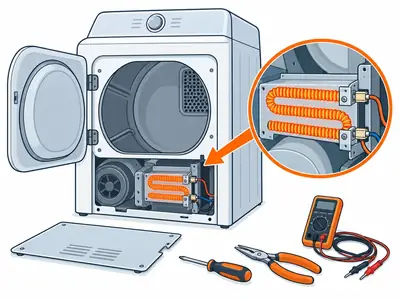 KitchenDryer Not Heating Up but Spinning: What to Check FirstDryer not heating up but spinning? Check the breaker, lint, vent, thermal fuse, heating element and thermostat on any brand of electric dryer.
 KitchenHow to Clean a Dryer Lint Trap and the Slot Behind ItLearn how to clean a dryer lint trap: remove lint every load, wash the screen, vacuum the slot, and spot clogs that slow drying or raise fire risk.PlumbingWater Heater Takes Too Long to Heat Up: What to CheckWhen a water heater takes too long to heat up, the cause is usually sediment, a failing element or thermostat, or the distance to the faucet.
 KitchenDryer Thermal Fuse: How to Test and Replace ItDryer will not start or has no heat? Learn how to find, test and replace a dryer thermal fuse, and why a blown fuse means you must clean the vent first.
 KitchenHow to Clean a Dryer Drum and Remove Stains and ResidueLearn how to clean a dryer drum: unplug it, wipe off stains and residue, clear the lint, check the vent area and keep marks off your next load of laundry.