
Washing Machine Loud Noise: What to Check
Part of: Appliances
- Difficulty
- Easy to moderate
- Time
- 15 to 45 minutes
- Tools
- Level, flashlight, adjustable wrench, towel, small pocket light
- Call a pro if
- the noise is a loud grinding from the drum, the drum wobbles freely or you smell burning
In this guide
- Power off first
If your washing machine loud noise is new, the sound itself points to the cause. A washer that bangs, grinds or squeals gets your attention quickly. Some noises come from a harmless cause, such as a coin in the drum or an uneven load. Others point to a worn part that needs repair. This guide helps you match the sound to the cause, run a few safe checks and decide when to call for service.
This guide is part of our wider guide to appliance problems.
Check the load and the level
Open the washer and look for coins, keys, underwire and small items. Make sure the load is not too large or too small. A single heavy item can cause banging. Check that the washer sits level and does not rock. Push each corner. Adjust the feet until it is firm. See Washing machine shakes or walks.
Banging or thumping
This often means an unbalanced load or a washer that is not level. Stop the machine, rearrange the clothes and start again. Check that the shipping bolts were removed on a new machine. If the washer is on a weak floor, it may thump. A heavy wet item, like a rug, can also cause it.
Grinding or rumbling
A grinding sound can come from worn drum bearings, a loose item in the pump or the drive parts. Spin the empty drum by hand with the power off. If it rumbles, scrapes or feels rough, the bearings may be worn. Bearing repairs are costly, so compare the repair estimate with the age of the machine.
Squealing or squeaking
A squeal may come from a worn belt, a loose pulley or dry bearings. Some washers have a belt that can be replaced. Check the manual. A squeal during the spin cycle points to the motor or the belt. A squeak while the washer fills may be a water valve and not a mechanical part.
Clicking or rattling
A click may come from a small object caught in the pump or the drain. A rattle may come from a loose item such as a button on a garment. Check the pockets. Look in the drain pump filter, if your machine has one, and clear it. See Washing machine not draining: what to check.
Step by step: basic checks
1. Unplug the washer and shut off the water.
2. Empty the drum and check for objects.
3. Spin the drum by hand. It should turn smoothly and quietly.
4. Check the feet and level the machine.
5. Tighten the hose connections and clamps that rattle.
6. Clear the pump filter if there is one.
7. Run a short empty cycle and listen.
Signs that point to each cause
Noise only during spin points to a load, a belt or a bearing. Noise during fill points to the water valve or hoses. Noise during drain points to the pump. Noise only with heavy loads points to the shocks or the suspension. Noise that began after a move points to shipping bolts or a feet problem. See Washing machine door will not open if the door lock makes noise.
Prevention
Do not overload the washer. Wash heavy items separately. Check the pockets. Level the machine once a year. Clean the pump filter every few months. Keep the floor around the washer clear.
When repairs make sense
For a washer less than eight years old, a belt or a pump may be worth fixing. For a bearing or suspension repair on an older machine, replacement might make more sense. A technician can check the noise and give a clear estimate before you decide.
Check the floor and the base
A washer on a weak or sloping floor can sound much louder. Put a level on the top of the machine, front to back and side to side. Rock each corner. Add a rubber anti-vibration pad under each foot if the noise remains. A solid plywood base can help on a weak floor.
Know what is normal
Modern washers make a range of sounds, such as water running, clicks from the lock and a hum during spin. These are normal. A sound that is new, louder or sharper than before is a reason to check. Note when it happens in the cycle, as it helps a repair person find the cause.
Related guides
- How to Set Up a Washing Machine Standpipe Drain
- Washing Machine Inlet Screens: How to Clean Them for Better Water Flow
- Washing Machine Smells: How to Clean It and Stop the Odor
- Washer Leaks From the Bottom: How to Find the Source
- How to Drain a Washing Machine Full of Water
- Washing Machine Won't Spin: What to Check
FAQ
Why does my washer bang on spin? The load is unbalanced or the washer is not level.
Is grinding serious? It can be. It may point to worn bearings.
Can a coin cause noise? Yes. Check the drum and the pump filter.
Should I keep using it if it is loud? Stop if the noise is loud grinding or smells like burning.
More from this topic
- Washing Machine Not Filling with Water: What to Check: Washing machine not filling with water or filling slowly? Check the water valves, hoses, inlet screens and...
- How to Unclog a Washing Machine Drain Hose: Learn how to unclog a washing machine drain hose: pull the washer out, disconnect the hose, clear lint and...
- How to Replace Washing Machine Hoses to Prevent Leaks: Learn how to replace washing machine hoses, spot signs of wear and connect hot and cold lines correctly to...
- How to Install a Washing Machine: Hook It Up Right: How to install a washing machine: connect the hoses, level the machine, set the drain and run the test cycle...
- How to Set Up a Washing Machine Standpipe Drain: Washer drain overflowing or siphoning? Learn how to set up a washing machine standpipe drain with the right...
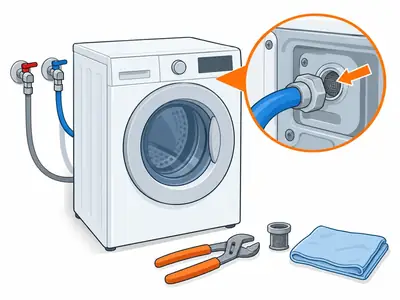 PlumbingWashing Machine Not Filling with Water: What to CheckWashing machine not filling with water or filling slowly? Check the water valves, hoses, inlet screens and lid switch before you call a repair person.
 PlumbingHow to Unclog a Washing Machine Drain HoseLearn how to unclog a washing machine drain hose: pull the washer out, disconnect the hose, clear lint and sludge, check the standpipe and reconnect it.
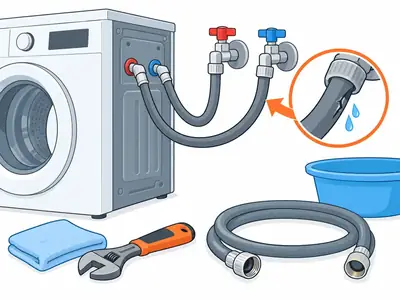 PlumbingHow to Replace Washing Machine Hoses to Prevent LeaksLearn how to replace washing machine hoses, spot signs of wear and connect hot and cold lines correctly to avoid leaks and flood damage in your laundry room.
 PlumbingHow to Install a Washing Machine: Hook It Up RightHow to install a washing machine: connect the hoses, level the machine, set the drain and run the test cycle that prevents floods.
 PlumbingHow to Set Up a Washing Machine Standpipe DrainWasher drain overflowing or siphoning? Learn how to set up a washing machine standpipe drain with the right height, trap and hose connection.