
Washer Leaks From the Bottom: How to Find the Source
Part of: Appliances
- Difficulty
- Easy to medium
- Time
- 30 minutes to 2 hours
- Tools
- Flashlight, towels, dry paper or cardboard, bucket, pliers, screwdrivers, new hoses or clamps if needed
- Call a pro if
- the tub itself is cracked, water comes from the pump housing or bearing, or water reaches electrical parts
In this guide
- Power off first
- Water off first
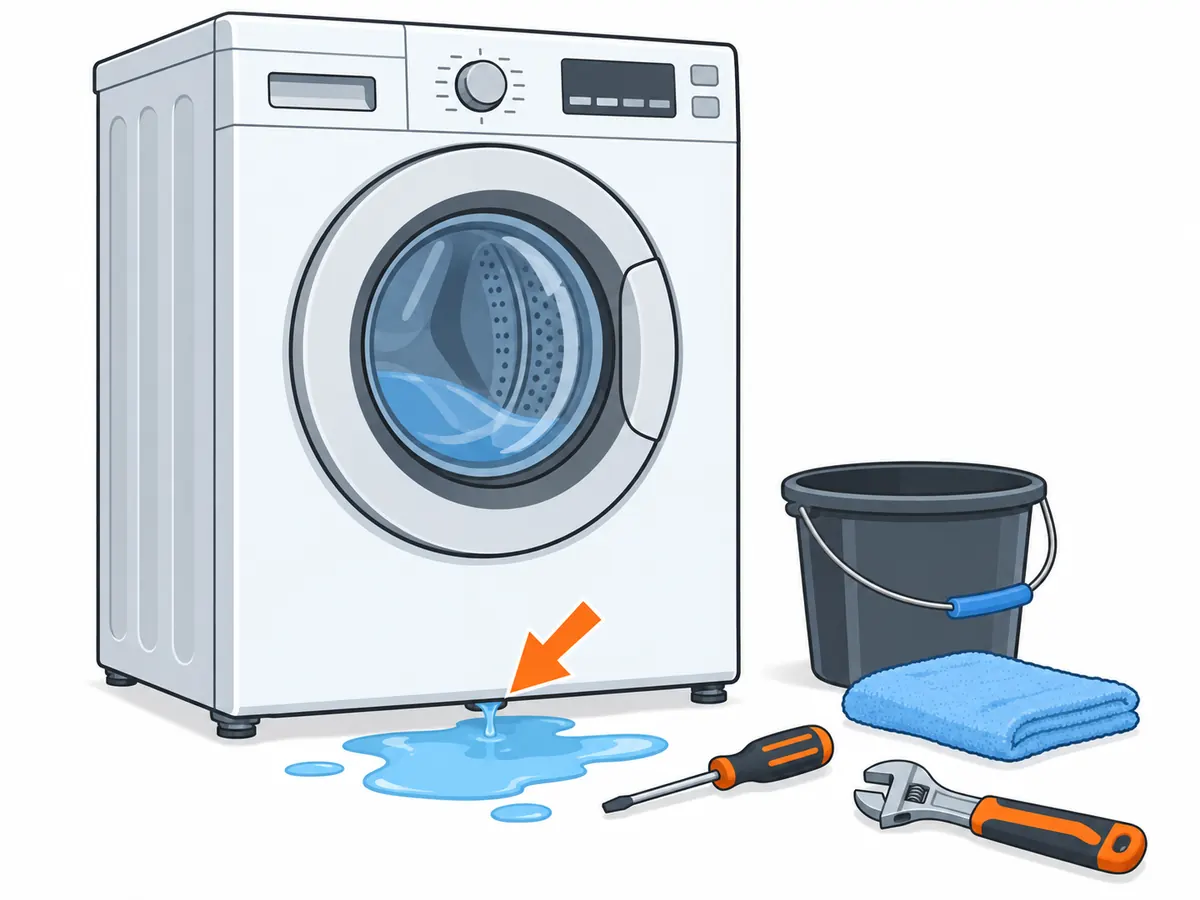
Water on the floor under a washing machine can come from many places. When a washer leaks from the bottom, the water often runs along a hose or the cabinet, so the puddle may not be where the leak starts. This guide helps you trace the water, fix common leaks and know when to call for service.
This guide is part of our wider guide to appliance problems.
First steps
1. Stop the machine. Unplug it and turn off both water valves at the wall. If water is flowing, see How to shut off the water main.
2. Dry the floor and place a dry piece of cardboard under the machine. Note where the new drops fall.
3. Run a short cycle and watch when the leak happens. Does it leak while filling, washing, draining or spinning?
The timing tells you the cause:
- Leaks during fill: a fill hose, a valve or the connection at the wall.
- Leaks during wash: the door seal, the detergent drawer or the tub.
- Leaks during drain or spin: the drain hose, the pump or the filter.
Check the fill hoses
Look at the two hoses on the back of the washer. Check each end for drips and wet spots. Tighten loose connections by hand, then another quarter turn with pliers. Do not overtighten plastic parts. Look for bulges, cracks and rust. Rubber hoses are often worth replacing after a few years. See How to replace a supply line braided hose. Also check the washers inside each hose end, since a flat or missing one can leak.
Check the drain hose
The drain hose goes from the back of the washer to a standpipe or a sink. Check for cracks and loose clamps. Make sure it is not pushed down too far into the standpipe, which can cause siphoning, and not too loose, which can cause overflow. A drain that is blocked can make water back up. See Washing machine not draining: what to check.
Check the door seal and detergent drawer
On a front loader, look at the rubber seal around the door. Pull the folds back and look for tears, mold and trapped coins. Wipe it clean. Use less detergent, as too much suds can push water out of the drawer or door. Make sure the drawer is closed and that the dispenser is not clogged.
Check the pump and the filter
Many front loaders have a small filter at the bottom front behind a panel. Put towels and a shallow tray under it, then open the cap slowly to drain the water. Clean out the lint, coins and hair. Screw the cap back on tightly, since a loose filter cap is a common leak. Check the pump and the hoses attached to it for cracks, and tighten any clamps.
Tub and bearing leaks
A leak that appears from the center bottom of the machine during the wash may come from the tub seal or the bearings. These parts are expensive to replace. If the machine is old, a replacement may be a better choice. Ask a service person for an estimate.
Prevention
Replace the hoses every few years, or when they show wear. Leave the door open after use so the seal can dry. Clean the filter every few months. Check around the machine for dampness once a month. Use a drip tray or a leak sensor if the washer is on an upper floor.
A simple way to trace the water
Wipe the machine dry, then tuck a few strips of dry paper towel around the back, the sides and the bottom edge. Run a cycle. After each stage, check which strip is wet first. Water on the back strips points to the hoses and the pump. Water at the front points to the door seal or the filter. Water in the middle of the base points to the tub or the hose inside the cabinet. This costs nothing and often finds a leak in one cycle.
When to replace the machine
If the tub or the bearing leaks on a machine that is more than ten years old, a repair can cost close to the price of a new washer. Ask for a written estimate before you decide. If the leak is only a hose, a clamp or a filter cap, the repair is cheap, so fix it and keep the machine. After any repair, run a full cycle with a towel under the machine and check it again the next day, since slow leaks can take a while to show.
More help
If the water is coming from somewhere else, plumbing leaks sorts every common leak by location and links to the repair.
Related guides
- Electric Pressure Washer Comparison: Sun Joe SPX3000, Greenworks 2000 PSI and Ryobi RY142300
- Washing Machine Door Will Not Open: Why It Locks and How to Release It
- How to Set Up a Washing Machine Standpipe Drain
- Garbage Disposal Leaking From the Bottom: What to Do
- How to Move a Washer and Dryer Safely
- Dishwasher Not Draining: How to Find and Fix the Clog
FAQ
Is a small leak a big problem?
A small leak can rot the floor and cause mold. Fix it soon.
Can I use the washer with a leak?
No. Stop until you find and fix the leak.
How long do washer hoses last?
Often five years or so. Replace them when they show wear.
Where should I look first?
Start with the hoses and the filter. They are the most common causes.
More from this topic
- Washing Machine Shakes or Walks Across the Floor: Washing machine shakes or walks during spin? Level the machine, adjust the feet, balance the load and check...
- Washing Machine Not Draining: What to Check: Washing machine not draining? Check the drain hose, the pump filter and the standpipe. Safe steps, tools and...
- Washing Machine Won't Spin: What to Check: Your washing machine won't spin? It is usually an unbalanced load, a lid switch, a drive belt or a drain...
- How to Clean a Washing Machine Drain Pump Filter: Learn how to clean a washing machine drain pump filter: find the panel, drain the water, clear lint and...
- Washing Machine Shaking During Spin Cycle: Washing machine shaking during spin cycle? Check for shipping bolts, leveling and worn shock absorbers, and...
 KitchenWashing Machine Shakes or Walks Across the FloorWashing machine shakes or walks during spin? Level the machine, adjust the feet, balance the load and check the shipping bolts. Easy fixes that work.
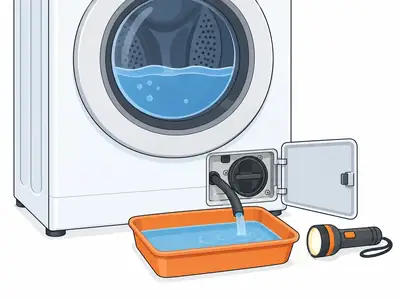 KitchenWashing Machine Not Draining: What to CheckWashing machine not draining? Check the drain hose, the pump filter and the standpipe. Safe steps, tools and when to call a repair tech.
 KitchenWashing Machine Won't Spin: What to CheckYour washing machine won't spin? It is usually an unbalanced load, a lid switch, a drive belt or a drain problem. Check them in this order.
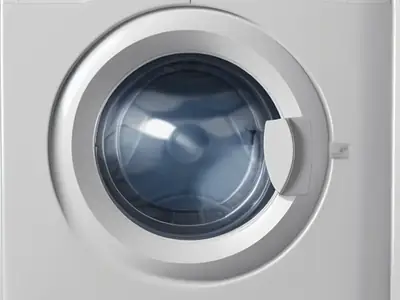 KitchenHow to Clean a Washing Machine Drain Pump FilterLearn how to clean a washing machine drain pump filter: find the panel, drain the water, clear lint and coins, and refit the filter correctly.
 KitchenWashing Machine Shaking During Spin CycleWashing machine shaking during spin cycle? Check for shipping bolts, leveling and worn shock absorbers, and fix the cheap causes first.